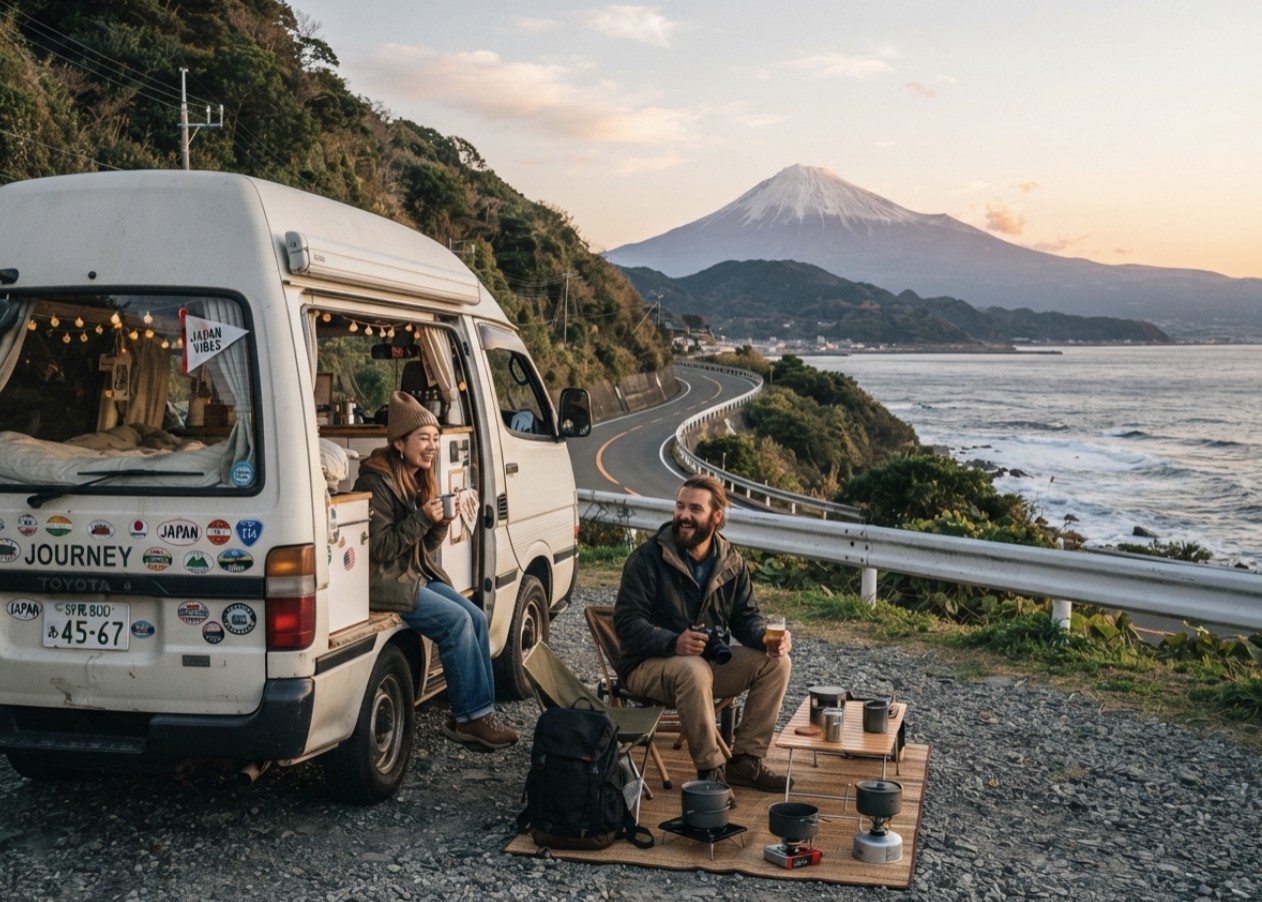
A budget campervan trip in Japan is entirely achievable by hiring a compact van from Tokyo, sleeping strategically at michi-no-eki (道の駅, roadside stations) and paid RV parks, and sticking to regional routes that avoid expensive expressways. For couples, daily costs typically range from £70–£110 (¥14,000–¥22,000 / €85–€130), including hire, fuel, and occasional campgrounds.
Why Campervan Travel Works for Budget-Conscious Travellers
Japan’s accommodation costs can be steep, especially during peak seasons like cherry blossom (late March–early April) and autumn foliage (October–November). A campervan consolidates your transport and lodging into one flexible asset, letting you wake up in scenic locations without the stress of nightly hotel bookings. For UK travellers, this is particularly cost-effective: you avoid both urban hotel premiums and the need to pre-book every night.
The key is to keep your daily mileage sensible and mix free overnight stops with the occasional paid RV park for showers and facilities. You’ll also save significantly on food by cooking simple meals in the van and buying fresh produce at michi-no-eki farmers’ markets, where local vegetables, seafood, and bento boxes are often cheaper than supermarkets.
For a best time to visit Japan on a budget, target June, September, or January–February (low season) when rental rates drop and crowds thin. Avoid Golden Week (late April/early May), Obon (mid-August), New Year, and peak sakura season.
Campervan Rental Costs in Japan (2026)
Daily Hire Rates
| Van Type | Daily Rate (Low Season) | Daily Rate (High Season) | Sleeps |
|---|---|---|---|
| Mini Camper | ¥7,500–¥9,499 | +¥1,000–¥2,000 | 2 |
| Mid-Size Camper | ¥8,500–¥11,499 | +¥1,000–¥2,000 | 2–3 |
| Large Camper | ¥10,500–¥14,900 | +¥1,500 | 2–4 |
| Motorhome (Class C) | ¥19,900–¥26,900 | +¥2,000 | 4–5 |
For couples, a mini or mid-size camper is the sweet spot for budget travel. Expect to pay an additional ¥1,500 per day for comprehensive insurance. Samurai Campers offers 150+ vans from ¥7,500/day (with full discount & returning customers) with pickup in Tokyo, Osaka, or Fukuoka, while Roam & Roll‘s Soyo campervan runs ¥22,900–¥25,900/day depending on season (off-peak 1 June–30 September: ¥22,900; peak 1 October–31 May: ¥25,900).
Once you’ve secured your van, you’ll need to book activities and experiences along your route. Trip.com offers competitively priced day tours, onsen entries, and attraction tickets across Japan—with free cancellation on most bookings. Browse Japan experiences on Trip.com to complement your road trip.
Additional Costs to Budget For
- Fuel: ¥160–¥180 per litre (regular petrol).
- Tolls: ¥5,000–¥15,000 for a round trip from Tokyo to the Japanese Alps if you use expressways. Avoid tolls to save.
- ETC Card: ¥600/day for automatic toll payment (optional if avoiding expressways).
- Cleaning Fee: Some companies charge around ¥7,000 per rental.
- Overnight Parking: Free at michi-no-eki, ¥1,000–¥5,000 at campgrounds/RV parks.
Realistic Daily Budget for Two
For a couple travelling responsibly and avoiding heavy toll use:
- Rental + Insurance: ¥10,000–¥14,000
- Fuel: ¥2,000–¥3,000
- Food: ¥3,000–¥5,000 (self-catering + michi-no-eki bento)
- Occasional Campground: ¥2,000–¥4,000 (every 2–3 nights)
Total: ¥14,000–¥22,000 per day (roughly £70–£110 / €85–€130).
Klook.comWhere to Sleep: Michi-no-Eki vs. Paid RV Parks
Michi-no-Eki (道の駅) – Japan’s Roadside Stations
There are 1,145 michi-no-eki across all 47 prefectures, offering free 24-hour parking, clean restrooms, local produce, and often restaurants or onsen. The Ministry of Land, Infrastructure, Transport and Tourism (MLIT) tolerates resting overnight in your vehicle (shachūhaku, 車中泊) as a fatigue-recovery measure, but camping behaviour is prohibited.
Overnight Rules (2026):
- Resting overnight in your vehicle (shachūhaku) is generally tolerated as a fatigue-recovery measure.
- Camping behaviour is prohibited: no awnings, tables, chairs, BBQs, or cooking outside the van.
- One night only: you’re a guest, not a resident. Arrive late, leave early.
- Park at the far edge of the lot, away from shop entrances.
- Quiet after 21:00: no music, loud conversations, or slamming doors.
- Buy something from the shop or restaurant to maintain goodwill.
- Take all rubbish with you—dumping waste is not permitted.
Some stations explicitly ban overnight stays—always check signage on arrival. When in doubt, use a paid RV park. For Hokkaido onsen hotels with hot-spring baths, see our dedicated guide.
Paid RV Parks and Auto Campgrounds
For showers, electricity, and peace of mind, paid facilities are ideal. Expect to pay ¥1,000–¥5,000 per night, with auto campgrounds typically ¥2,000–¥4,000 and RV parks ¥2,000–¥4,500.
Recommended Networks:
- Japan RV Association RV Parks: https://rv-park.jp/ – official network with bookable sites.
- Carstay: https://carstay.jp/ja/ – private parking spots with reviews.
- Auto Campgrounds: e.g., Aokiko Camping Ground (Nagano), Shiawase no Mura (Kobe), Furano Natural Village (Hokkaido).
Best Budget Campervan Routes in Japan
Planning your route? Klook’s Japan destination hub features last-minute deals on local experiences, from lavender farm visits in Furano to volcano tours at Mt Aso—perfect for filling gaps in your itinerary. Explore Klook Japan activities to enhance your road trip.
These routes avoid heavy tolls, maximise scenic value, and are rich in michi-no-eki stops. For a comprehensive 7-day Japan bullet train itinerary with scenic routes, see our detailed guide.
1. Tokyo → Mt Fuji → Japanese Alps (5–7 Days)
Route: Tokyo → Lake Kawaguchi (Fuji Five Lakes) → Matsumoto (松本城, Matsumoto-jō) → Takayama (高山市) → Shirakawa-go (白川郷, UNESCO Village) → Nagano → Tokyo.
Highlights:
- Lake Kawaguchi (Fuji Five Lakes) – iconic Fuji views; official tourism site: Fujikawaguchiko Tourism Federation
- Matsumoto Castle (松本城) – one of Japan’s original castles; open 8:30 AM–5:00 PM (last entry 4:30 PM), ¥1,200 e-ticket / ¥1,300 paper ticket; official site: Matsumoto Castle
- Takayama Old Town (高山市) – Edo-period streets and morning markets
- Shirakawa-go UNESCO Village (白川郷) – thatched-roof farmhouses; visiting hours 8:00–17:00 (parking last entry 16:40); official site: Shirakawa-go Tourist Association
For more Fuji-focused day trips, see our guide to day trips from Tokyo to Mount Fuji and Hakone.
Key Michi-no-Eki Stops:
- Michi-no-Eki Fujigane (富士根) – Fuji views, local soba
- Michi-no-Eki Minami-Alps (南アルプス) – fruit stalls, onsen nearby
Budget Tip: Use National Route 20 and 19 instead of the Chuo Expressway to save ¥8,000+ in tolls.
2. Hokkaido Scenic Loop (7–10 Days)
Best Time: June–September (lavender season peaks mid-July).
Route: New Chitose Airport → Sapporo → Furano → Biei → Shiretoko → Lake Kussharo → Return to Sapporo.
Why It’s Great: Wide roads, fewer crowds, incredible nature, and abundant michi-no-eki with fresh seafood, dairy, and lavender products. For a detailed Hokkaido onsen hotels guide, see our full article.
Key Michi-no-Eki & Attractions:
- Farm Tomita (ファーム富田) – lavender fields; 2026 season 20 June–20 July, 9:30–16:30 (Lavender East); main farm 8:30–17:30; official site: Farm Tomita
- Michi-no-Eki Furano (ふらの) – lavender products, soft-serve ice cream
- Michi-no-Eki Shiretoko Rausu (しれとこらうす) – crab, sea urchin, and wild hot springs
Sample Itinerary (3N4D from Furano-Biei guide):
- Day 1: New Chitose Airport → Furano (Farm Tomita) → Overnight near Nakafurano campsite (¥2,000–¥2,500)
- Day 2: Patchwork Road (Biei) → Blue Pond → Shirogane Onsen → Biei Shirogane campsite (¥2,600)
- Day 3: Shikisai-no-Oka → Asahikawa → Return to New Chitose
3. Kyushu Onsen & Volcano Trail (7–10 Days)
Route: Fukuoka → Beppu (地獄めぐり, Jigoku Meguri “Hells”) → Aso (阿蘇山, Aso-zan) → Kagoshima (桜島, Sakurajima views) → Nagasaki.
Highlights:
- Beppu’s “Hells” (地獄めぐり) – seven geothermal hot spring attractions; open 8:00–17:00 daily; combo ticket ¥2,400 adults / ¥1,200 children; official site: Beppu Jigoku
- Mt Aso (阿蘇山) – one of the world’s largest active volcanoes; Alert Level 2 (June 2026), crater access restricted; official site: Aso Volcano
- Sakurajima (桜島) – views from Kagoshima ferry terminal
- Yufuin Onsen – scenic hot spring town en route
For alternative 7-day Japan itinerary Tokyo Kyoto Osaka route, see our dedicated guide.
Budget Tip: Kyushu’s expressways are pricier; stick to National Route 3 (west coast) and Route 10 (east coast) for scenic coastal driving. The Yamanami Highway (Beppu → Aso) is one of Japan’s top 10 scenic roads and toll-free.
4. Tohoku Autumn Colours (7–10 Days, September–November)
Route: Sendai → Kakunodate (角館, Samurai District) → Nyuto Onsen (乳頭温泉, Nyūtō Onsen) → Lake Towada → Oirase Gorge (奥入瀬渓流) → Aomori.
Highlights:
- Samurai District in Kakunodate (角館) – preserved samurai residences
- Nyuto Onsen (乳頭温泉) – rustic, forested hot springs
- Oirase Gorge (奥入瀬渓流) – hiking trails and waterfalls; access via JR Bus Tohoku from Aomori or Hachinohe Station
- Lake Towada – scenic boat cruises
Key Michi-no-Eki:
- Michi-no-Eki Yagoshi (やごし) – apple products, local sake
5. Shikoku Pilgrimage & Coastal Drive (7–10 Days)
Route: Tokushima → Kochi → Matsuyama → Takamatsu → Return via Seto Inland Sea bridges.
Why It’s Great: Less crowded, authentic rural Japan, 88-temple pilgrimage trails, and stunning Seto Inland Sea coastline.
Key Michi-no-Eki:
- Michi-no-Eki Iyo (いよ) – citrus fruits, udon noodles
Overnight Parking Etiquette & Safety
Japan is exceptionally safe, but respectful behaviour ensures michi-no-eki remain camper-friendly. Follow these non-negotiable rules:
- No idling: turn off the engine. Many prefectures ban idling by ordinance.
- Nothing outside the van: no awnings, chairs, or drying laundry.
- No open flames: use the van’s internal stove only.
- Keep noise down: especially between 21:00–08:00.
- Move on after one night: don’t use the same spot for multiple nights.
- Take all rubbish: dumping waste is prohibited.
For long-term stays, rotate between michi-no-eki and paid RV parks. If you need shower facilities, check our list of top 10 best travel apps for Japan for navigation and facility finders.
Essential Tools & Resources
Before collecting your camper, make sure you have your passport, International Driving Permit (IDP), driving licence, and credit card. For a complete Japan packing list what to pack by season (64 items, ~9kg), see our dedicated guide.
- MichiStops Map: https://michistops.com/ – interactive English map of all 1,145 michi-no-eki with filters for onsen, EV charging, showers, and campgrounds.
- Japan RV Association: https://rv-park.jp/ – paid overnight parking network.
- Carstay: https://carstay.jp/ja/ – bookable private parking spots with reviews.
- Japan Travel (JNTO): https://www.japan.travel/ – official tourism hub.
- JAF (Japan Automobile Federation): https://www.jaf.or.jp/ – IDP translations and driving rules.
Frequently Asked Questions
Can I sleep overnight at any michi-no-eki?
Most tolerate a quiet, single-night rest in your vehicle (shachūhaku), but it’s a courtesy, not a legal right. Always check for “no overnight stay” signs, and never camp outside the van. Paid RV parks are the safe alternative.
Do I need an International Driving Permit (IDP)?
Yes, most nationalities require a 1949 Geneva Convention IDP obtained before arrival. Some countries (e.g., Germany, France, Switzerland) can use a JAF translation instead. Check your eligibility at https://www.jaf.or.jp/.
Are toll roads worth using in a campervan?
For budget travel, no. Japan’s expressways are expensive (¥5,000–¥15,000+ per day). National routes are scenic, slower, and free. Use tolls only when time is critical.
What’s the best time of year for a budget campervan trip?
Best Value: June, September, and January–February (low season).
Avoid: Golden Week (late April/early May), Obon (mid-August), New Year, and peak cherry blossom (late March–early April). For more detail, see our best time to visit Japan guide.
Can I cook inside the campervan?
Yes, most rentals include a gas stove and basic cookware. Use it only inside the van—no outdoor BBQs at michi-no-eki. Buy fresh produce at roadside station farmers’ markets for cheap, healthy meals.
Ready to book? Start by comparing campervan hires on Samurai Campers (from ¥7,500/day, with full discount & returning customers) or Roam & Roll (¥22,900–¥25,900/day), then map your michi-no-eki stops using MichiStops. With careful planning, you’ll experience Japan’s scenic routes and local culture at a fraction of the cost of traditional travel.
Beyond campervan-specific tools, general travel platforms like Trip.com help you book accommodation backups (hotels, ryokan) should weather or fatigue require a proper bed, while Klook offers attraction passes for cities like Tokyo, Kyoto, and Sapporo.