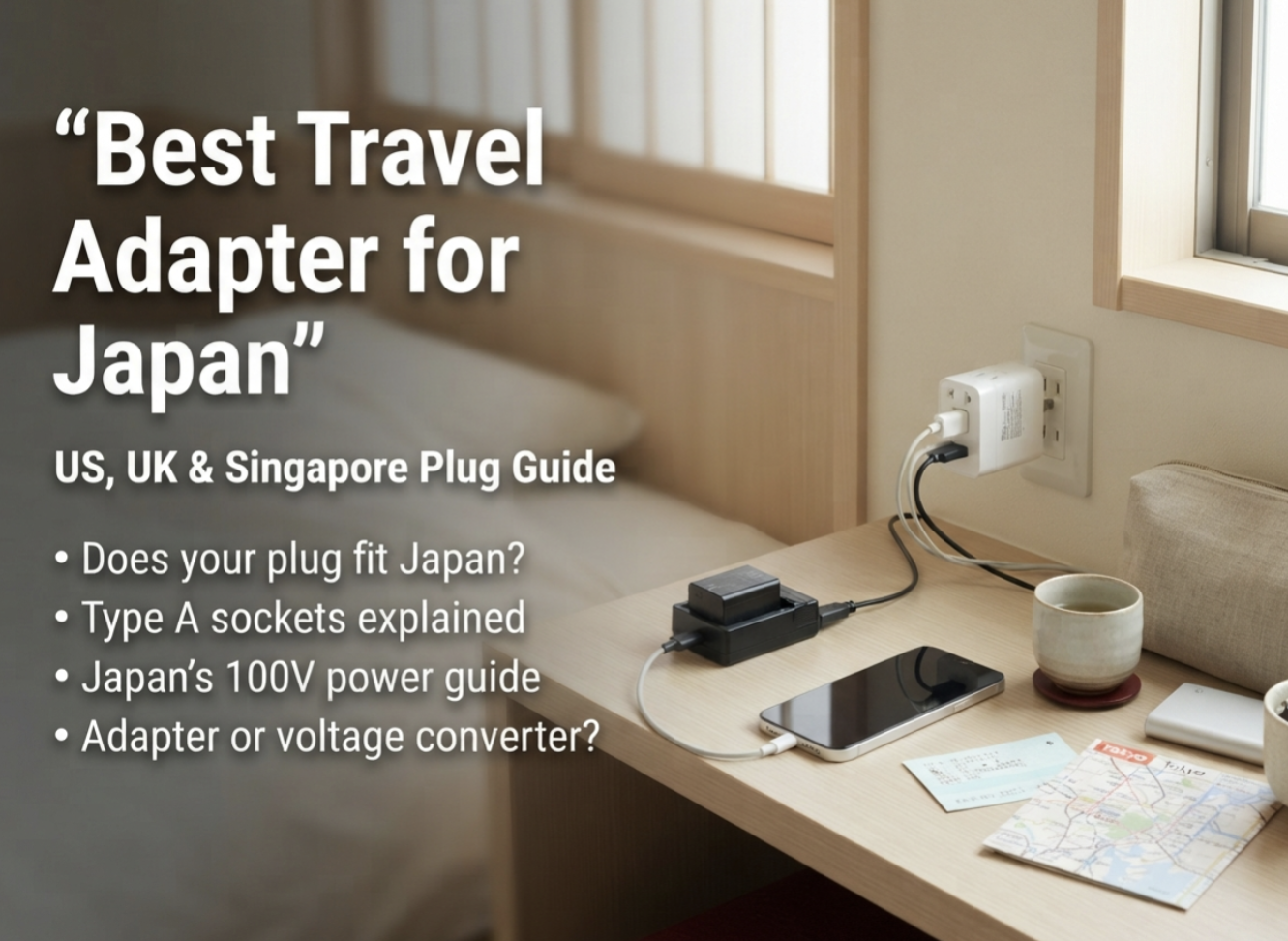
Choosing the right travel adapter for Japan is straightforward once you understand the country’s plugs, voltage and charging limitations. Japan uses Type A plugs, known as タイプAプラグ (taipu A puragu), with two flat parallel pins. Its nationwide electricity supply is 100V. That means travellers from the UK and Singapore need a physical Japan plug adapter, while visitors from the United States can often use ordinary two-pin chargers without an adapter because the pin shape is the same.
The important distinction is between plug shape and voltage. A charger may physically fit a Japanese socket but still be unsuitable if its voltage range is wrong. Most recent phones, tablets, cameras, laptops and USB chargers are rated 100–240V, so they work across Japan with the correct plug arrangement. A UK-only or Singapore-only 230V hairdryer, however, may require a step-down transformer or should be left at home. This Japan power socket guide explains the practical differences and helps you choose a universal travel adapter Japan visitors can rely on.
What Plug Type Does Japan Use?
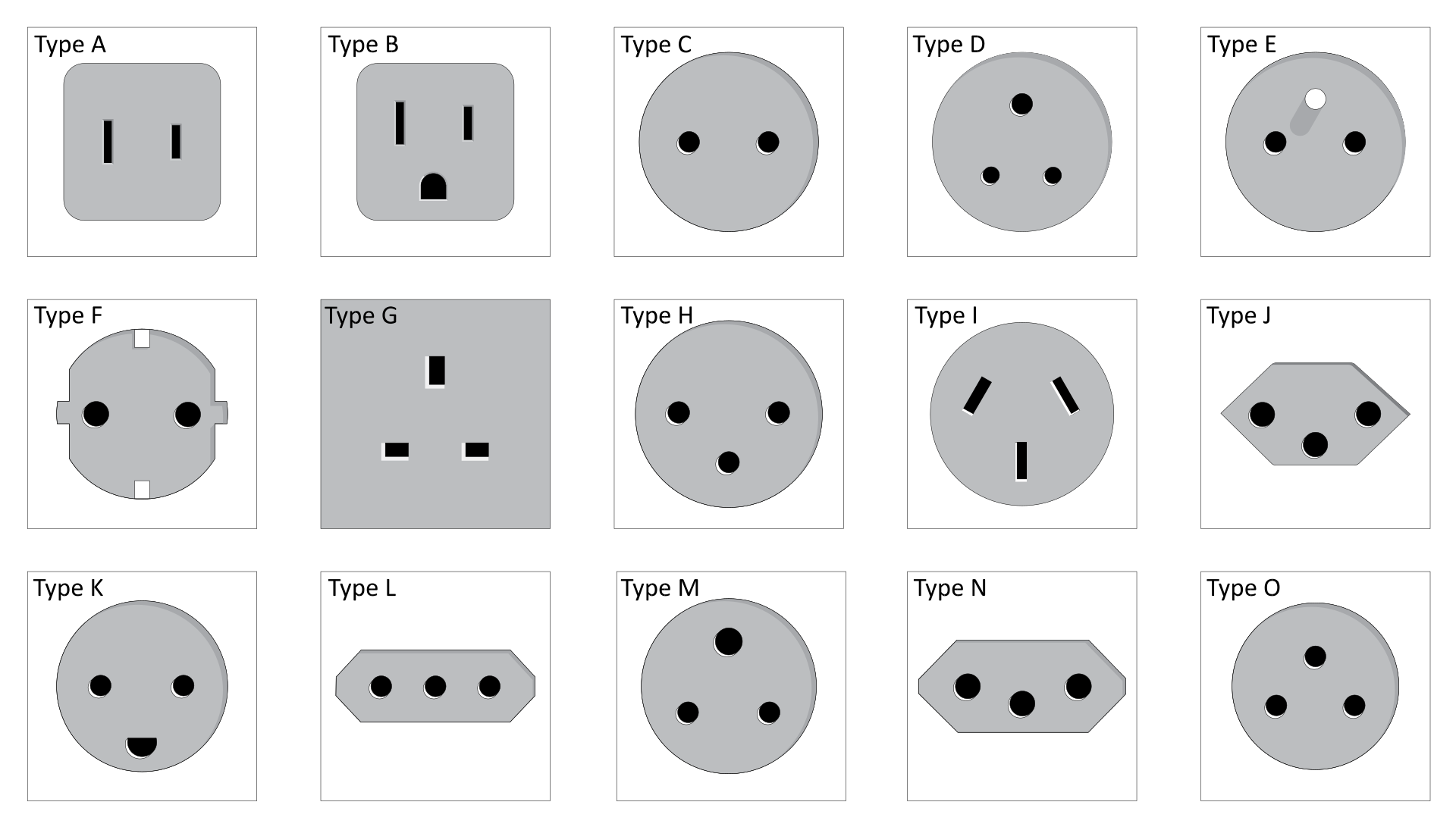
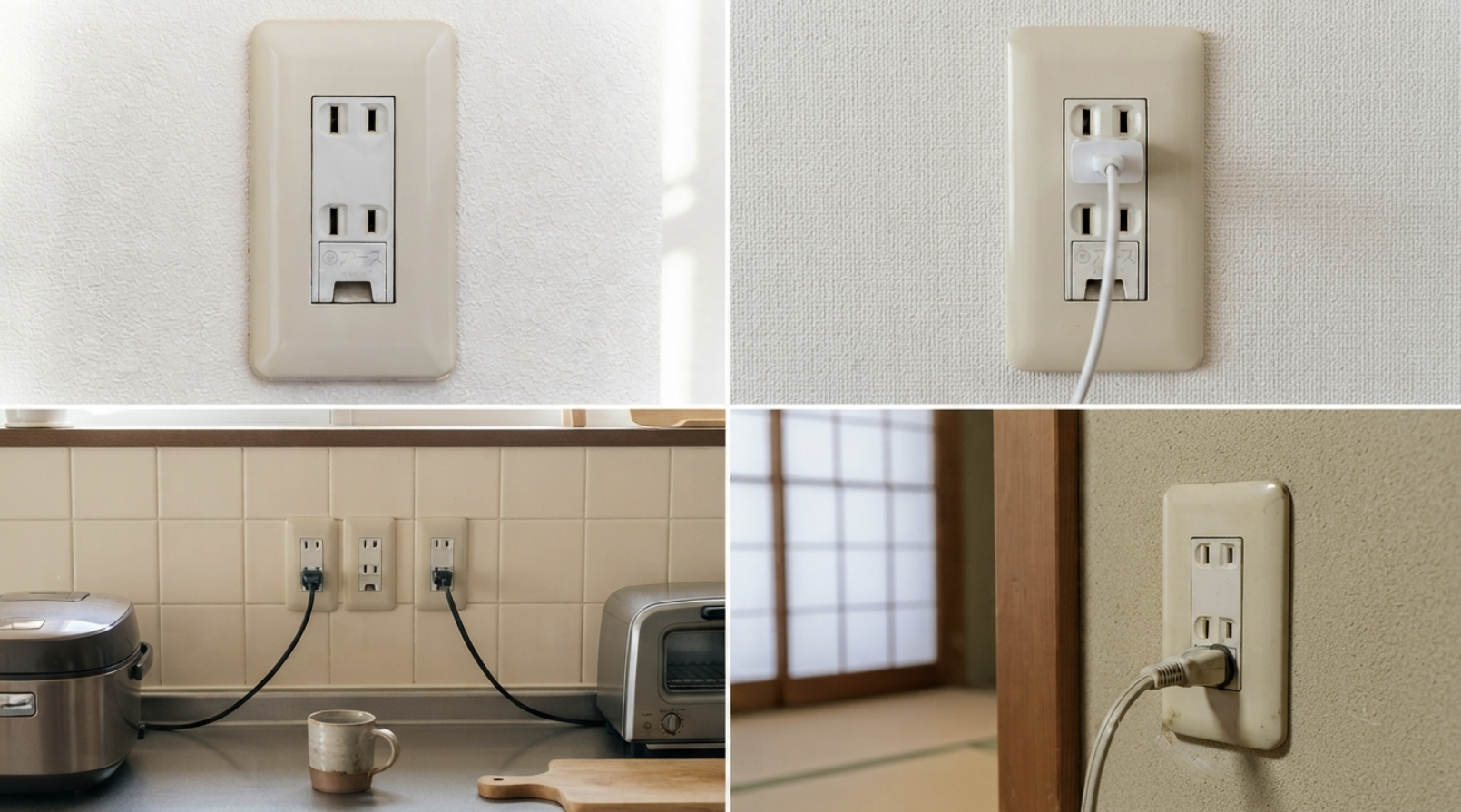
Japan primarily uses the Type A plug. This has two flat pins and is the same basic shape found in the United States, Canada, Taiwan and parts of Central America. In Japanese, a wall outlet is commonly called コンセント (konsento), a Japanese term derived from “concentric plug”. You will find standard two-slot Type A sockets in hotels, ryokan, cafés, airports, railway stations and apartment accommodation throughout the country.
Some newer buildings may have grounded three-hole outlets, especially near desks or areas designed for larger electrical equipment. However, travellers should not assume that these will be available. A normal Japan power socket is usually the two-slot Type A design. A US grounded Type B plug, with two flat pins and a third round earth pin, only works when a compatible three-hole outlet is present. It does not fit into an ordinary two-slot Japanese socket.
Japan Plug Type: UK, Singapore and US Comparison
| Home region | Usual plug type | Voltage and frequency | Will it fit a Japan power socket? | What you need |
|---|---|---|---|---|
| United States | Type A or Type B | 120V, 60Hz | Two-pin Type A plugs fit. Three-pin Type B plugs need a compatible grounded outlet. | Usually no adapter for ordinary two-pin chargers. Check the voltage label and grounding requirements for every other device. |
| United Kingdom | Type G | 230V, 50Hz | No. The three rectangular pins are physically incompatible with Type A. | A Type G-to-Type A plug adapter or a universal adapter. Most modern chargers do not need a voltage converter. |
| Singapore | Type G | 230V, 50Hz | No. Singapore uses the same Type G design as the UK. | A Type G-to-Type A plug adapter or a universal adapter. Check high-heat appliances carefully. |
For UK and Singapore travellers, a universal adapter is usually the best long-term purchase because it offers Japan-compatible Type A pins while remaining useful for Europe, Australia, North America and other destinations. For Americans, a universal adapter is optional rather than essential. It can still be useful if you want several USB charging ports from one socket, are travelling as a couple or family, or plan to continue to another country after Japan.
Japan Voltage: 100V and Frequency
Japan voltage is 100V AC nationwide. This is lower than the 230V supply used in the UK and Singapore and slightly lower than the 120V supply used in the United States. Before packing any electronic item, check the small input label on its charger, plug or power brick. If it reads Input: 100–240V, 50/60Hz, it is dual voltage and normally needs only the right plug shape for Japan.
This is the standard input range for most current smartphones, USB charging bricks, mirrorless cameras, portable game consoles, laptops, e-readers and electric toothbrush chargers. In Japanese, voltage is 電圧 (den’atsu), and the frequency of electricity is 周波数 (shūhasū). Both terms may appear on appliance labels or in Japanese hotel information.
Japan has a split electrical grid. Tokyo (東京), Yokohama (横浜), Sendai (仙台), Sapporo (札幌) and most of Hokkaido use 50Hz. Osaka (大阪), Kyoto (京都), Nagoya (名古屋), Hiroshima (広島) and Fukuoka (福岡) use 60Hz. The difference comes from Japan’s early electrification, when eastern and western regions imported generators and electrical equipment from different countries. For modern chargers marked 50/60Hz, the split makes no practical difference.

The frequency split matters mainly for older motorised equipment, analogue clocks and specialised devices. It does not affect USB charging. If you are carrying medical equipment, work equipment or an older appliance, check its manufacturer guidance before departure instead of relying on a general travel adapter recommendation.
Klook.com
Adapter or Voltage Converter?
A 変換プラグ (henkan puragu) changes the shape of your plug so that it fits a different wall socket. It does not alter voltage. A 変圧器 (hen’atsuki) changes the electricity voltage. These are different products, and confusing them can damage appliances.
For a phone, camera or laptop charger marked 100–240V, use a standard travel adapter for Japan. For an item marked only “220–240V”, such as some hairdryers, curling tongs and straighteners bought in the UK or Singapore, a basic adapter is not enough. Japan’s 100V supply may cause the appliance to work poorly or not at all. For a US appliance marked only “120V”, check the manufacturer’s stated tolerance before using it in Japan, as a physical plug match is not a complete electrical safety check.
High-heat appliances deserve particular caution. Japanese accommodation commonly uses 100V/15A circuits, equivalent to approximately 1,500W total. Do not assume a compact adapter can safely handle a hairdryer, kettle, clothes steamer or portable heater. The safer option is a dual-voltage appliance, a hotel-supplied hairdryer or a suitable locally purchased device.
Why a Universal Adapter Helps
- It supports more destinations. A single unit with Type A, C, G and I settings can work in Japan, the US, the UK, Singapore, Europe and Australia.
- It reduces cable clutter. Multi-port models let you charge a phone, power bank, camera battery and smartwatch from one wall socket.
- It is useful in compact rooms. Business hotels, budget rooms and older ryokan may have limited accessible outlets near the bed or desk.
- It can replace separate chargers. A compatible GaN travel adapter may charge a USB-C laptop, tablet and phone using one compact unit.
- It helps during long travel days. Having one small adapter with several ports is useful at airports, on overnight ferry journeys and in shared accommodation.
A portable charger is equally valuable. In Japanese, a power bank is often called a モバイルバッテリー (mobairu batterī), while a charger is 充電器 (jūdenki). Keeping both a charged power bank and a suitable Japan plug adapter in your day bag gives you a reliable backup for maps, railway tickets, translation apps and hotel confirmations.
For wider packing advice, use our Japan packing list by season. It covers weather-appropriate layers, travel documents, payment preparation, SIM or pocket Wi-Fi choices and essential technology for different times of year.
Klook.comWhat to Check Before Buying
- Confirm Type A or Japan compatibility. The listing should specifically mention Japan, Type A, US/JP or flat-pin compatibility. Do not assume every “universal” adapter includes a Japanese plug setting.
- Check device voltage labels. Look for 100–240V and 50/60Hz on your phone, camera and laptop chargers before travelling.
- Match USB-C output to your laptop. A 20W or 30W charger is ideal for phones and tablets but may not adequately power a laptop. Check the wattage on your original USB-C power supply.
- Choose USB-only or AC pass-through carefully. USB-only models are lighter for phones and tablets. Choose an AC socket only if you have a compatible mains charger you still need to use.
- Read the combined-output specification. The total output drops when several USB ports are used at the same time. A model advertised as 70W may not supply 70W to every connected device simultaneously.
- Check safety features directly. Buy models that explicitly state fuse, thermal protection, overload protection or surge protection where relevant. These protections are not automatic on every adapter.
- Avoid using it for high-heat appliances. Travel adapters are primarily for chargers and low-to-moderate-power electronics, not for kettles, heaters or unsupported styling tools.
If you only travel to Japan occasionally, compare short-term connectivity options before buying another device. Some travel bundles may include accessories or make it easier to arrange pocket Wi-Fi and a compatible charging setup at the same time.
Five Universal Adapters for Japan
All five models below offer a Japan-compatible flat-pin option. The best choice depends on what you are charging, how many people are sharing the adapter and whether you need laptop-grade USB-C power. Prices, ratings, stock levels and promotional labels change frequently, so check the live retailer listing before placing an order.
MOMAX 1-World² 70W GaN Travel Adapter
The MOMAX 1-World² 70W GaN travel adapter is a strong all-round option for travellers carrying a USB-C laptop as well as phones and camera equipment. Its configuration includes one universal AC socket, three USB-C PD ports and two USB-A ports, with integrated Japan/US, UK, EU and Australia plug options. This is a compact choice for people who want to reduce the number of separate charging bricks in their luggage.
It is most suitable for one or two travellers moving between several hotels. On a rail-focused route such as our seven-day Tokyo, Kyoto and Osaka itinerary, fewer charging accessories mean a lighter day bag and easier hotel changes. Check your laptop’s original charger wattage and the adapter’s combined-output chart before buying.
MOMAX 205W GaN 9-in-1 Travel Adapter
The MOMAX 205W GaN 9-in-1 is designed for higher-demand charging setups. Its stated configuration includes two AC outlets, six USB-C ports and one USB-A port, with integrated plug settings covering Japan/US, the UK, Europe and Australia. This can suit remote workers, content creators and families who need to charge multiple devices in a room with only one available socket.
Its main benefit is capacity rather than minimal size. It is excessive for a traveller carrying only a phone and power bank, but it can be useful for a laptop, camera batteries, tablet, phone and shared accessories. It remains a plug adapter and charger, not a voltage converter, so apply the same 100V device-label checks before using any connected appliance in Japan.
LENCENT 4-Port USB Travel Charger
The LENCENT 4-Port model is a lighter option for travellers who need USB charging only. It has two USB-C and two USB-A ports with interchangeable international plug heads. It is appropriate for phones, tablets, e-readers, smartwatches, portable game consoles and USB-chargeable camera batteries.
Choose this type of adapter if you do not need an AC pass-through socket. It will not replace a laptop’s mains charging brick and is not suitable for hairdryers or other mains appliances. It works best for a minimalist Japan trip where you need to recharge small devices in a compact hotel, hostel or airport hotel.
MyTravelPal Pro Grounded Universal Adapter
The MyTravelPal Pro combines an AC socket with USB-C and USB-A charging ports. Its integrated plug settings are designed for destinations including Japan, the US, the UK, Europe and Australia. It is a useful multi-country option for travellers who want one adapter for a Japan holiday and future trips elsewhere.
Grounding needs to be understood correctly. The adapter may provide useful compatibility in destinations with grounded sockets, but it cannot create an earth connection when it is plugged into an ordinary two-slot Japanese Type A outlet. Treat it as a flexible international adapter rather than a guarantee of grounding in every hotel room.
TESSAN 28W Universal Travel Adapter
The TESSAN 28W universal travel adapter is a practical everyday choice for lower-power devices. It combines one AC socket with three USB-C and two USB-A ports, alongside Type A, C, G and I plug settings. For a Japan trip focused on phone photography, maps, portable Wi-Fi, camera batteries and a power bank, it provides flexible overnight charging without the weight of a higher-output laptop charger.
It is less suitable for travellers who expect to fast-charge a demanding laptop while powering several devices at the same time. Check the live listing for individual-port and total USB output figures. For ordinary holiday charging, it remains a convenient universal adapter for Japan, particularly when several small devices need charging from one wall outlet.
Which Japan Travel Adapter Is Best?
- Best for phones, tablets and camera batteries: TESSAN 28W or the LENCENT 4-Port USB charger.
- Best for one USB-C laptop and everyday devices: MOMAX 1-World² 70W GaN.
- Best for creators, families and multiple devices: MOMAX 205W GaN 9-in-1.
- Best for multi-country travel: MyTravelPal Pro or either MOMAX universal adapter.
- Best for US travellers with simple two-pin chargers: You may not need an adapter, but a multi-port charger can still make hotel charging easier.
Charging in Hotels and Ryokan
Do not assume every Japanese hotel room has a power point beside the bed. Newer hotels in Shinjuku (新宿), Shibuya (渋谷), Tokyo Station (東京駅) and Osaka Station (大阪駅) may have USB sockets and several mains outlets, but compact rooms can still offer only one conveniently placed plug. Traditional ryokan may have older layouts, with a single socket near a low table rather than next to the futon.

A multi-port adapter solves this problem neatly. Two travellers can charge phones, a モバイルバッテリー (mobairu batterī), camera batteries and a tablet from one socket overnight. When choosing accommodation, our guide to where to stay in Tokyo for first-timers compares Shinjuku, Shibuya, Asakusa, Ginza and the Tokyo Station area for transport, budget and room style.
If your plans include a traditional hot-spring stay, socket availability can matter even more. Our Tokyo to Hakone day-trip guide is useful for planning transport, sightseeing and accommodation around an area known for ryokan and onsen stays.

Will One Adapter Work Across Japan?
Yes. The same Type A travel adapter for Japan works nationwide, from Tokyo and Hakone to Kyoto, Osaka, Hiroshima and Fukuoka. The 50Hz/60Hz difference does not require another plug or another adapter. It matters only for a small number of frequency-sensitive appliances, not for normal travel technology.
The same setup also works in Hokkaido. If you are travelling north, use our seven-day Hokkaido summer itinerary to plan Sapporo, Otaru, Furano and Biei. For live regional transport and travel information, check the JR Hokkaido Railway Company, the Hokkaido Official Tourism Portal and the Sapporo City Official Tourism Site.
If You Forget Your Adapter
Forgetting your Japan plug adapter is inconvenient, but it is not a disaster. Narita, Haneda and Kansai airports have electronics retailers, convenience stores and travel shops where you can buy a basic Type A adapter after landing. In major cities, large electronics chains and Don Quijote stores commonly stock adapters, charging cables and power banks. Airport choices may be limited and more expensive, so buying before departure remains the better option.
Complete immigration and customs declarations before travelling through the official Visit Japan Web service. For official planning information, use Japan Travel and the Japan National Tourism Organization. During typhoon season or severe weather, check live notices from the Japan Meteorological Agency.

Frequently Asked Questions
Do I need a voltage converter for Japan?
Most travellers need only a plug adapter. Phones, laptops, cameras and USB chargers normally accept 100–240V. Check each item’s input label before travelling. A voltage transformer may be necessary for equipment that cannot run on Japan’s 100V supply, especially appliances marked solely for 220–240V use.
Can I use a US charger in Japan?
Usually yes, if it has a two-pin Type A plug and is rated for 100V or 100–240V input. A US grounded Type B plug needs a compatible three-hole outlet and may not fit a standard two-slot Japan power socket. Check the device label if it is single voltage, high wattage or electrically sensitive.
Will a UK or Singapore plug fit in Japan?
No. UK and Singapore plugs use Type G, with three large rectangular pins. They are physically incompatible with Japan’s Type A sockets. You need a Type G-to-Type A adapter or a universal travel adapter that includes Japan-compatible flat pins.
Klook.comCan I use a hairdryer or straightener in Japan?
Use one only if it is explicitly dual voltage or rated for 100V. Many UK and Singapore styling appliances are 220–240V only and should not be plugged into a Japanese socket with a basic adapter. A dual-voltage travel dryer, hotel-supplied dryer or locally purchased appliance is usually safer.
Does Japan use 50Hz or 60Hz electricity?
Japan uses both. Eastern Japan, including Tokyo and Hokkaido, uses 50Hz. Western Japan, including Osaka and Kyoto, uses 60Hz. Most modern chargers are marked 50/60Hz and work across the country without any adjustment.
Should I bring more than one adapter to Japan?
One quality multi-port adapter is usually enough for a solo traveller. Bring a second adapter if two people need to charge laptops, if you carry separate camera chargers, or if your accommodation has sockets in inconvenient locations. A short extension lead can also help, but only use one that is suitable for Japan’s 100V supply and do not overload it.
Klook.com