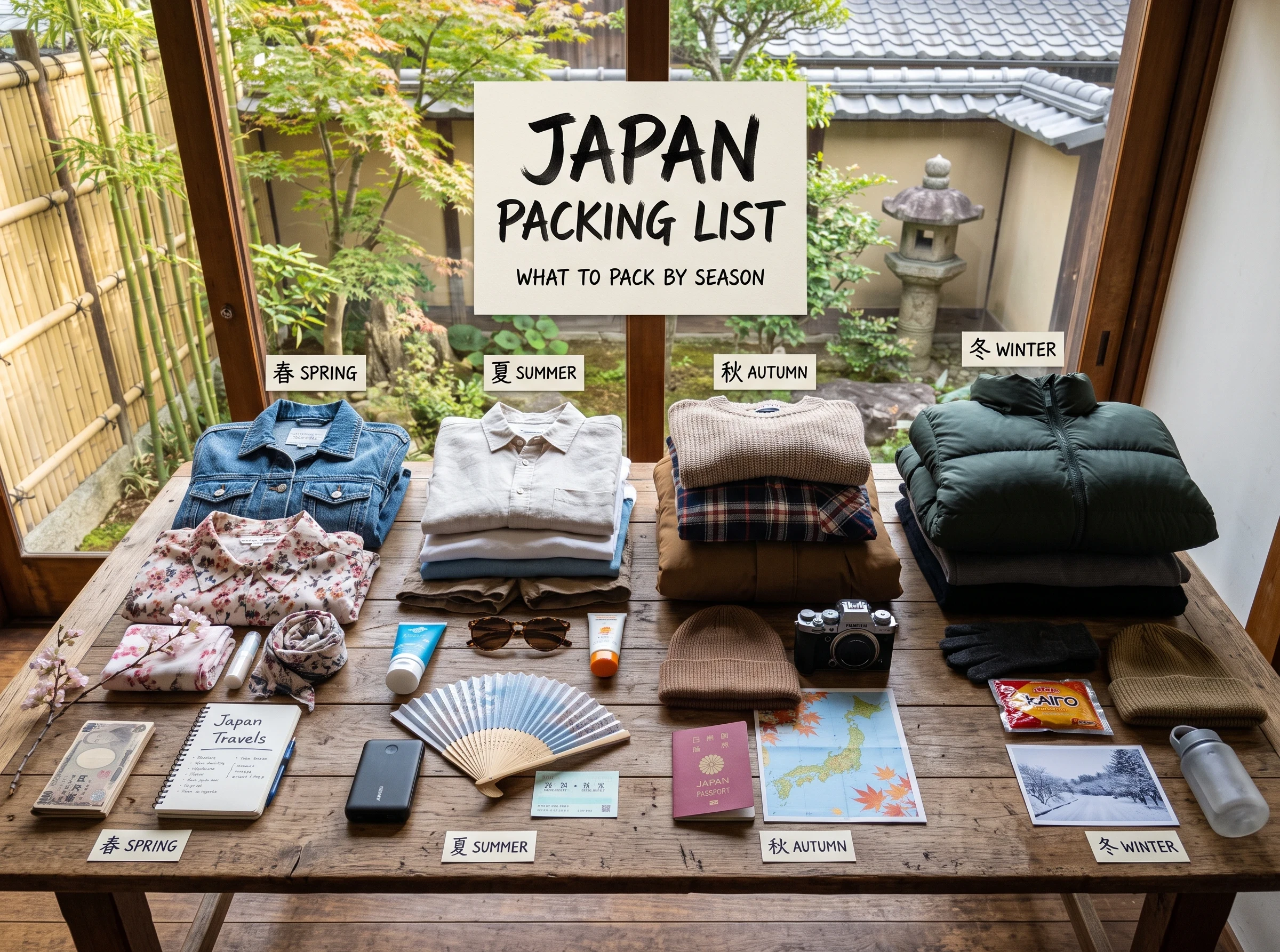
Packing for Japan can feel complicated because of its varied climate, heavy daily walking and its shoe-removal culture in many indoor spaces. A well-structured packing list, adjusted slightly by season, makes preparation straightforward without overpacking.
Experienced travellers consistently prioritise comfortable footwear, light layers, reliable tech essentials and a few small items such as a portable charger and a compact umbrella, alongside respect for local norms around shoes and modest dress.
Japan Packing Essentials for Any Season
A few items are worth packing regardless of when you travel.
- Comfortable walking shoes: Daily step counts in cities such as Tokyo (東京) and Kyoto (京都) can easily reach 15,000 to 25,000 steps, so broken-in trainers or walking shoes are essential.
- A daypack: A small backpack for water, an umbrella, a camera, snacks and a light layer.
- A portable battery pack: Navigation and translation apps can drain your phone quickly, making a power bank one of the most useful items you can carry.
Documents and Money
Passport and Travel Insurance
Bring your passport, any required visa documentation, and proof of travel insurance covering healthcare, delays and cancellations. Japan does not require a visa for short tourist stays for UK passport holders, but always confirm your specific entry requirements before travel.
How Much Cash to Bring
Japan is increasingly card-friendly in major cities, but many small shops, older restaurants and rural businesses still prefer or require cash.
A common recommendation is to start your trip with roughly 20,000 to 30,000 yen in cash for incidentals, topping up at convenience store or bank ATMs as needed.
IC Cards and Payment
Having a prepaid IC card ready, or setting one up soon after arrival, simplifies trains, buses and many small purchases. Visitors should specifically look for the tourist-oriented Welcome Suica card or the Welcome Suica Mobile app, both issued by JR East for temporary visitors.
Official information: Welcome Suica, JR East and Welcome Suica Mobile, JR East
Tech and Connectivity
Power Adapter and Voltage Notes
Japan uses Type A plugs, the same two flat parallel pins found in North America, and runs on 100V, 50 or 60 Hz depending on the region.
- UK travellers need a plug adapter for Type A sockets, since UK plugs use a different three-pin shape.
- Most modern phone chargers and laptop chargers support 100 to 240V and will work fine once you have the correct adapter.
- Check the voltage rating on older hairdryers, straighteners or other high-wattage devices before packing, since not all are dual voltage.
Portable Battery Pack and Cables
Bring at least one high-capacity power bank, charging cables for all your devices, and consider a short extension lead, since some older hotel rooms and ryokan have limited sockets.
SIM, eSIM or Pocket Wi-Fi
Decide in advance whether you will use a Japan eSIM, a physical local SIM card, or a rented pocket Wi-Fi router, and arrange it before you fly to avoid dealing with this at the airport on arrival. Most major eSIM providers allow activation from your home country before departure.
Clothing and Footwear
Layering Strategy
A simple three-layer approach works well across most of the year in Japan.
- Base layer: Breathable t-shirts and long-sleeve tops.
- Mid layer: A light jumper or fleece for cooler evenings.
- Outer layer: A compact rain jacket or windproof coat, depending on the season.
Slip-On Shoes and Socks
You will frequently remove your shoes in ryokan (旅館), some restaurants and temple interiors, so a few practical choices make a real difference.
- Pack shoes that are quick and easy to slip on and off.
- Bring several pairs of socks without holes, since removing your shoes in front of others is common and this small detail is genuinely noticed.
Seasonal Packing Adjustments
Spring and Autumn
- A light jumper or cardigan for cooler mornings and evenings.
- A rain jacket for occasional spring or autumn showers.
- A scarf for cooler evenings in Kyoto or mountain areas.
Summer
- Lightweight, breathable clothing for high heat and humidity.
- A sun hat and sunscreen for extended outdoor sightseeing.
- Extra changes of clothing, since humidity can leave items feeling damp within a single day.
Winter
- A warm coat or down jacket, particularly for colder regions such as Hokkaido (北海道) or the Japan Alps (日本アルプス).
- Gloves, a hat and a scarf for outdoor sightseeing.
- Thermal base layers for snow areas or long evenings outdoors.
Tokyo and Osaka are generally cooler but far less extreme than northern Japan in winter. Layering remains useful so you can adapt easily between heated trains, warm indoor spaces and colder outdoor walks.
Rain Gear and Weather Preparation
Sudden showers are common in Japan, particularly during the early-summer rainy season and other transitional months.
- A compact umbrella: Widely considered an everyday essential rather than an optional extra.
- A packable rain jacket: Better than an umbrella for longer walks or windy conditions.
- A dry bag or waterproof daypack cover: Useful for keeping electronics safe during sudden downpours.
Health and Comfort Items
- Basic medicines in familiar brands, such as painkillers and stomach remedies, since not all equivalents are easy to identify in Japanese pharmacies.
- Plasters or blister pads for high-walking days.
- A refillable water bottle; tap water in Japan is generally safe to drink throughout the country.
Quick Packing Checklist by Category
- Documents: Passport, insurance, booking confirmations, emergency contacts.
- Money: Cash of roughly 20,000 to 30,000 yen, a payment card, a Welcome Suica card or app.
- Tech: Plug adapter, battery pack, charging cables, SIM, eSIM or pocket Wi-Fi.
- Clothing: Layered outfits, modest clothing for temples, slip-on shoes, spare socks.
- Rain and weather gear: Compact umbrella, packable rain jacket, seasonal extras.
- Health: Basic medicines, plasters, sunscreen, a refillable water bottle.
Frequently Asked Questions
Do I need a plug adapter for Japan?
Yes. UK travellers need a plug adapter for Japan’s Type A sockets and 100V system. Most modern phone and laptop chargers are compatible with the voltage, but always check high-wattage appliances individually.
How much cash should I carry in Japan?
Starting with around 20,000 to 30,000 yen is common, topping up at ATMs as needed. Many small businesses, older restaurants and rural shops still prefer cash over cards.
What shoes are best for walking in Japan?
Comfortable, already broken-in trainers or walking shoes are strongly recommended, ideally ones that are easy to slip on and off for temples, ryokan and some restaurants.
Should I pack rain gear even in summer?
Yes. Sudden showers and high humidity make a compact umbrella and a light, packable rain jacket sensible additions even during the summer months.
A well-planned Japan packing list comes down to comfortable footwear, flexible layers, reliable tech and a small amount of cash on hand. Bookmark this checklist before you start packing, and adjust the seasonal section based on your specific travel dates and destinations.