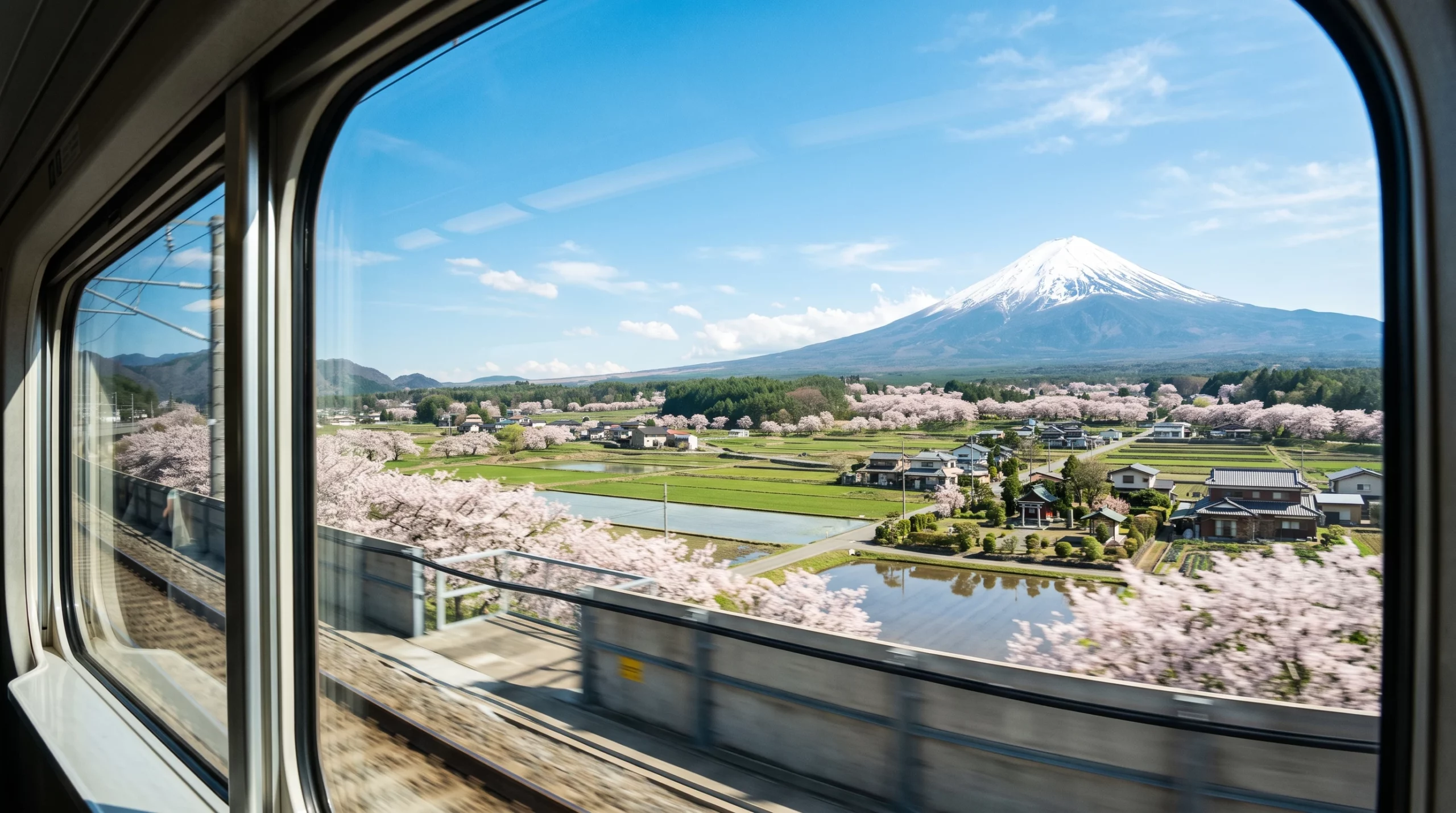
If you have seven days in Japan and want a fast-moving rail itinerary, this route combines Tokyo (東京), Hakone (箱根), Kyoto (京都), Osaka (大阪), Hiroshima (広島) and Kanazawa (金沢). It uses the shinkansen where it is genuinely useful, but it does not assume a nationwide Japan Rail Pass is automatically the cheapest choice: compare the current pass price with point-to-point fares before buying.
Route Overview
This itinerary is ambitious but feasible for travellers who are happy to change hotels frequently and make an early start on the longest rail day. It is designed around one night in Hakone, two nights in Kyoto or Osaka, one night in Hiroshima, one night in Kanazawa and a final night in Tokyo.
| Day | Route | Main transport | Overnight base |
|---|---|---|---|
| 1 | Tokyo to Odawara, then Hakone | Tokaido Shinkansen, then local Hakone transport | Hakone |
| 2 | Hakone or Odawara to Kyoto | Tokaido Shinkansen from Odawara | Kyoto |
| 3 | Kyoto and Osaka | JR local train, private railway or shinkansen | Kyoto or Osaka |
| 4 | Osaka to Hiroshima | Sanyo Shinkansen | Hiroshima |
| 5 | Hiroshima to Kanazawa | Sanyo Shinkansen, Thunderbird and Hokuriku Shinkansen | Kanazawa |
| 6 | Kanazawa to Tokyo | Hokuriku Shinkansen | Tokyo |
| 7 | Tokyo or one selected day trip | JR, private railways or subway, depending on destination | Tokyo |
Japan Rail Pass: Read This First
A standard adult nationwide Japan Rail Pass costs ¥50,000 for seven consecutive calendar days. It offers extensive travel on JR trains and most shinkansen services, but it is not a blanket ticket for all trains, subways, buses or private railways. For this itinerary, compare the pass with individual tickets shortly before travel, because the right answer depends on your exact train choices, seat reservations and side trips.
- The pass covers Hikari, Kodama, Sakura and many other JR shinkansen services.
- Nozomi and Mizuho are not included as standard; pass holders need a separate Nozomi/Mizuho special ticket before boarding.
- The pass does not cover the Hakone Tozan Railway, Hakone Ropeway, Hakone sightseeing cruise, Tokyo Metro, Osaka Metro, the Fuji Excursion service or most private railways.
- JR Pass seat reservations are normally available without an additional reservation charge, subject to availability.
- Buy from the official Japan Rail Pass website or an authorised overseas seller; purchase methods, exchange arrangements and reservation features differ by seller.
A nationwide pass may be convenient for this high-mileage route, but convenience and value are different things. If you plan to use the fastest Nozomi trains, pay for local transport in Hakone and Tokyo, or alter the route, individual tickets and regional passes may be better value.
Day 1: Tokyo to Hakone
Start at Tokyo Station (東京駅) and take a Hikari or Kodama service on the Tokaido Shinkansen to Odawara Station (小田原駅). The shinkansen journey takes roughly 35 minutes, although the exact time depends on the service. From Odawara, transfer to Hakone transport for Hakone-Yumoto (箱根湯本), Gora (強羅) or your chosen onsen hotel.
Hakone is not a shinkansen destination itself. The shinkansen gets you to Odawara; local railways, buses, cable cars and ropeways handle the final journey. A Hakone Free Pass may be useful if you plan to use several participating local services, but compare the pass price with the rides you will actually take.
- Visit the Hakone Open-Air Museum (彫刻の森美術館) if you are staying near Gora.
- Use the Hakone Ropeway for views over Owakudani (大涌谷), subject to weather and operational conditions.
- Mount Fuji views from Hakone are never guaranteed; clear mornings in the colder months often offer the best chance.
- Book an onsen hotel in advance if visiting at weekends, during cherry-blossom season or autumn foliage season.
Day 2: Odawara to Kyoto
Return to Odawara and board the Tokaido Shinkansen for Kyoto Station (京都駅). The journey is normally around two hours on a fast service, but allow extra time for the transfer from your Hakone accommodation. If travelling south-west from Tokyo or Odawara towards Kyoto, a right-side window seat is the usual choice for a possible view of Mount Fuji; cloud cover and visibility remain unpredictable.
- For a first afternoon in Kyoto, choose one area rather than trying to see the entire city.
- Fushimi Inari Taisha (伏見稲荷大社) is easiest from Kyoto Station via the JR Nara Line.
- Kinkaku-ji (金閣寺) and the Philosopher’s Path (哲学の道) are in different parts of the city and require local buses, taxis or a carefully planned route.
- Gion (祇園) is a historic entertainment district, not a guaranteed geisha-sighting attraction; respect local signs and avoid obstructing residents or performers.
Day 3: Kyoto and Osaka
Kyoto and Osaka are close enough to combine, but you do not need the shinkansen for this short journey. The shinkansen from Kyoto to Shin-Osaka (新大阪駅) takes about 14 minutes, yet Shin-Osaka is not central Osaka. The JR Kyoto Line to Osaka Station (大阪駅), or private services to Osaka-Umeda (大阪梅田) or Namba (難波), can be more convenient depending on where you are staying and what you want to see.
- Visit Osaka Castle (大阪城) for its park, museum and city views.
- Explore Dotonbori (道頓堀) and nearby Namba for takoyaki, okonomiyaki and evening street atmosphere.
- Shinsekai (新世界) is a popular dining and entertainment district; follow normal city-safety precautions, particularly late at night.
- Consider sleeping in Kyoto for a quieter early start the next day, or in Osaka for a more nightlife-focused evening.
Day 4: Osaka to Hiroshima
Travel from Shin-Osaka to Hiroshima Station (広島駅) on the Sanyo Shinkansen. A direct Nozomi is fastest but needs the separate special ticket if you hold a nationwide JR Pass. Hikari and Sakura services are covered by the pass, though journey times and stopping patterns vary. Check the timetable for your travel date rather than relying on one fixed duration.
Use the afternoon for Hiroshima Peace Memorial Park (平和記念公園), the Atomic Bomb Dome (原爆ドーム) and the Hiroshima Peace Memorial Museum (広島平和記念資料館). These are substantial, reflective sites: allow enough time and avoid trying to combine them with a rushed Miyajima visit on the same afternoon.
- Stay in Hiroshima to make an early Miyajima trip possible the following morning, if that is your priority.
- Try Hiroshima-style okonomiyaki (広島風お好み焼き), a layered version of the regional dish.
- Use the JR West Miyajima Ferry if travelling with a nationwide JR Pass; the separate Miyajima Visitor Tax still applies.
Day 5: Hiroshima to Kanazawa
This is the itinerary’s longest and most complicated rail day. Take the Sanyo Shinkansen from Hiroshima back to Shin-Osaka, transfer to the Thunderbird limited express for Tsuruga (敦賀), then transfer again to the Hokuriku Shinkansen for Kanazawa. The former direct Thunderbird connection between the Kansai region and Kanazawa ended when the Hokuriku Shinkansen extension to Tsuruga opened, so do not plan for a direct Shin-Osaka-to-Kanazawa Thunderbird train.
Because this journey requires multiple transfers and takes much of the day, keep your Kanazawa plans light. Check into your hotel, explore the restaurants around Kanazawa Station (金沢駅) or take an evening walk through the Higashi Chaya District (ひがし茶屋街) if time and energy allow.
Day 6: Kanazawa to Tokyo
Take the Hokuriku Shinkansen from Kanazawa to Tokyo. The route runs through the Hokuriku and Nagano regions, rather than along the Sea of Japan for most of the journey, so do not expect continuous coastal views. It is nevertheless a comfortable and scenic ride through changing countryside, valleys and mountain areas.
- Spend the morning at Kenroku-en (兼六園), one of Japan’s Three Great Gardens, if you can take a later train.
- Ōmichō Market (近江町市場) is a good stop for breakfast or an early seafood lunch, but individual stalls have their own hours and closing days.
- The 21st Century Museum of Contemporary Art, Kanazawa (金沢21世紀美術館) and Nagamachi Samurai District (長町武家屋敷跡) are worthwhile if you add another night in Kanazawa.
- A stop in Nagano (長野) is possible, but it reduces your Tokyo time and should be planned around luggage storage and train timings.
Day 7: Tokyo or One Day Trip
Use the final day for Tokyo or choose only one day trip. Nikko (日光), Lake Kawaguchi (河口湖) and Yokohama (横浜) are all worthwhile, but they use different rail operators and are not equivalent shinkansen trips. Check the weather before committing to a Mount Fuji-focused day at Lake Kawaguchi.
- Nikko: Reachable by JR services or Tobu Railway; Toshogu Shrine (東照宮) is a UNESCO World Heritage site.
- Lake Kawaguchi: The Fuji Excursion from Shinjuku (新宿) uses JR and Fujikyu Railway tracks. A nationwide JR Pass covers the JR section to Ōtsuki, but not the Fujikyu Railway section between Ōtsuki and Kawaguchiko.
- Yokohama: An easy local JR journey from central Tokyo for Minato Mirai, the waterfront and Yokohama Chinatown (横浜中華街).
- Tokyo: Staying in the city may be the best choice after six days of hotel changes; consider Asakusa (浅草), Ueno (上野), Shibuya (渋谷) or Shinjuku (新宿).
Practical Shinkansen Tips
- Reserve strategic journeys: Reserve long or busy legs once your itinerary is confirmed, especially in spring, autumn, during Golden Week and around New Year.
- Plan luggage properly: On Tokaido, Sanyo and Kyushu Shinkansen services, luggage whose three dimensions total between 161 cm and 250 cm requires a reserved seat with an oversized baggage area or compartment. The advance reservation has no extra charge, but boarding with oversized luggage without the required reservation can result in a ¥1,000 fee.
- Use an IC card locally: Suica, ICOCA and other major IC cards are useful for most local rail, subway and bus journeys, but they are separate from a national JR Pass.
- Allow transfer time: Shin-Osaka, Kyoto, Tokyo and Tsuruga can involve long walks between platforms. Do not build an itinerary around a very tight connection.
- Check train status: Use official railway websites or a reliable route planner on the day, especially in typhoon, heavy snow or major holiday periods.
- Use a data plan: An eSIM can be useful for route changes, hotel contact and map access; compare coverage and data allowances before purchase.
JR Pass or Individual Tickets?
Ticket costs, exchange rates, seat type, departure time and use of Nozomi supplements all affect the total. As a rule, calculate the actual routes you will take in yen, then compare that total with the ¥50,000 nationwide pass and the cost of any necessary private transport.
| Travel item | Included in nationwide JR Pass? | Important note |
|---|---|---|
| Most JR shinkansen services | Yes | Includes Hikari, Kodama and Sakura services |
| Nozomi and Mizuho | No, not as standard | Buy a separate Nozomi/Mizuho special ticket before boarding |
| Tokyo to Odawara by Hikari or Kodama | Yes | Hakone transport after Odawara is separate |
| Hakone Tozan Railway and Hakone Ropeway | No | Private or local transport; consider a Hakone pass if suitable |
| Tokyo Metro and Osaka Metro | No | Use an IC card, local ticket or relevant city pass |
| Fuji Excursion from Shinjuku | Partly | The pass covers the JR section to Ōtsuki, but not the Fujikyu Railway section to Kawaguchiko |
| JR-West Miyajima Ferry | Yes | The separate Miyajima Visitor Tax of ¥100 applies |
For booking, compare rail tickets and passes before committing. The official Japan Rail Pass website is the clearest source for current coverage and rules. If you choose the online retailer such as Klook or Trip.com, verify whether you are purchasing the national pass, a regional pass or ordinary train tickets, and read the cancellation terms before payment.
For mobile data, you may wish to compare an Airalo eSIM with other Japan eSIM providers before departure. Choose based on data allowance, network coverage, tethering requirements and your device’s eSIM compatibility.
Frequently Asked Questions
- Is a seven-day Japan Rail Pass worth it for Tokyo, Kyoto, Osaka, Hiroshima and Kanazawa?
Possibly, but not automatically. This route covers substantial distance, yet the pass costs ¥50,000 and does not include Hakone transport, city subways or standard Nozomi travel. Price the exact trips you expect to make before buying. - Can I use a Japan Rail Pass on Nozomi trains?
Yes, but only if you buy a separate Nozomi/Mizuho special ticket before boarding. Without that extra ticket, use covered services such as Hikari, Kodama or Sakura. - How do I travel from Hiroshima to Kanazawa by train?
Travel from Hiroshima to Shin-Osaka on the Sanyo Shinkansen, take the Thunderbird limited express to Tsuruga, then transfer to the Hokuriku Shinkansen for Kanazawa. Allow plenty of time for the two transfers. - Can I see Mount Fuji from the shinkansen?
It is possible on the Tokyo-to-Kyoto corridor in clear weather. When travelling south-west from Tokyo, reserve a right-side window seat, but clouds, haze and timing can prevent any view.
Save this itinerary, then recheck train schedules, accommodation availability and rail-pass rules shortly before booking. Japan’s rail network is exceptionally efficient, but this route works best when you treat Hiroshima-to-Kanazawa as a full travel day and leave room for weather, crowds and the occasional change of plan.