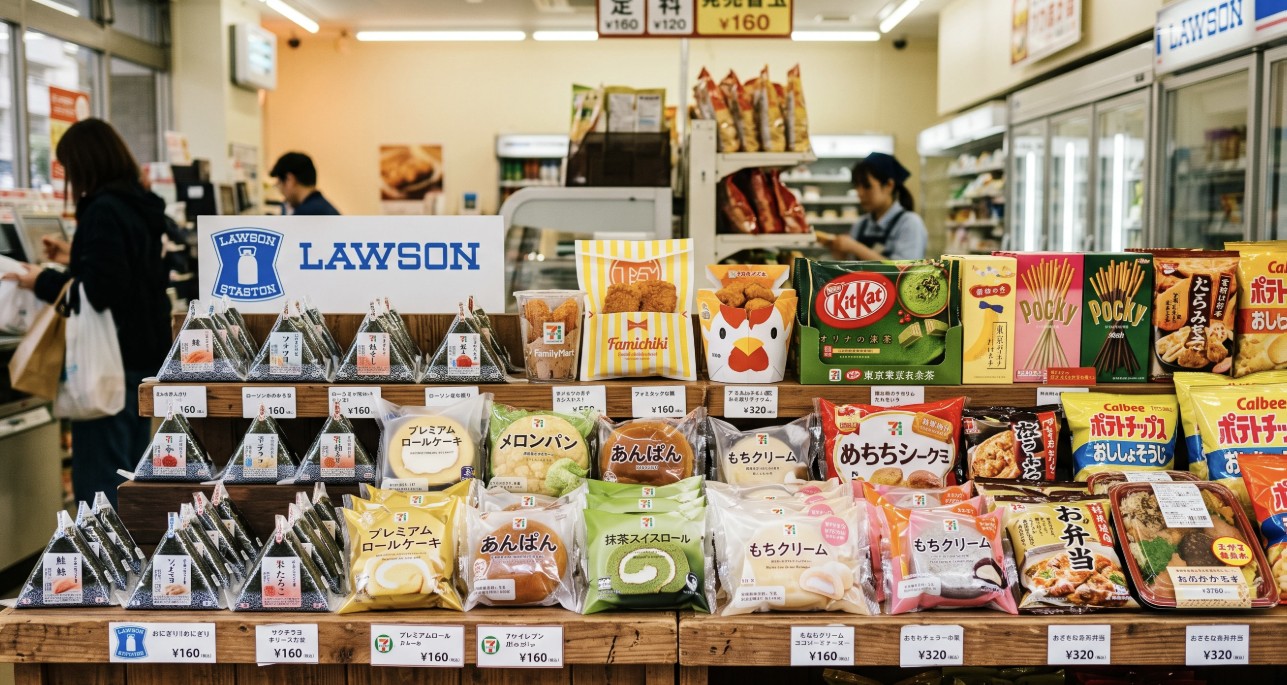
Japanese convenience stores, known as konbini (コンビニ), are an excellent place to pick up quick meals, drinks, snacks and desserts while travelling in Japan. Lawson (ローソン) and 7‑Eleven Japan (セブン‑イレブン) both sell a wide range of ready-to-eat food, from onigiri and sandwiches to fried foods and seasonal sweets.
Stock, recipes, package sizes, allergens and regional availability change regularly, so this guide focuses on reliable product categories and long-running favourites rather than fixed prices or short-lived releases. Always check the label and in-store information before buying, particularly if you have dietary requirements.
Why Japanese Konbini Food Is So Popular
Japan’s major convenience-store chains offer far more than crisps and drinks. Most branches carry onigiri (rice balls), sandwiches, noodles, bento meals, salads, bakery products, hot snacks, desserts, coffee and a broad range of packaged food.
Convenience stores are found in cities, suburbs and many rural areas, and many branches operate around the clock. Individual opening hours and services can differ by location, so check the store listing if you are travelling late at night or visiting a smaller town.
Lawson vs 7‑Eleven: What to Try
Both chains refresh their food ranges frequently, but a few categories are dependable choices for first-time visitors. Treat the table as a practical starting point rather than a fixed menu: flavours, fillings and seasonal products can differ by prefecture and store.
| Food category | Lawson ideas | 7‑Eleven Japan ideas | What to check |
|---|---|---|---|
| Hot fried food | Karaage-kun (からあげクン) chicken bites; L-chiki fried chicken | Nanachiki (ななチキ) fried chicken and other counter snacks | Availability, ingredients and allergens vary by flavour and branch |
| Onigiri | Seaweed-wrapped rice balls with rotating fillings | Hand-rolled and premium-style onigiri with regional and seasonal options | Look for the filling and any allergen statement on the wrapper |
| Sandwiches | Egg, meat, salad and fruit-sandwich options, depending on store | Egg, ham, cutlet, salad and fruit-sandwich options, depending on store | Check the use-by date and keep chilled products cool |
| Desserts | Uchi Café (ウチカフェ) sweets, including roll cakes, puddings and seasonal desserts | Chilled desserts, choux pastries, puddings and seasonal sweets | Ranges change quickly and may vary by region |
| Warm snacks | Steamed buns (中華まん), roasted sweet potatoes and seasonal hot food | Steamed buns, hot snacks and seasonal counter items | Some warm products are seasonal and not sold year-round |
Best Lawson Food to Look For
Lawson is particularly well known for its fried-food counter and Uchi Café desserts. The best approach is to browse the chilled cabinets and counter display on the day, as flavours change often and some products are regional or limited editions.
- Karaage-kun (からあげクン): Lawson’s long-running bite-size fried chicken line. The standard and limited flavours change, so check the current label for ingredients and allergens.
- L-chiki: A larger piece of fried chicken sold from the hot-food counter; availability and flavours vary by branch.
- Uchi Café (ウチカフェ) desserts: Lawson’s own dessert range, known for chilled sweets such as roll cakes, puddings, cream-filled pastries and seasonal collaborations.
- Onigiri: A practical breakfast, train snack or light meal. Common fillings may include salmon, tuna mayonnaise, umeboshi, kombu and seasonal combinations.
- Chūkaman (中華まん): Steamed buns sold from a heated case, often with savoury fillings and occasional sweet varieties. These are especially common in cooler months.
Best 7‑Eleven Japan Food to Look For
7‑Eleven Japan has an extensive ready-to-eat range, including hot snacks, onigiri, sandwiches, chilled desserts and meals that staff can often heat on request. Product names and menus vary by region, so choose based on what is freshest and most appealing in the branch you visit.
- Nanachiki (ななチキ): A popular fried chicken item sold from the hot-food counter. It contains chicken and listed allergens, so check the current product label if you have dietary restrictions.
- Onigiri: Seaweed-wrapped rice balls are available in a broad mix of classic, premium-style and seasonal fillings.
- Sandwiches: Egg, ham, cutlet, salad and fruit sandwiches are common chilled options. They are best eaten promptly and kept refrigerated until you are ready.
- Chilled sweets: Look for cream puffs, puddings, Japanese-style parfaits and seasonal desserts in the chilled cabinet.
- Ready meals: Bento, pasta, gratin-style dishes, noodles and rice bowls can be useful for a simple hotel meal or train journey, subject to storage instructions.
How to Choose Konbini Food
- Check the use-by date: Refrigerated meals, sandwiches and desserts carry date and storage information on the packaging. Choose an item that you can eat within the stated time and store correctly.
- Browse the seasonal displays: Look for 季節限定 (seasonal limited edition) or 期間限定 (limited-time only) on packaging. These products are often tied to ingredients or events such as sakura season, autumn sweet potato, chestnut or regional fairs.
- Ask for heating if needed: At the till, staff may ask whether you would like a bento, pasta dish or other microwaveable item warmed. A simple “atatemasu ka?” means “Would you like it heated?”
- Use the in-store microwave only when permitted: Follow staff instructions and packaging guidance. Not every product should be microwaved in its original container.
- Try a balanced combination: Pair an onigiri or sandwich with salad, fruit, yoghurt or a drink rather than relying entirely on fried snacks.
Dietary and Allergen Advice
Do not assume that a product is vegetarian, vegan, halal, alcohol-free or suitable for a particular allergy from its name alone. Japanese packaged food labels provide ingredient and allergen information, but recipes and suppliers can change, and English translations are not guaranteed.
- Vegetarian and vegan travellers: Read the full ingredient label. Even apparently simple foods such as rice balls, sauces, soups and vegetable dishes may contain fish stock, meat extract, gelatine, egg or dairy.
- Muslim travellers: Do not assume a dedicated halal section or halal certification at Lawson or 7‑Eleven Japan. Check ingredients carefully and choose independently certified products where certification is required for your needs.
- Allergies: Check the package every time, including when buying a familiar item. Lawson and Seven & i provide product and allergen information, but the package label is the most relevant source for the item in your hand.
- Useful Japanese: “Niku nashi” (肉なし) means “without meat”, “sakana nashi” (魚なし) means “without fish”, and “arerugī ga arimasu” (アレルギーがあります) means “I have an allergy”. These phrases can help, but packaging remains essential for ingredient verification.
For serious allergies or strict dietary requirements, choose products only after reading the current package label and, where needed, seek advice from an appropriate specialist source. Convenience-store staff may not be able to confirm cross-contact or every ingredient in a product.
Payment and Practical Tips
Convenience stores are useful for more than food. Many branches provide ATMs, drinks, basic travel supplies and payment services, but facilities vary by location. 7‑Eleven Japan provides visitor information on its official website, including accepted card types and in-store services.
- Carry some Japanese yen, particularly outside major city centres or when visiting small independent shops alongside convenience stores.
- Credit and debit cards, contactless payment and transport IC cards may be accepted, but payment options vary by store and card issuer.
- Keep chilled food cool, especially in summer, and eat it within the date and storage guidance printed on the pack.
- Use the official store locators when you need a specific branch, ATM or service rather than relying on general search results.
Frequently Asked Questions
Is convenience-store food safe in Japan?
Packaged food is labelled with storage and use-by information. Buy items that are properly chilled or heated as appropriate, follow the instructions on the package, and avoid eating food after its stated date.
What is the best first konbini meal to try?
A simple starting point is an onigiri, sandwich or bento paired with a drink and a dessert. If you eat meat, Lawson’s Karaage-kun or 7‑Eleven’s Nanachiki are widely recognised hot-snack choices, subject to branch availability.
Can staff heat my convenience-store meal?
Many branches can heat suitable bento, pasta and rice dishes at the till. Staff will normally ask, but you can also point to the item and ask “atatemasu ka?” if you would like it warmed.
Are Japanese convenience stores open 24 hours?
Many are open 24 hours, but this is not universal. Opening times, food counters and services can vary by branch, especially in smaller towns or rural locations.
Are Lawson and 7‑Eleven snacks vegetarian or halal?
Some individual products may suit certain diets, but neither suitability nor certification should be assumed from the product name. Read the current ingredients and allergen information on each package before purchasing.
Official Links and Useful Resources
- Lawson Japan official website
- Lawson official fried-food range
- Lawson product, nutrition and allergen information
- 7‑Eleven Japan official website
- 7‑Eleven Japan visitor information
- Japan National Tourism Organization
Final Tip
The most enjoyable way to experience Japanese convenience-store food is to browse with an open mind. Pick one familiar item, one local or seasonal product, and one sweet treat, then check the packaging carefully and enjoy it while it is fresh.