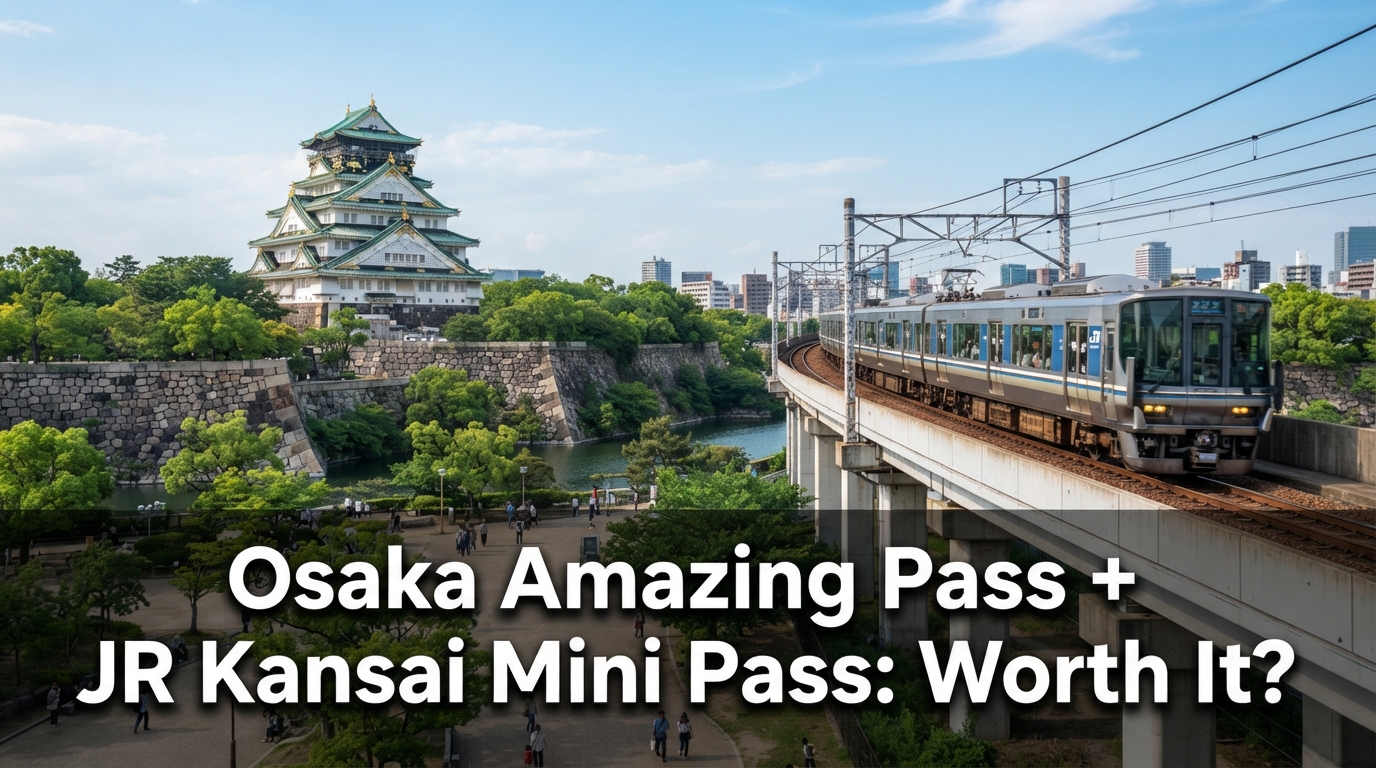
Planning Osaka, Kyoto, Kobe and Nara in one trip? Combining the Osaka Amazing Pass (大阪周遊パス, Ōsaka Shūyū Pass) with the JR Kansai Mini Pass, officially called the WEST QR Kansai Mini Pass (WEST QR 関西ミニパス), can be good value when you use each pass for a different purpose.
The Osaka Amazing Pass is built around sightseeing in Osaka itself, while the JR Kansai Mini Pass covers eligible ordinary JR travel across part of the Kansai region. Neither is a complete Kansai transport solution, and the two products are not interchangeable. The combination suits travellers who want one busy Osaka attraction day followed by three consecutive days of JR trips to Kyoto, Kobe and Nara — a pattern that fits well with a broader Kansai itinerary that also includes time in other major Japanese cities before or after the Kansai leg.
This Osaka transport pass guide explains which journeys each product covers, where you will still need an ICOCA card or a separate ticket, and how to avoid paying for rail coverage that does not match your actual itinerary.
Osaka Amazing Pass vs JR Kansai Mini Pass: Know the Names
| Pass | Japanese name | Current price (adult) | Best use |
|---|---|---|---|
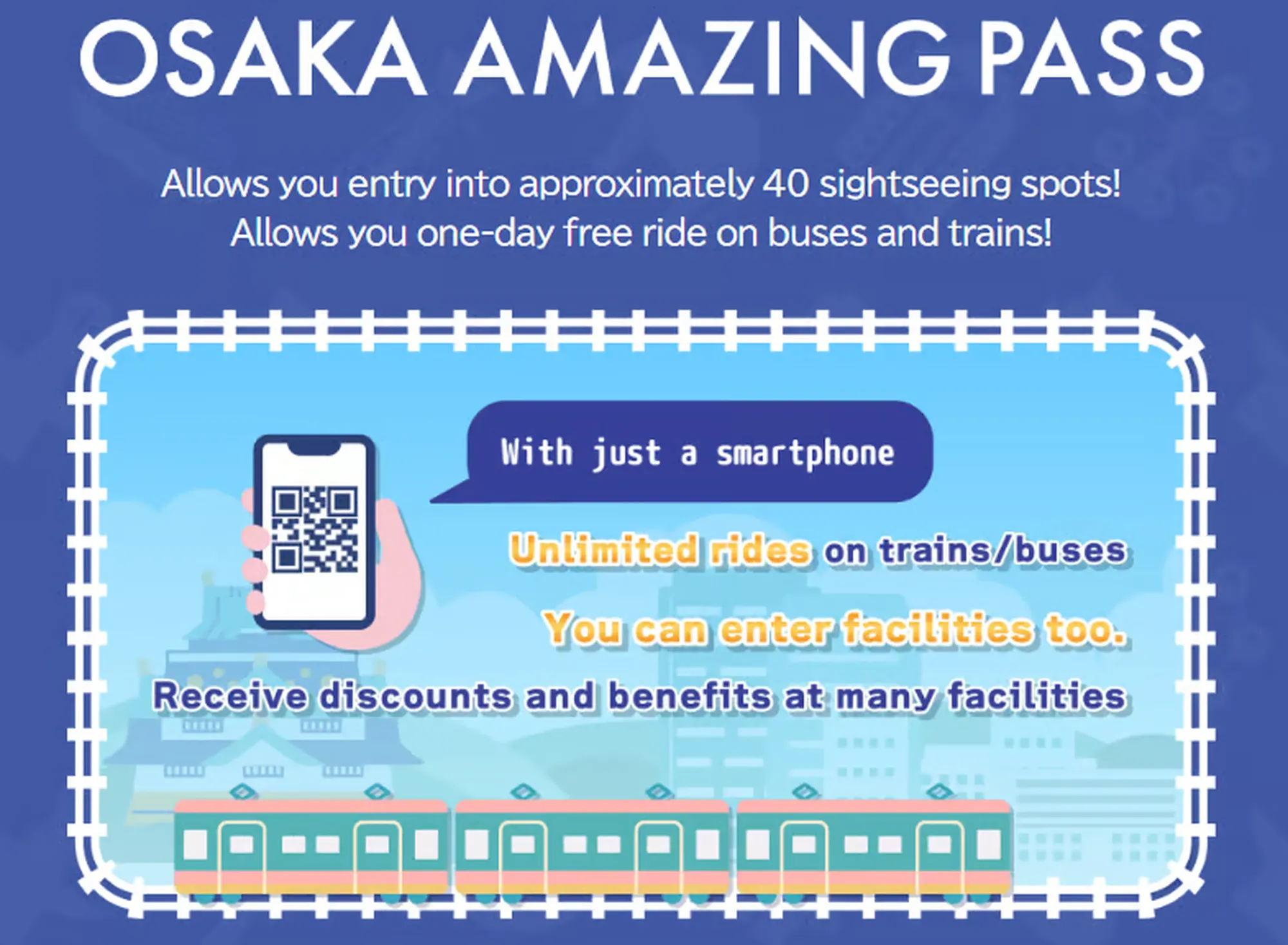
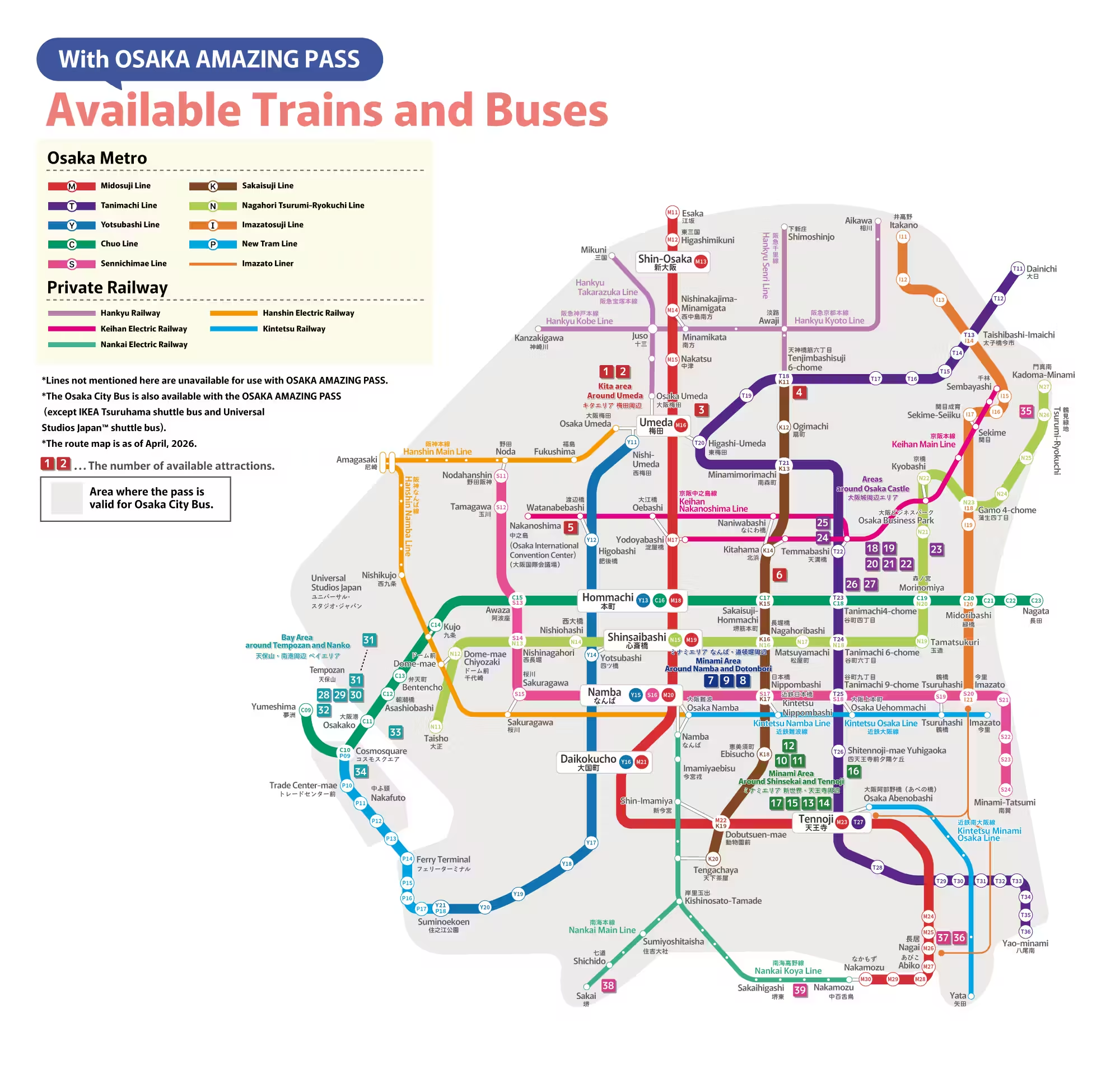
| Osaka Amazing Pass | 大阪周遊パス Ōsaka Shūyū Pass | ¥3,500 (1-day) / ¥5,000 (2-day) | Eligible Osaka attractions plus Osaka Metro, city buses and eligible private railways included in the current version of the pass. |
| WEST QR Kansai Mini Pass | WEST QR 関西ミニパス | ¥3,000 for 3 consecutive days | Three consecutive days of eligible ordinary JR travel in the designated area. |
| Osaka e-Pass | 大阪楽遊パス Ōsaka Rakuyū Pass | From around ¥2,400 (1-day) | Digital attraction admission without ordinary public-transport fares. |
| Enjoy Eco Card | エンジョイエコカード | ¥820 weekdays / ¥620 weekends and holidays | One-day Osaka Metro and eligible Osaka City Bus travel. |
These names matter because online pass comparisons often mix them up. The Osaka e-Pass is an attraction product; it does not include ordinary train and bus fares, so you would need to add a Metro day pass or pay-as-you-go ICOCA journeys on top. The Osaka Amazing Pass, by contrast, bundles sightseeing benefits with eligible transport, though the exact participating attractions and transport rules can change between sales periods — the current edition runs from 25 March 2026 to 31 March 2027, and a separate 28-hour Kansai International Airport (KIX) version is scheduled to go on sale from 1 October 2026. Always check the current information on the official Osaka Amazing Pass website before committing to a date.
Use Each Kansai Transport Pass Differently
The most efficient Osaka Amazing Pass and JR Kansai Mini Pass strategy is to separate the days. Use the Osaka sightseeing pass for a packed day in the city, then start the three-day JR pass once you are ready for consecutive journeys to Kyoto, Kobe and JR Nara.
Do not activate both passes on the same day merely because both are available. There may occasionally be a reason to do so, but most visitors get better value by avoiding duplicated coverage around central Osaka. A carefully planned route matters more than owning the largest number of tickets.
Before buying, note where you are staying and which station is closest. Hotels near Osaka Station or Shin-Osaka may suit JR-heavy day trips, while a base in Namba, Shinsaibashi or Dotonbori often means more reliance on Osaka Metro, Nankai or Kintetsu services. That difference can change whether a Kansai railway pass is worthwhile at all, and it is worth mapping against your planned shopping stops — the same logic that applies when weighing up shopping-district transport links in Tokyo applies equally in Osaka.
Klook.comWhat the JR Kansai Mini Pass Covers
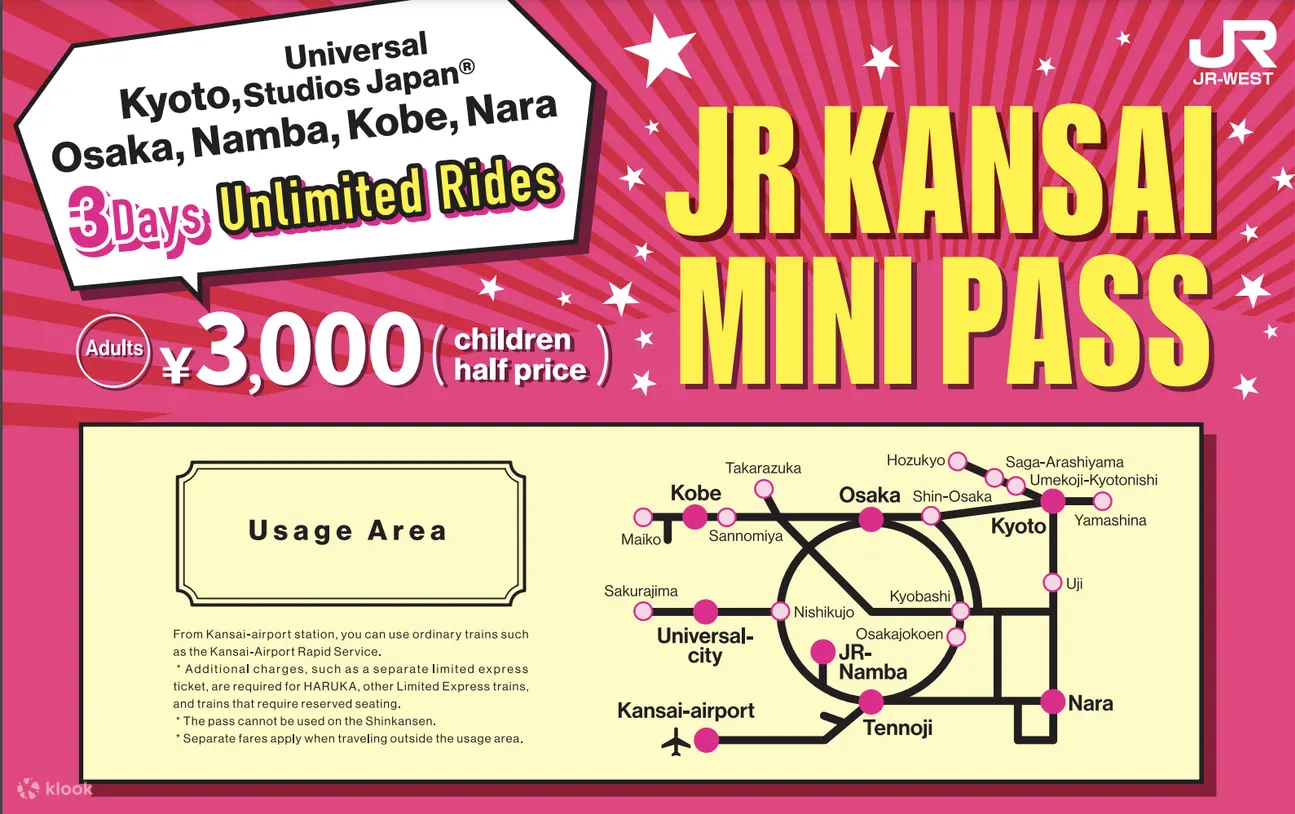
The WEST QR Kansai Mini Pass is a digital JR West product for international visitors entering Japan with Temporary Visitor status (短期滞在, Tanki Taizai). It costs ¥3,000 for adults and ¥1,500 for children aged 6–11, and it is valid for three consecutive days on eligible ordinary JR trains within the designated free-travel area, including Local, Rapid and Special Rapid services.
For an Osaka–Kyoto–Kobe–Nara rail pass itinerary, ordinary JR services are useful between Osaka and Kyoto, Osaka and Kobe, and Osaka and JR Nara. It is especially practical if your hotel is near a JR station and you are content to use JR for the main intercity legs.
- The pass does not cover the Tōkaidō or Sanyō Shinkansen; separate basic fare and limited express tickets are required.
- The pass does not include Limited Express services, including the HARUKA airport train, without a separate limited express ticket.
- Reserved or paid seating on eligible ordinary trains (such as A-seat carriages) requires an extra charge.
- It does not cover Osaka Metro, Osaka City Bus, Kintetsu, Hankyu, Hanshin, Keihan or Nankai services.
- A smartphone and working internet connection are required to display the live QR boarding code; a companion’s phone can display it if you are travelling together.
- A screenshot or printed QR code cannot replace the live ticket, and the pass is valid from 4:00am on the start day until midnight on the final day.
Read the current conditions on the official JR West Kansai Mini Pass page before purchase. QR ticket rules, service conditions and the valid travel area should always be checked again shortly before departure, since JR West states that fares and terms are subject to change.
Once your Kyoto, Kobe and Nara days are fixed, compare the current price and booking conditions before you buy. The Mini Pass works best when you will use ordinary JR services on all three consecutive days — if even one day relies mostly on private railways, run the maths against single tickets first.
When the Osaka Amazing Pass Pays
The Osaka Amazing Pass is most useful when you have a full, attraction-heavy Osaka day. At ¥3,500 for the 1-day version, the pass pays for itself quickly: Osaka Castle’s main tower alone costs ¥1,200 for adults, and stacking two or three more paid attractions on top — such as the Umeda Sky Building’s Floating Garden observatory or Tsutenkaku Tower — can comfortably clear the break-even point in a single afternoon.
The pass is less useful for a relaxed day spent shopping in Shinsaibashi, eating in Dotonbori or browsing Kuromon Market, because none of those activities carry an admission fee that the pass would offset. Plan your Osaka Amazing Pass day by grouping places geographically rather than chasing every possible inclusion. For example, make Osaka Castle and the eastern side of the city one part of the day, then move towards Umeda, Nakanoshima, Tennoji or Shinsekai depending on the live attraction list and opening hours.

Osaka Castle (大阪城, Ōsaka-jō) is one of the city’s most recognisable landmarks. The current reconstructed main keep functions as a museum with an observation deck, and the surrounding castle grounds — free to enter — include stone walls, moats and historic structures such as the Otemon Gate. Main tower admission costs ¥1,200 for adults and ¥600 for college and high-school students; the tower is open 9:00am to 5:00pm with last admission at 4:30pm, though hours can shift for seasonal events, so check current ticketing, exhibitions and opening information directly through the official Osaka Castle website.
For a Metro-focused day without multiple paid attractions, compare the official Enjoy Eco Card information, which currently costs ¥820 on weekdays and ¥620 on Saturdays, Sundays and public holidays, inclusive of the station accessibility fee. If you want attraction entry but prefer to pay for travel separately, consult the official Osaka e-Pass guide, where 1-day passes start from roughly ¥2,400 and 2-day passes from around ¥3,000, depending on the current promotion.
If you have identified enough eligible attractions for one busy day, it is worth comparing the current digital-pass price before you finalise your schedule. It is also worth browsing a wider list of Klook Japan attraction passes in case a city-specific bundle suits your dates better than the standard Osaka pass.
A 5-Day Osaka, Kyoto, Kobe and Nara Plan
Day 1: Arrive without activating
Unless you have several eligible JR journeys planned after landing, do not activate the three-day pass on arrival. Flight delays, immigration queues, luggage collection and hotel check-in can turn an intended sightseeing day into a short evening. Save the three consecutive days for the part of the trip when you will definitely use them.
From Kansai International Airport, choose your train based on your hotel location rather than brand loyalty. Nankai Railway is often convenient for Namba, while JR routes can work better for Tennoji, Osaka Station, Umeda and Shin-Osaka. The Mini Pass does not include the Limited Express HARUKA, so treat airport transport as a separate decision, and buy an ICOCA IC card on arrival for any journeys that fall outside your passes.
Klook.comDay 2: Osaka sightseeing with the Osaka Amazing Pass
Use the Osaka Amazing Pass on your busiest city day. Start early, confirm final-entry times and leave breathing room for queues. A realistic itinerary with several attractions in connected districts will deliver more value than an over-packed list that leaves you outside a venue after its last admission.

Osaka Metro is usually the most useful network for central sightseeing. The Midosuji Line (御堂筋線, Midōsuji-sen) connects Umeda, Shinsaibashi, Namba and Tennoji, while other lines provide access to Osaka Castle, Osaka Bay and the city’s museums, shopping streets and entertainment areas.
Day 3: Kyoto by JR Kansai Mini Pass
Start the JR Kansai Mini Pass for Kyoto if an ordinary JR route fits your plan. Kyoto Station is useful for the JR Nara Line towards Fushimi Inari Taisha and the JR Sagano Line towards Arashiyama. This makes a Kansai Mini Pass itinerary practical for travellers who begin with stations served directly by JR.

Fushimi Inari Taisha (伏見稲荷大社, Fushimi Inari Taisha) stands beside JR Inari Station. The shrine is known for its long path of vermilion torii gates climbing Mount Inari, and the main grounds can be visited at any time, free of charge. Check access guidance, visitor notices and festival information on the official Fushimi Inari Taisha website.
JR coverage does not mean every Kyoto journey is included. Gion (祇園, Gion), Higashiyama (東山, Higashiyama), Kawaramachi (河原町, Kawaramachi) and many temple districts are often easier to reach by Keihan Railway, Hankyu Railway, Kyoto City Bus or Kyoto Subway. Keep an ICOCA card for these separate journeys. If you have an extra afternoon in Kyoto, it is also worth comparing the city’s immersive art venues, since the choice between teamLab Biovortex Kyoto and the Tokyo teamLab museums depends heavily on which leg of your trip has spare time.
Day 4: Kobe by JR Kansai Mini Pass
Kobe is a straightforward JR day trip from Osaka, with Sannomiya (三ノ宮, Sannomiya) serving as a useful arrival area. From there, you can walk towards Kitano, the harbour or Nankinmachi (南京町, Nankinmachi), Kobe’s Chinatown.
Nankinmachi is managed by the Nankinmachi Shopping District Promotion Association and has no single district-wide closing day; shop hours and closures vary by business. Use the official Nankinmachi website to check its map, events and individual shop information.
Continue towards Meriken Park (メリケンパーク, Meriken Pāku) for views across Kobe’s waterfront, including Kobe Port Tower. For seasonal events and visitor information, see the official VISIT KOBE page for Meriken Park. Nearby Kobe Harbourland has its own official Harbourland website with shop, restaurant and event details.
Mount Rokko (六甲山, Rokkō-san) is a separate add-on rather than a natural extension of JR coverage. The cable car, buses and other mountain transport require separate fares. Check timetables and tickets through the official Rokko Cable website before setting out.
Day 5: Nara or another JR day
JR Nara Station is covered when it falls within the Mini Pass travel area, but it is not the closest rail station to Nara Park. Kintetsu-Nara Station is generally more convenient for Nara Park, Tōdai-ji and Kasuga Taisha, especially from Namba. Kintetsu is not included in the JR pass, so compare the time saved against the separate fare before deciding which station to head for.

Tōdai-ji (東大寺, Tōdai-ji) is home to the Great Buddha Hall (大仏殿, Daibutsuden) and is one of Nara’s key historic sites, part of the Historic Monuments of Ancient Nara UNESCO World Heritage listing. Its English-language official Tōdai-ji website publishes current worship, access and visitor information. Check it before travelling because hall access and opening hours can vary by season or event.
Klook.comWhen an ICOCA Card Beats Both Passes
An ICOCA card can be the most cost-effective option when your travel is spread across several operators. It is particularly useful for a Namba-based stay, Kyoto routes that rely on private railways, short Osaka Metro rides, buses and a Nara day trip using Kintetsu.
- You are staying in Namba and want the quickest route to Nara Park.
- Your Osaka itinerary focuses on food, shopping and neighbourhood walks rather than attraction admission.
- You plan to visit only one or two eligible Osaka attractions.
- Your Kyoto plans depend mainly on Keihan, Hankyu, buses or Kyoto Subway.
- Your day trips are not on three consecutive days.
- You are visiting Universal Studios Japan and do not have a separate Osaka sightseeing day.
An ICOCA card costs ¥2,000 when purchased through Klook with airport pick-up (¥500 refundable deposit plus ¥1,500 preloaded balance), or you can buy one directly at a JR West ticket machine or counter at Kansai Airport Station. If you return the card at a JR West service counter, a ¥220 handling fee is deducted from the ¥500 deposit refund. The card also unlocks a small discount on the HARUKA airport train when shown at the ticket counter, which is useful if your onward journey is not covered by either pass.
Klook.comCommon Osaka Amazing Pass and JR Kansai Mini Pass Mistakes
- Assuming the JR Kansai Mini Pass covers all public transport in Kansai.
- Expecting the pass to include the Shinkansen, HARUKA or every Limited Express service.
- Activating the Mini Pass on an airport-arrival day with little eligible travel.
- Buying an Osaka Amazing Pass without checking the current attraction list, final entry and reservation conditions.
- Confusing Osaka e-Pass admission with bundled public transport.
- Using JR for Nara solely because you have a pass when Kintetsu is more convenient.
- Depending on a QR-ticket screenshot rather than the live ticket in the official system.
- Applying an Osaka-style pass strategy to a different region without checking local rules, the same trap that catches travellers comparing rail passes on a separate Sapporo to Otaru day-trip route in Hokkaido.
Is the Combination Worth It?
The Osaka Amazing Pass and JR Kansai Mini Pass combination can offer good value for first-time visitors who will complete a full Osaka attraction day and then use ordinary JR services for three consecutive days. Together, the two passes cost roughly ¥6,500 for an adult (¥3,500 plus ¥3,000), which is easily recovered if your itinerary includes Osaka Castle, one or two more paid attractions, and JR-based day trips to Kyoto, Kobe and Nara. It is less suitable for slower trips, shopping-led itineraries and routes dominated by private railways.
Finalise your hotel first, map every important journey and identify the operator for each one. Then compare current pass conditions with likely individual fares. That simple calculation is the most reliable way to protect your Osaka travel budget while still keeping the itinerary flexible.
Klook.com