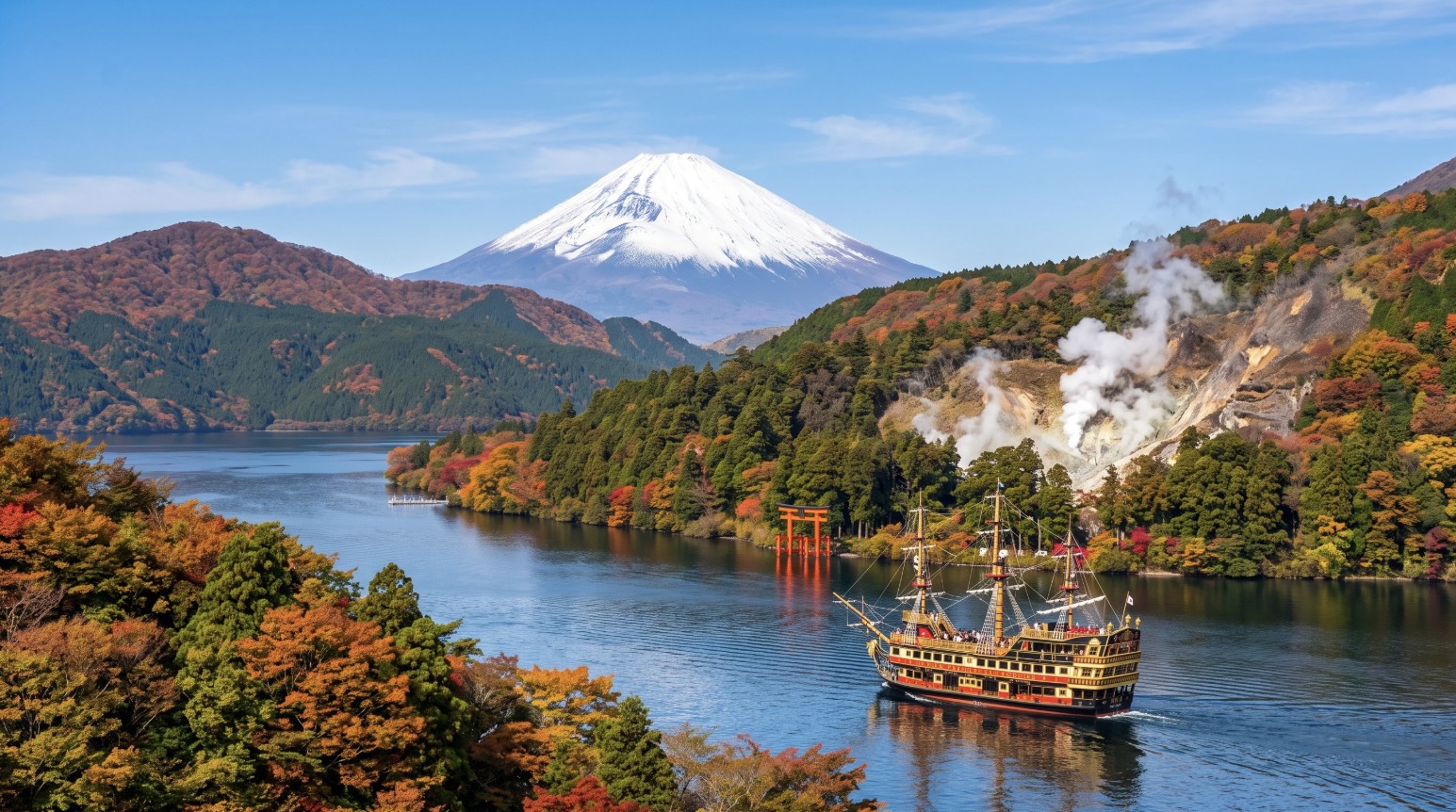
Day trips from Tokyo (東京) to Mount Fuji (富士山) and Hakone (箱根) rank among the most popular excursions for visitors who want to see Japan’s natural scenery without leaving the capital region overnight. Both areas combine iconic mountain views, relaxing hot springs and cultural sights, all reachable on efficient train and bus routes within a single day. This guide covers the main travel options, top itineraries and booking tips for planning a smooth trip.
Why This Route Is So Popular from Tokyo
Mount Fuji is Japan’s tallest peak and one of its most recognisable symbols, while Hakone offers hot spring baths (onsen), the volcanic scenery of Lake Ashi, and several notable art museums. Reliable train and bus connections make it realistic to see the highlights of either area, or a combination of both, within a single long day from Tokyo.
- Fuji visibility: Clear mornings, particularly in winter, tend to offer the best chance of an unobstructed view of the mountain.
- Hot springs and lake cruises: Hakone has numerous onsen facilities and sightseeing boats on Lake Ashi (芦ノ湖).
- Direct transport links: Fast train and bus services allow an early start with a same-day return to Tokyo.
- Varied activities: The area mixes natural scenery with art museums, cable cars, volcanic valleys and lakeside walks.
Transport Methods: Train, Bus or Guided Tour
The way you travel affects both your itinerary and your budget. Here is how the main options compare.
| Method | Duration (one-way) | Typical Fare | Flexibility |
|---|---|---|---|
| Odakyu Romancecar or JR Fuji Excursion | Around 1.5 to 2 hours | Approx. 4,200 yen (Shinjuku to Kawaguchiko), or covered by Hakone Freepass to Hakone-Yumoto | High, set your own pace |
| Highway bus | Around 2 to 2.5 hours | Approx. 1,900 to 2,300 yen one way to Kawaguchiko | Medium |
| Guided day tour | Varies, roughly 10 hours round trip | Varies by operator and inclusions | Low, fixed itinerary |
Rail passes and the Fuji Excursion limited express can be booked through JR East or via Klook’s Fuji Excursion ticket page. Guided day tours bundling transport, lunch and entry fees are available through Klook and Trip.com.
Main Day Trip Routes
- Mount Fuji and Kawaguchiko (河口湖) focused: Chureito Pagoda (忠霊塔), Lake Kawaguchi, the Mount Fuji 5th Station (富士山五合目), and nearby museums.
- Hakone nature and onsen focused: Lake Ashi, the Hakone Ropeway (箱根ロープウェイ), Owakudani Volcanic Valley (大涌谷), the Hakone Open-Air Museum, and hot spring baths.
Combining both destinations in one day is possible but ambitious, and generally works best with an early start and a pre-planned pass such as the Hakone Freepass (箱根フリーパス) or the Fuji Hakone Pass, both covering transport across the two areas.
Essential Tickets and Passes
- Hakone Freepass: Covers unlimited use of Odakyu-affiliated trains, buses, boats, cable cars and the ropeway within the Hakone area for two or three consecutive days. The 2-day pass costs 7,100 yen including a round trip from Shinjuku, or 6,000 yen if purchased within the free area itself (e.g. at Odawara). A Romancecar seat reservation costs an extra 1,200 yen each way if used. Purchase via Odakyu’s official Hakone Freepass page.
- Fuji Hakone Pass: A three-day pass for non-Japanese passport holders covering transport around both Hakone and the Fuji Five Lakes area, plus a round trip from Shinjuku, priced at 11,100 yen for adults.
- Fuji Excursion Limited Express: A direct reserved-seat train from Shinjuku to Kawaguchiko, priced at 4,200 yen one way. Book via JR East or Klook.
- Guided tour bundles: For a fixed itinerary with English-speaking guides, book through Klook or Trip.com, checking current inclusions before booking.
Top Itinerary Highlights
Classic Mount Fuji Day Trip
- Chureito Pagoda (忠霊塔): A well-known photo spot pairing the five-storey pagoda with Mount Fuji in the background, especially striking during cherry blossom season.
- Mount Fuji 5th Station (富士山五合目): Reachable by bus, sitting at roughly 2,300m, giving a close view of the mountain without a full climb.
- Lake Kawaguchi (河口湖): A relaxed spot for lakeside walks, boat rides and cafes, with Fuji-Q Highland amusement park nearby.
- Kawaguchiko Music Forest Museum (河口湖音楽と森の美術館): Features antique automatic organs and music boxes alongside European-style gardens.
Essential Hakone Experiences
- Hakone Open-Air Museum (箱根彫刻の森美術館): Outdoor sculpture park including a dedicated Picasso exhibition hall, set against a mountain backdrop.
- Hakone Ropeway (箱根ロープウェイ) and Owakudani (大涌谷): The ropeway passes directly over the volcanic Owakudani valley, where the local black eggs (黒たまご) are a popular snack. Round trip fare is 3,000 yen, and the ropeway is covered by the Hakone Freepass. Note that sections occasionally close temporarily for scheduled maintenance, with replacement buses running during closures, so check current operating status before your visit.
- Lake Ashi Cruise (芦ノ湖遊覧船): Sightseeing boats, including pirate ship-style vessels, cross the lake, with Mount Fuji visible from the water on clear days.
- Onsen baths: Numerous hot spring facilities are accessible around Hakone, ranging from day-use baths to hotel-based onsen.
Combining Both Destinations in One Day
An early departure from Shinjuku on the Odakyu Romancecar to Hakone-Yumoto (箱根湯本), paired with a Hakone Freepass, allows time for the Open-Air Museum and the ropeway before a midday cruise on Lake Ashi. From there, onward travel to Gotemba (御殿場) or Kawaguchiko is possible by bus or train, allowing a brief visit to Fuji-area sights before returning to Tokyo. This is a demanding schedule, and is best suited to travellers comfortable with a fast-paced day.
Practical Tips
- Weather: Mount Fuji is often obscured by cloud, particularly in summer. Clear mornings outside the rainy season, from roughly October to March, offer the best visibility.
- Pack layers: Hakone and the Fuji Five Lakes area tend to be noticeably cooler than central Tokyo, even in summer.
- Luggage storage: Coin lockers at Shinjuku, Hakone-Yumoto and Kawaguchiko stations are useful for travelling light on a day trip.
- IC cards: Suica and PASMO work on most local buses and trains, though some cable car and ropeway tickets may require a separate paper ticket or pass.
- Connectivity: A Japan eSIM, such as one from Airalo, or a rented pocket Wi-Fi device, helps with navigation and checking train times on the go.
- Advance booking: Weekends and Japanese public holidays bring larger crowds, and reserved-seat tickets for the Fuji Excursion can sell out, so booking ahead is worthwhile once your dates are fixed.
Best Time of Year to Visit
Cooler months from October to March generally offer the clearest views of Mount Fuji, often with snow on the summit. Cherry blossom season, from late March into April, is popular but can bring haze that obscures the mountain. Summer tends to be green but cloudier, while early November is a strong choice for autumn foliage across Hakone.
Booking Resources
- Airalo eSIMs: A convenient way to stay connected in Japan for navigation and checking transport schedules. Airalo Japan eSIM
- Klook and Trip.com: Useful for booking rail tickets, guided tours and some attraction entry in English ahead of your trip.
- Official tourism resources: Always confirm current opening hours, ropeway status and pass pricing on the JNTO official guide and Japan Travel planning hub before setting out.
Frequently Asked Questions
Can I visit both Mount Fuji and Hakone in one day?
Yes, with an early start and careful planning it’s possible to see highlights such as the Hakone Open-Air Museum and Lake Ashi before travelling on to Kawaguchiko or the Fuji 5th Station, though it makes for a long and fast-paced day.
Is the Hakone Freepass worth it for a day trip?
For visitors planning to use the ropeway, cable car and a lake cruise in the same day, the Freepass often works out more cost-effective than paying for each separately, while also including transport from Shinjuku.
Which day tours include English-speaking guides?
Klook and Trip.com both list guided day tours to Mount Fuji and Hakone with English-language support, typically including transport, lunch and entry fees, though inclusions vary by operator.
What if Mount Fuji is covered in cloud on the day?
This is common, particularly outside winter. Hakone’s museums, onsen baths and lake cruises remain worthwhile even without a clear view of the mountain, making it a reasonable backup plan for the day.
Bookmark this guide before your trip, and check official Odakyu, JR East and Hakone tourism sites closer to your travel dates for the latest pass pricing and any seasonal ropeway closures.