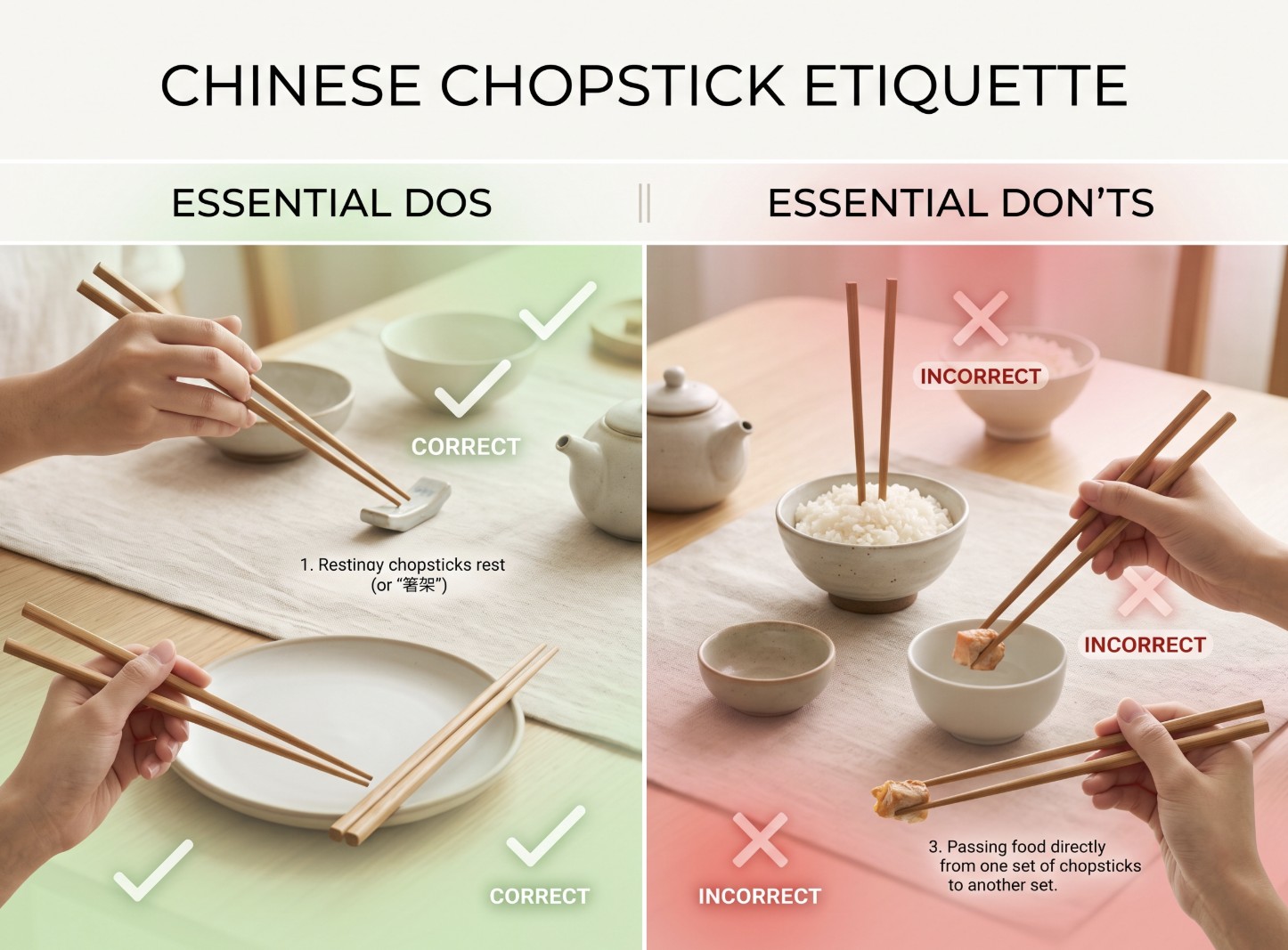
Chinese chopstick etiquette is mainly about consideration: wait for the host or senior diners to begin, use serving utensils for shared dishes where they are provided, and avoid gestures that make the table uncomfortable. The most important rule for travellers is simple: follow the lead of your host and the restaurant’s set-up. Customs vary between regions, families and formal occasions, so good manners matter more than trying to memorise every superstition.
Chinese Chopstick Etiquette at a Glance
At a relaxed family meal, nobody expects a visitor to perform every custom perfectly. However, a few habits are widely appreciated: take food neatly, avoid waving chopsticks around, and keep the ends that touch your mouth away from communal dishes. If a host offers a particular dish or serves food into your bowl, accept it graciously unless you have a dietary requirement.
| Situation | Respectful approach | Avoid |
|---|---|---|
| Shared dishes | Use communal chopsticks or a serving spoon when supplied. | Eating directly from the serving plate. |
| Starting the meal | Wait for the host to invite everyone to begin; at family meals, let elders start first. | Immediately helping yourself before others are ready. |
| Putting chopsticks down | Use a chopstick rest, or lay them neatly across your bowl or plate if appropriate. | Standing them vertically in rice or food. |
| Choosing food | Take a piece cleanly and without disturbing the dish. | Searching through a shared plate for a preferred piece. |
| Conversation | Keep chopsticks still when speaking. | Pointing, drumming, gesturing or playing with them. |
A Short History of Chopsticks
Chopsticks originated in China and were in use by at least the Shang dynasty. Early forms were likely practical implements for handling food in cooking vessels, before chopsticks developed into everyday eating utensils. From China, chopstick use spread across East Asia, where materials, shapes and table customs developed differently in places including Japan, Korea and Vietnam.
It is tempting to explain the rise of chopsticks with one neat story, such as food being cut small to save fuel. In reality, food culture changes through many connected factors: cooking methods, available materials, social custom and regional taste. For a traveller, the useful point is that Chinese chopsticks are generally longer and have blunter ends than many Japanese styles, making them well suited to shared dishes placed in the middle of the table.
Why Are Chopsticks Called 筷子?
In Mandarin, chopsticks are called 筷子 (kuàizi). The first character, 筷, contains the bamboo radical 竹, reflecting the historical importance of bamboo as a chopstick material. Its pronunciation is connected with 快 (kuài), meaning “quick”. Chinese vocabulary has changed over centuries and differs across Sinitic languages, so it is best not to treat one popular origin story as a universal explanation for every Chinese-speaking community.
In Cantonese, chopsticks are commonly called 筷子, pronounced faai3 zi2. You may also see older or regional terms in historical writing. Learning the Mandarin word is useful in mainland China and widely understood, but a warm “thank you” and considerate table manners will always be more important than perfect pronunciation.
How to Hold Chinese Chopsticks
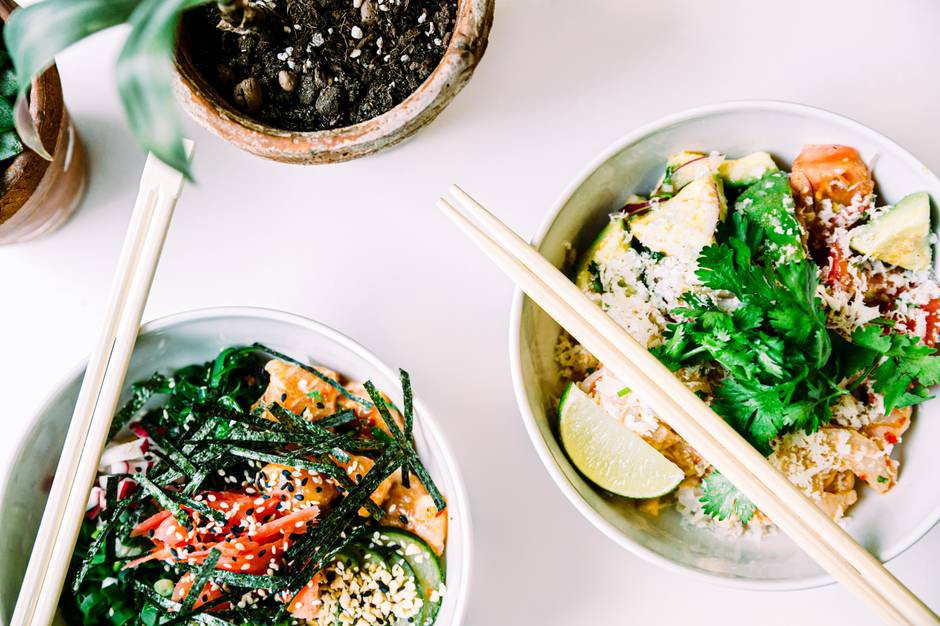
There is no need to feel self-conscious if you are still learning. Most hosts will value your effort, and many Chinese diners use slightly different grips. The common method is to rest the lower chopstick in the space between the thumb and index finger, supporting it against the ring finger. Hold the upper chopstick like a pencil and move only that one to open and close the tips.
- Place the lower chopstick securely in the base of your thumb and against your ring finger.
- Hold the upper chopstick between your thumb, index finger and middle finger.
- Keep the lower chopstick steady and move the upper chopstick to grip the food.
- Choose manageable pieces. It is perfectly acceptable to ask for a spoon, fork or knife if a dish is difficult to manage.
Chinese Chopstick Etiquette: What to Do
Chinese meals often involve shared dishes, especially at round tables. These practical habits help you join in politely without turning dinner into a test of etiquette.
- Wait until the host signals that the meal has begun. In many family and formal settings, elders or honoured guests are invited to start first.
- Use communal chopsticks, a serving spoon or other serving utensil for shared dishes when one is provided. In Chinese, communal chopsticks are called 公筷 (gōngkuài).
- Transfer food from a communal dish to your own bowl or small plate before eating it.
- Take food from the part of a shared dish nearest to you, rather than reaching across the table or moving food around.
- Accept a small offering of food from a host graciously where possible. If you cannot eat it, a brief and polite explanation is better than silently refusing it.
- Lift a small rice bowl towards your mouth if that is how those around you are eating. This is normal in many Chinese dining settings.
- Rest chopsticks on the holder supplied. If there is no rest, place them neatly on your bowl, plate or the provided wrapper, according to the table setting.

Chinese Chopstick Etiquette: What to Avoid
The following actions can be distracting, unhygienic or associated with funerary practices. They are easy to avoid and are more useful to know than a long list of supposed bad-luck rules.
- Do not stand chopsticks upright in a bowl of rice. This resembles incense used in offerings for the deceased and is widely regarded as inappropriate at the dining table.
- Do not point at people or gesture with chopsticks. Put them down before making a point in conversation.
- Do not tap bowls, plates or glasses with chopsticks. It creates unnecessary noise and can carry an association with begging in traditional etiquette.
- Do not spear food unless the host has clearly indicated that it is acceptable. Chopsticks are intended to grip food rather than stab it.
- Do not search through a communal dish, turn pieces over or leave food behind after touching it. Choose a piece decisively.
- Do not use chopsticks to drag bowls, move plates or reach for distant dishes. Ask someone to pass the dish instead.
- Do not lick, chew or hold chopsticks in your mouth. This is both unhygienic and impolite.
- Do not pass food directly from your chopsticks to another person’s chopsticks. Use a bowl, plate or serving utensil instead.
Serving Food and Modern Hygiene
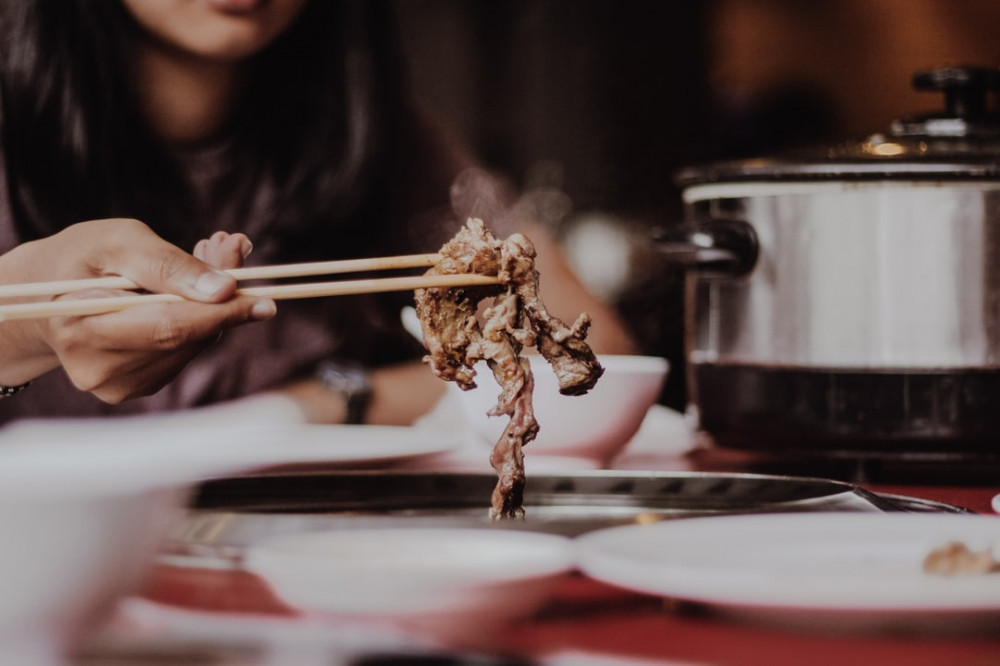
Table habits are not fixed in time. Communal chopsticks and spoons are now common in many restaurants and households, particularly when dishes are shared. Always use them when supplied. If there are no serving utensils, avoid assuming that there is one universal rule: observe the host and other diners, then follow their lead.
Some people use the clean, wider end of their own chopsticks to serve food when communal utensils are absent. This may be accepted in some informal settings, but it is not a substitute for serving utensils when they are available. If you are unsure, ask politely: “Would you like me to use these serving chopsticks?” That question shows far more consideration than trying to guess.
Chopstick Rests and Table Settings
A chopstick rest is called 筷子架 (kuàizijià) or 筷子座 (kuàizizuò) in Mandarin. Its purpose is practical: it keeps the eating ends of chopsticks off the table and stops them rolling away. You are more likely to see one at a formal meal or restaurant than at an everyday home dinner.
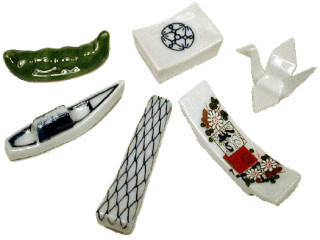
When a rest is provided, set your chopsticks down neatly rather than crossing them or leaving them in food. Placement can differ between restaurants and regions, so there is no need to reposition a formal setting that has already been laid out for you. Simply use the rest as intended and follow the host if you are dining in someone’s home.
The Best Rule for Travellers
Chinese dining etiquette is not about catching visitors out. It is a way of making a shared meal comfortable, clean and considerate. Start with the host, use the serving utensils provided, take food neatly and keep chopsticks away from gestures. If you make a small mistake, do not worry: a calm apology and a friendly attitude will be remembered far more than an imperfect grip.
Bookmark this guide before your next meal in China, Hong Kong, Taiwan or a Chinese restaurant at home. It covers the essentials, but the table itself is always the best guide: observe, adapt and enjoy the food.
Frequently Asked Questions
- Is it rude to ask for a fork in a Chinese restaurant? No. If you are finding chopsticks difficult, it is perfectly acceptable to ask politely for a fork or spoon.
- Can I use my own chopsticks to take food from a shared dish? Use communal chopsticks or serving spoons whenever they are provided. If there are no serving utensils, follow your host’s lead or politely ask what they prefer.
- Why should chopsticks not be placed upright in rice? Upright chopsticks resemble incense used in offerings for the deceased, so this placement is generally avoided at the dining table.
- What should I do with chopsticks when I have finished eating? Put them neatly on the chopstick rest if one is provided. Otherwise, place them together across your bowl or plate, following the table setting where possible.