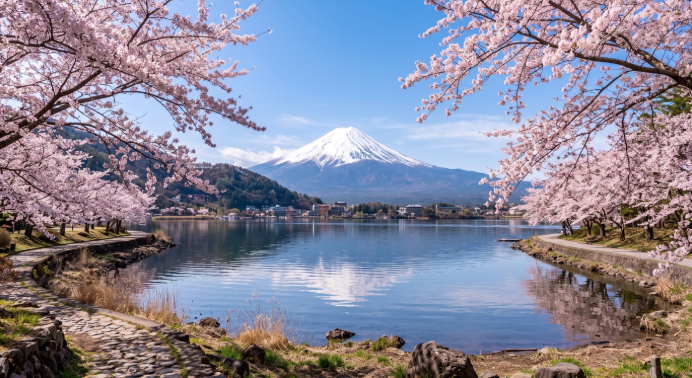
Japan is a year-round destination, but the best time to visit depends on what you want to experience. Spring is popular for cherry blossoms, summer for festivals and mountain trips, autumn for colourful foliage, and winter for snow sports and hot springs.
There is no single best season for the entire country. Japan stretches from snowy Hokkaido in the north to subtropical Okinawa in the south, so temperatures, rainfall, snowfall and seasonal highlights vary considerably by region.
Japan’s four seasons
- Spring: March to May
- Summer: June to August
- Autumn: September to November
- Winter: December to February
Japan has four distinct seasons, but local conditions can be very different at the same time of year. Hokkaido and mountain areas can have long, snowy winters, while Okinawa remains comparatively mild. Check the forecast and weather warnings for every destination on your itinerary shortly before travelling.
Spring in Japan: cherry blossoms and gardens
Spring is one of Japan’s busiest and most rewarding travel seasons. Cherry blossom season gradually moves northwards through the country, but flowering and full-bloom dates change every year according to local temperatures, altitude and weather conditions.
In Tokyo, Kyoto and Osaka, cherry blossoms often appear from late March into early April. Northern Japan, higher-altitude locations and Hokkaido usually see blossoms later. If sakura is a priority, check the latest regional forecast before confirming your itinerary.
- Best for: Cherry blossoms, gardens, city sightseeing and seasonal food.
- Weather: Days become warmer through the season, but mornings, evenings and wet days can remain cool.
- What to pack: Layers, comfortable walking shoes and a light waterproof jacket.
- Planning note: Accommodation and long-distance transport can be especially busy during blossom season and Golden Week.
Spring food differs between regions, but bamboo shoots, young greens, seasonal seafood and sakura-themed sweets are common. Local markets and neighbourhood restaurants are often good places to discover seasonal ingredients during your visit.
Summer in Japan: festivals, beaches and mountains
Summer varies greatly by location. In many parts of Japan, early summer brings a rainy period from around June into July. Hokkaido is less affected than much of the country, while Okinawa and Amami have different seasonal weather patterns.
After the rainy period, many cities become hot and humid. Tokyo, Kyoto, Osaka and much of western Japan can feel particularly warm during the day. Hokkaido, Tohoku and higher-altitude destinations may be more comfortable for walking, hiking and outdoor activities.
- Best for: Summer festivals, fireworks, beaches, diving and mountain walking.
- Weather: Hot and humid conditions are common in many cities; heavy rain and tropical cyclones can affect travel.
- What to pack: Light clothing, sun protection, a refillable water bottle and a compact umbrella or waterproof layer.
- Planning note: Plan demanding outdoor activities for mornings or evenings, and monitor official weather warnings.
Mount Fuji climbing is seasonal and subject to trail-specific opening dates, safety rules, access controls and possible registration requirements. Check the official climbing website shortly before travelling, and do not attempt an out-of-season climb.
Autumn in Japan: foliage and cooler weather
Autumn is popular for city sightseeing, temple visits, gardens and scenic walks. September can still be warm, wet and affected by tropical cyclones. Conditions often become cooler later in the season, although weather should never be assumed to be the same across the country.
Autumn foliage begins earlier in northern and mountainous regions, then progresses towards lower-altitude and more southerly areas. Kyoto, Nikko, Tokyo’s parks, Miyajima and mountain destinations are popular for autumn colour, but peak timing varies by year and location.
- Best for: Autumn foliage, temple gardens, walking, city breaks and scenic rail journeys.
- Weather: Temperatures generally fall through the season, but early autumn can still bring humidity and heavy rain.
- What to pack: Layers, a light coat and waterproof footwear for wet days.
- Planning note: Use local foliage forecasts rather than relying on one nationwide peak date.
Autumn is also a good time to look for chestnuts, sweet potatoes, mushrooms, apples, grapes and other regional harvest foods. Seasonal menus vary by prefecture, so local markets and small restaurants can provide a more useful guide than a generic national list.
Winter in Japan: snow sports and hot springs
Winter offers a very different side of Japan. Hokkaido, Tohoku, Nagano and other mountain regions are well known for skiing and snowboarding. Tokyo, Kyoto and Osaka are generally cold in winter, while Okinawa remains much milder than the main islands.
Heavy snowfall can affect northern, mountainous and Sea of Japan coast destinations. Check road, rail and resort conditions before travelling in winter, particularly if your itinerary includes remote areas or self-driving.
- Best for: Skiing, snowboarding, hot springs, winter scenery and seasonal seafood.
- Weather: Cold conditions, snow and possible transport disruption in northern and mountainous regions.
- What to pack: Warm layers, gloves, waterproof footwear and suitable outerwear for snow destinations.
- Planning note: Popular ski resorts and major winter events can be busy, so reserve accommodation early.
Hot springs can be enjoyed throughout the year, but winter is especially popular for outdoor baths in cold weather. Before booking an onsen stay, check the property’s bathing rules, tattoo policy, private-bath availability and reservation requirements.
Best time to visit key destinations
| Destination | Spring | Summer | Autumn | Winter |
|---|---|---|---|---|
| Tokyo | Cherry blossoms, gardens and comfortable sightseeing weather | Hot and humid, with seasonal events and fireworks | Parks and foliage; conditions often become more comfortable later in the season | Cold but generally suitable for city sightseeing and illuminations |
| Kyoto | Sakura, temple gardens and busy sightseeing periods | Very hot and humid, with major summer events | Temple gardens and foliage; popular places can be crowded | Cold mornings, quieter gardens and seasonal temple visits |
| Hokkaido | Later spring and later cherry blossoms | Walking, hiking and generally milder conditions than central Japan | Earlier foliage in many areas | Snow sports, winter landscapes and seasonal events |
| Okinawa | Warm weather and outdoor sightseeing | Hot, humid beach weather, with tropical-cyclone risk | Warm conditions, although early autumn can remain storm-prone | Mild weather for sightseeing; seasonal marine activities vary |
Essential planning tips
- Check local forecasts and official weather warnings shortly before travel, especially during periods of heavy rain, tropical cyclones and winter snow.
- Expect busy domestic travel around Golden Week, Obon and the New Year holidays. Reserve accommodation and important long-distance journeys early.
- Use official attraction websites, local tourism boards and transport operators to confirm opening hours, seasonal closures and event arrangements.
- Build flexibility into your itinerary. Weather changes can affect blossom viewing, foliage, mountain walks, ferry services and snow travel.
- Pack layers in every season, as temperatures can differ noticeably between cities, coasts, mountain areas and evenings.
Frequently asked questions
When is cherry blossom season in Japan?
There is no single nationwide cherry blossom season. In Tokyo, Kyoto and Osaka, blossoms often appear from late March into early April. Northern cities, higher-altitude areas and Hokkaido generally bloom later. Check the latest regional forecast for the year you are travelling.
Is autumn a good time to visit Japan?
Yes. Autumn is popular for foliage, walking and temple visits. September can still be warm, wet and affected by tropical cyclones, so later autumn is often more comfortable for sightseeing in central Japan.
Is Japan too hot to visit in summer?
Summer can be very hot and humid in many cities, but it is still worthwhile for festivals, beaches and mountain travel. Hokkaido, Tohoku and higher-altitude destinations may be more comfortable than Tokyo, Kyoto or Osaka during the hottest periods.
What is the best season for hot springs in Japan?
Hot springs can be enjoyed throughout the year. Winter is especially popular for outdoor bathing in cold weather, while spring and autumn are excellent for combining an onsen stay with gardens, foliage or walking.