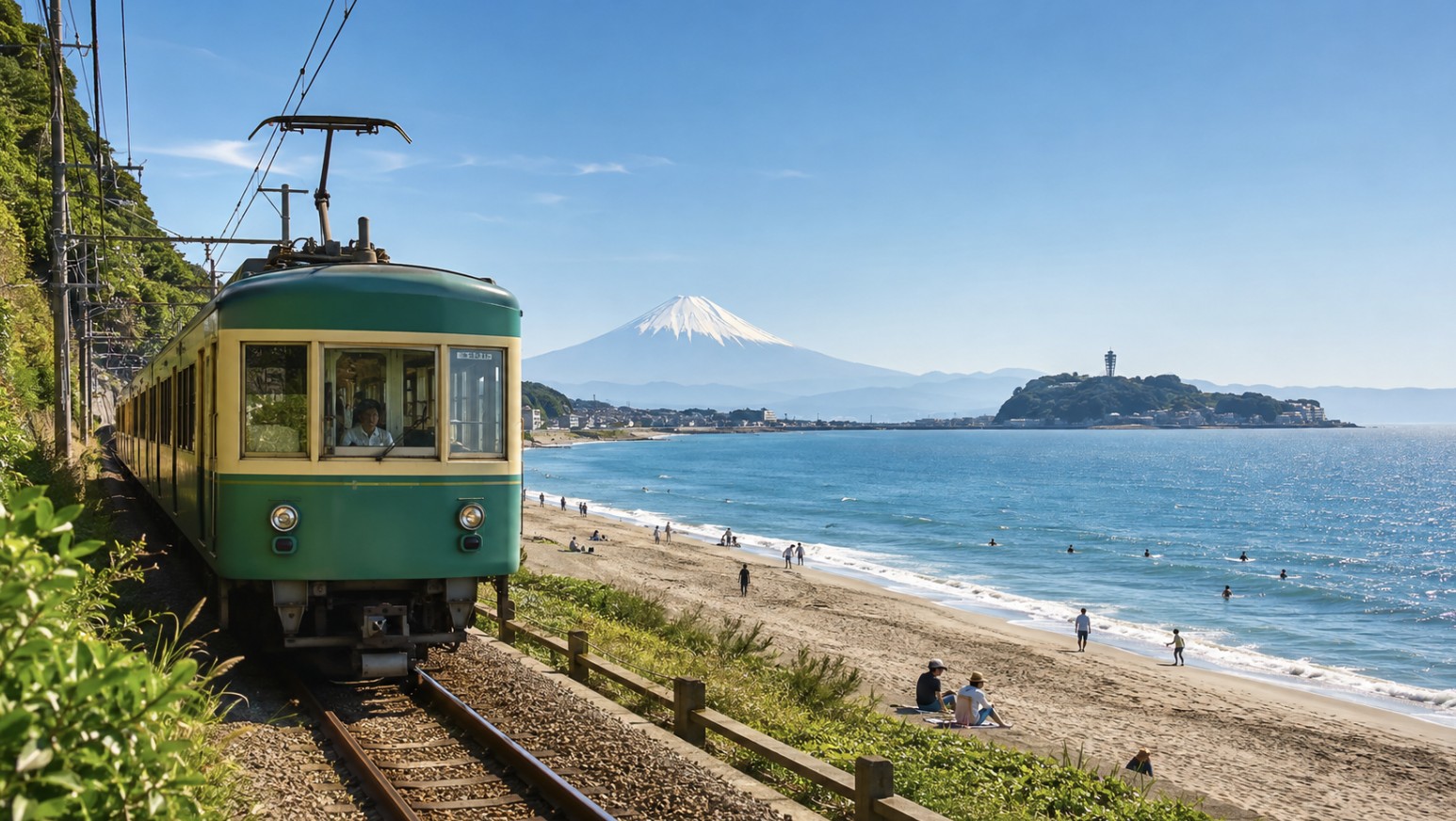
Japan is one of the world’s easiest countries to explore without driving, and the coast is no exception. Several good beaches are connected to central Tokyo, Osaka and Kyoto by regular trains, with the final stretch covered on foot, by tram or on a local bus. That means you can leave a city hotel after breakfast, spend the afternoon by the sea, and still return before the last train.
This guide focuses on practical beaches for independent travellers. Yuigahama Beach (由比ヶ浜海岸), Katase Higashihama Beach (片瀬東浜海水浴場), Zushi Beach (逗子海岸), Miura Beach (三浦海岸) and Onjuku Beach (御宿海岸) all work from Tokyo. Shirarahama Beach (白良浜) in Nanki-Shirahama (南紀白浜), Wakayama Prefecture (和歌山県), is the better choice from Osaka (大阪) or Kyoto (京都) if you would like an overnight coastal break with hot springs.
Travel times below are planning estimates rather than fixed promises. They depend on your departure point, train type, transfer time and day of travel. Check the official rail operator or a live route planner shortly before leaving, particularly at weekends, during school holidays and when severe weather is forecast.
Why Train Access Matters
Many of the most enjoyable beach towns near Tokyo developed around JR and private railway stations rather than motorways. You can load money onto an IC card, follow clear platform signs, and arrive close to the sea without hiring a vehicle, dealing with tolls or searching for parking. In Kamakura (鎌倉) and Enoshima (江の島), a beach visit can also include temples, small shopping streets, cafés and coastal viewpoints.
There are a few practical limits. Beach facilities, lifeguard cover and permitted swimming areas are seasonal and decided locally. The beach may be open for walking while swimming is restricted, and coastal weather can be very different from the conditions in central Tokyo or Osaka. Do not assume that every changing room, shower or beach house operates outside the official summer season.
If you are fitting a beach stop into a first trip, this seven-day Tokyo, Kyoto and Osaka itinerary can help you decide whether to add a Tokyo coast day or stay overnight in Wakayama.
Best Beaches Near Tokyo
Yuigahama Beach (由比ヶ浜海岸), Kamakura
Yuigahama Beach (由比ヶ浜海岸) is the classic Kamakura seaside experience: a broad sandy shore, a relaxed coastal atmosphere and enough nearby sights to make the day worthwhile even if you do not swim. From Tokyo Station (東京駅), take the JR Yokosuka Line towards Kamakura Station (鎌倉駅). From there, it is around a 15 to 20 minute walk to the beach. Alternatively, take the Enoshima Electric Railway (江ノ島電鉄), usually called Enoden (江ノ電), to Yuigahama Station (由比ヶ浜駅), Hase Station (長谷駅) or Wadazuka Station (和田塚駅), then walk a few minutes to the sand.
Yuigahama works particularly well for travellers who want to mix beach time with Kamakura’s historic side. Kotoku-in Temple (高徳院), home to the Great Buddha of Kamakura (鎌倉大仏), is within easy reach from Hase Station. You could start with the temple in the morning, stop for lunch in Hase (長谷), then spend the afternoon by the water before returning through Kamakura’s centre.
In the main summer beach period, temporary seaside food and drink outlets may operate along the shore. At other times of year, Yuigahama is better for a coastal walk, sunset views or simply taking a break from Tokyo’s crowds. Bring a small day bag rather than heavy luggage; Kamakura’s lanes, stations and busy pavements are far more pleasant when you can move easily.
Katase Higashihama Beach (片瀬東浜海水浴場) and Enoshima (江の島)
Katase Higashihama Beach (片瀬東浜海水浴場) is one of the easiest beaches to reach from Tokyo. It sits beside Enoshima (江の島), a small island joined to the mainland by a causeway. The beach and island together make a full day out: you can swim or walk along the shore, then cross towards Enoshima Shrine (江島神社), viewpoints, cafés and seafood restaurants.
From Shinjuku Station (新宿駅), Odakyu Electric Railway (小田急電鉄) runs services towards Katase-Enoshima Station (片瀬江ノ島駅). Some travellers choose the Romancecar (ロマンスカー) limited express for a reserved seat, but this requires the appropriate limited-express supplement as well as the basic journey ticket. Check current routes, fares, tickets and passes through the official Odakyu Railway website.
Another useful route is the JR Tokaido Line (東海道線) or JR Shonan-Shinjuku Line (湘南新宿ライン) to Fujisawa Station (藤沢駅), followed by the Enoden to Enoshima Station (江ノ島駅). The Enoden is a compact local railway that travels through residential streets and beside parts of the coast. It is enjoyable but can become busy at weekends, so leave room in your schedule for queues and slower boarding.
Katase Higashihama is the simpler choice for a beach-focused day. Enoshima Island is more suitable if you want scenery and gentle sightseeing as well. Wear shoes comfortable enough for slopes and stairs, carry drinking water, and avoid setting an overly tight dinner reservation back in Tokyo. A leisurely island walk often takes longer than expected.
Zushi Beach (逗子海岸), Zushi
Zushi Beach (逗子海岸) in Zushi (逗子) is a good alternative when Kamakura and Enoshima feel too busy. Take the JR Yokosuka Line to Zushi Station (逗子駅), then walk towards the waterfront. The beach has an open shoreline, a promenade and a more residential atmosphere than the better-known Shonan (湘南) stops.
This is a sensible choice for families, couples and travellers who want a calm, low-effort day. Pick up drinks and snacks near the station, keep an eye on wind and wave conditions, and check the local rules for swimming before entering the water. Zushi is also realistic for a half-day outing if you are staying in Tokyo and do not want to dedicate a whole day to the coast.
Miura Beach (三浦海岸), Miura Peninsula
Miura Beach (三浦海岸) lies on the Miura Peninsula (三浦半島), south of Yokohama (横浜). Take Keikyu Railway (京急電鉄) to Miurakaigan Station (三浦海岸駅), then walk a short distance to the beach. The journey is longer than Kamakura or Zushi from central Tokyo, but the beach is simple to reach once you arrive.
Miura is a good pick when you want the beach to be the main event rather than an add-on to temples and museums. The peninsula is also closely associated with fishing ports and seafood, including tuna dishes around Misaki (三崎). If you have a particular restaurant in mind, check its latest opening hours and reservation policy directly before travelling; small coastal businesses can keep seasonal or irregular hours.
Onjuku Beach (御宿海岸), Chiba
Onjuku Beach (御宿海岸) in Onjuku (御宿), Chiba Prefecture (千葉県), is the choice for travellers prepared to spend more time on the train for a less urban coastline. Travel from Tokyo towards Onjuku Station (御宿駅), potentially using JR services on the Sotobo Line (外房線) or a Wakashio (わかしお) limited-express train, depending on the service you choose. From the station, the beach is walkable.
Onjuku feels more spacious than Shonan’s busiest beaches, but it should be treated as a full-day trip rather than a quick detour. Check the last return train, buy essentials before reaching the shore, and do not assume that every café or service will be open outside the height of summer. It suits beach walkers, surfers and repeat visitors who have already explored Kamakura and Enoshima.
Best Beach Near Osaka
Shirarahama Beach (白良浜), Nanki-Shirahama
Shirarahama Beach (白良浜) in Nanki-Shirahama (南紀白浜), Wakayama Prefecture (和歌山県), is the strongest option in this guide for an overnight seaside escape. It is known for its pale sand, sweeping bay and resort-town setting. The wider area also has onsen, coastal walks and hotels ranging from traditional ryokan to larger resort properties.
From Shin-Osaka Station (新大阪駅), Tennoji Station (天王寺駅) or Wakayama Station (和歌山駅), take the JR Limited Express Kuroshio (くろしお) towards Shirahama Station (白浜駅). Shirahama Station is not beside the beach. From the station, take a local Meiko Bus (明光バス) and alight near Shirarahama (白良浜); allow roughly 10 to 15 minutes for the bus section, subject to traffic and the service used.
Check live timetables, seat reservations and rail notices through JR West before travelling. A reserved seat can be worthwhile during Japanese public holidays, weekends and school breaks, particularly if you are carrying beach bags or travelling as a family.
An overnight stay makes Shirarahama much more enjoyable than a rushed return journey. Arrive before lunch, leave your bags at the hotel, spend time at the beach, then enjoy an onsen or seafood dinner in the evening. The following morning can be used for another beach walk, a café breakfast or a visit to nearby coastal sights before returning to Osaka or Kyoto.
Where to Stay
When choosing accommodation, location matters more than an impressive facilities list. In Shirahama (白浜), search around Shirarahama Beach (白良浜), Shirahama Onsen (白浜温泉) and the central coastal road so you can walk to the sea, restaurants and bus stops. Established options to research include Nanki-Shirahama Marriott Hotel (南紀白浜マリオットホテル), Shiraraso Grand Hotel (白良荘グランドホテル), Shirahama Key Terrace Hotel Seamore (SHIRAHAMA KEY TERRACE HOTEL SEAMORE) and Hotel Kawakyu (ホテル川久).
Near Kamakura (鎌倉) and Enoshima (江の島), consider Katase-Enoshima (片瀬江ノ島), Koshigoe (腰越), Hase (長谷) or central Kamakura depending on your plans. HOTEL AO KAMAKURA is one property to research near Koshigoe Beach (腰越海岸). A Kamakura Station base is generally better for temples and evening dining, while an Enoshima-side base gives you an easier start for the beach and island.
Compare accommodation near Shirarahama, Kamakura and Enoshima on Trip.com.
Book Flights to Japan
Choose your arrival airport around your itinerary. Tokyo Haneda Airport (東京国際空港/羽田空港) and Narita International Airport (成田国際空港) are the practical starting points for Yuigahama, Enoshima, Zushi, Miura and Onjuku. Kansai International Airport (関西国際空港) is a useful arrival point for Osaka, Kyoto and a later rail journey to Shirarahama.
Arrival time is as important as the ticket price. A late landing may leave too little time for a same-day transfer to a beach town because Japanese trains do not operate all night. For a smoother first day, stay near the airport or a central station, then travel to the coast after a proper night’s rest.
Compare flights to Tokyo and Osaka on Trip.com.
For help deciding where to begin and how to shape a wider route, visit the Japan travel planning hub.
Plan a Better Beach Day
Use an IC card such as Suica (スイカ) or PASMO (パスモ) for regular local journeys where accepted. This is usually quicker than buying individual tickets, but it does not automatically cover every limited-express supplement, reserved seat or tourist pass. Check the ticket rules for the Odakyu Romancecar and JR Kuroshio before boarding.
If Tokyo’s major stations feel intimidating, read the Tokyo transport guide before your trip. Understanding the difference between JR, private railways, local trains and limited-express services makes transfers at Tokyo, Shinjuku, Fujisawa and Yokohama much less stressful.
Pack light but do not under-pack. Bring swimwear, a small towel, dry clothes, sunscreen, water, a power bank and a waterproof bag for wet items. Comfortable walking shoes are vital if you plan to explore Enoshima Island or Kamakura after the beach. For clothing, adapters, documents and seasonal essentials, use this Japan packing checklist.
Always check the forecast and warnings through the Japan Meteorological Agency. Follow lifeguards, flags, barriers and beach notices. Do not enter the sea when the local advice says not to, even if the weather seems fine from the shore.
Before arrival, international visitors can use Visit Japan Web for immigration and customs procedures. For seasonal destination guidance, consult the official Japan Travel website and the Japan National Tourism Organization.
Food by the Sea
Coastal Japan is best enjoyed without over-planning every meal. Around Kamakura and Enoshima, look for shirasu dishes when available, alongside soba, grilled fish and small cafés. The Miura Peninsula is known for seafood, while Shirahama has hotel dinner plans, seafood restaurants and casual places around the central coast.
Check opening hours and reservations directly if you have a specific restaurant in mind, especially outside summer or on weekdays. For wider planning advice on dining, etiquette and building meals into your itinerary, read the Japan temple and shrine visit checklist, which includes useful timing and travel considerations for busy sightseeing days.
Frequently Asked Questions
- Which beach is easiest to reach from central Tokyo? Yuigahama Beach (由比ヶ浜海岸) in Kamakura and Katase Higashihama Beach (片瀬東浜海水浴場) near Enoshima are among the simplest choices because the railway stations, food and sightseeing areas are close to the coast.
- Can I visit Shirarahama Beach (白良浜) from Osaka in one day? Yes, but it makes for a long day. An overnight stay is more relaxing because you need to transfer from Shirahama Station (白浜駅) to the beach by local bus or taxi.
- Do I need to reserve train seats? Ordinary local trains do not usually require reservations. Limited-express services, including Odakyu Romancecar (ロマンスカー) and JR Kuroshio (くろしお), have separate ticket and seat requirements.
- When is swimming season at Japanese beaches? Opening dates, lifeguard cover and swimming rules vary by beach and by year. Check the local beach notice shortly before your visit.
- Is Enoshima (江の島) suitable for children? Yes. Katase Higashihama Beach offers easy beach access, while Enoshima Island adds shrines, views and food stops. Plan for sun, crowds and some uphill walking.
- Should I carry cash? Yes. Many places accept cards and IC payments, but some lockers, small eateries, beach services and buses may be easier to use with yen.