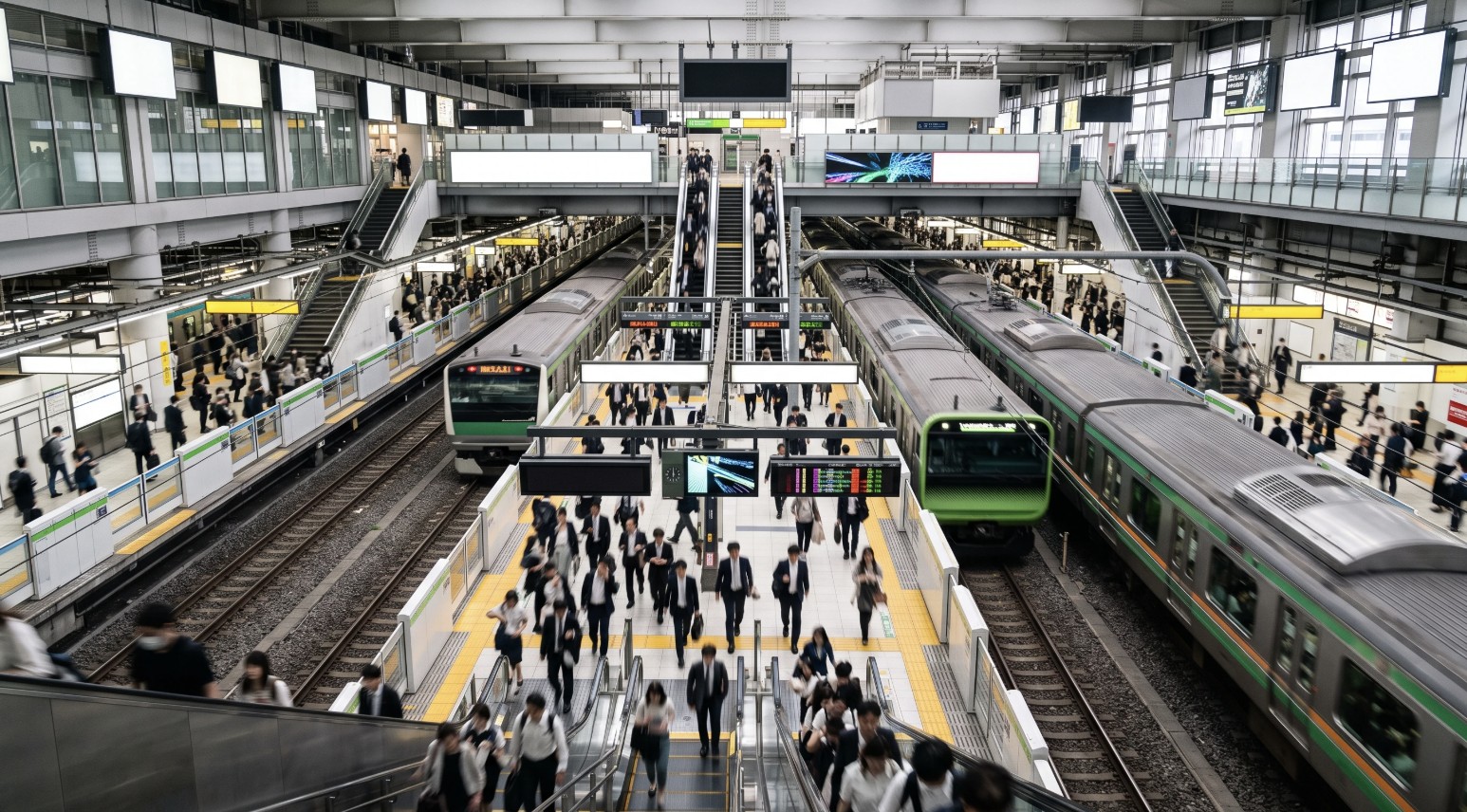
Tokyo’s public transport system is extensive, fast and generally easy to use once you understand the main operators. For most visitors, an IC card, a reliable route-planning app and a little extra time for large stations are all you need to travel confidently by train, subway and bus.
Tokyo does not have one single transport company. Your journey may use JR East trains, Tokyo Metro, Toei Subway, buses or private railways such as Odakyu, Keio, Tobu and Seibu. Accepted IC cards make transfers between many of these services simpler, but special tickets and limited-express services can have separate rules.
How Tokyo Transport Works
Tokyo’s rail network combines above-ground commuter railways with underground subway lines. The route that looks fastest on a map may involve more than one operator, so use a route planner to confirm the station, line, platform, fare and any required transfer before leaving.
| Transport type | What it covers | Best for | Typical payment |
|---|---|---|---|
| JR East trains | Central Tokyo and wider Greater Tokyo rail routes | Yamanote Line, cross-city journeys and JR connections | IC card, individual ticket or eligible rail pass |
| Tokyo Metro and Toei Subway | Central Tokyo and major visitor districts | Ginza, Asakusa, Ueno, Shinjuku, Roppongi and city-centre journeys | IC card, individual ticket or eligible subway ticket |
| Local buses | Neighbourhoods not directly served by rail | Short local journeys and specific destinations | IC card, cash or operator-specific payment method |
| Private railways | Suburbs and regional destinations | Hakone, Mount Takao, Nikko, Kawagoe and other day trips | IC card or operator-specific ticket; supplements may apply |
| Taxi | Door-to-door travel | Heavy luggage, mobility needs, groups and late-night journeys | Payment methods vary by taxi and operator |
IC Cards: Suica, PASMO and Visitor Options
An IC card is the simplest way to pay for most local journeys in Tokyo. You load a balance onto the card, touch it on the reader when entering and leaving a gate, and the correct fare is deducted automatically. IC cards are also accepted at many convenience stores, vending machines and other participating retailers.
Suica and PASMO are interoperable stored-value cards, so travellers usually do not need both. Card availability, sales locations and digital-wallet compatibility can change, so check official information at the airport station or a major station when you arrive.
- Welcome Suica: A JR East visitor IC-card option designed for temporary visitors. It is valid for 28 days from the date of issue and can be used for transport and shopping at participating locations.
- Physical Suica or PASMO: Availability can vary by product and sales point. Check current notices at JR East, Tokyo Metro, PASMO or the station where you intend to buy it.
- Mobile IC cards: Some visitors may be able to add a compatible card to a supported smartphone wallet. Device region, operating system, payment-card compatibility and top-up options vary.
- Top-ups: Add credit at participating ticket machines, convenience stores and other supported locations. Keep enough balance before travelling, especially late at night or outside central Tokyo.
Check Welcome Suica information on the official JR East website.
Check official PASMO visitor information.
Subway Tickets and Day Passes
Tokyo Subway Tickets are useful only when your itinerary includes enough rides on both Tokyo Metro and Toei Subway within a short period. They do not cover JR East trains, private railways, buses, the Tokyo Monorail or airport express services.
Tokyo Metro offers Tokyo Subway Tickets with 24-hour, 48-hour and 72-hour validity periods. Validity begins when you first enter through a ticket gate, not at midnight. Eligibility, purchase locations, sales channels and ticket format can change, so check the official Tokyo Metro page before buying.
- Choose an IC card when your routes mix JR, subway, buses and private railways.
- Consider a Tokyo Subway Ticket when you expect to make many Tokyo Metro and Toei Subway rides during its validity period.
- Do not assume a day pass saves money: estimate your likely individual fares before buying one.
- Check included lines carefully: Tokyo Metro and Toei are included in a Tokyo Subway Ticket, but JR and private railway routes are not.
Check Tokyo Metro’s official visitor-ticket information.
JR East and Private Railways
JR East operates many important Tokyo routes, including the Yamanote Line, which loops through major stations such as Tokyo, Ueno, Akihabara, Shinjuku, Shibuya and Shinagawa. However, the Yamanote Line is not always the fastest route; subways and other JR lines can often be more direct.
Private railways are important for many popular destinations outside central Tokyo. Odakyu serves the Hakone area, Keio serves Mount Takao, Tobu serves Nikko and parts of Saitama, and Seibu serves western Tokyo and Kawagoe-area routes.
An IC card can cover the base fare on many services, but limited-express trains may require an additional express or reserved-seat ticket. Check the relevant operator before travelling, especially if you are booking a seat or making a long day trip.
The Japan Rail Pass can be useful for some visitors taking multiple eligible long-distance JR journeys across Japan, but it is not automatically good value for local travel around Tokyo. It does not cover Tokyo Metro, Toei Subway, most private railways or local buses.
Read official Japan Rail Pass information and purchase guidance.
Planning Routes and Transfers
Google Maps, official operator route planners and Japanese navigation apps can all help you find the right route. Check more than one source if a journey is important, particularly during severe weather, public holidays, large events or service disruption.
- Check the station exit: Tokyo’s largest stations have many exits, and choosing the wrong one can add a long walk to your journey.
- Allow more time at interchanges: Shinjuku, Shibuya, Tokyo, Ueno and Ikebukuro are large station complexes. A connection can involve a substantial walk or a transfer between separate station areas.
- Confirm the train destination: Some services share a platform but split, terminate or continue to different destinations.
- Save your hotel details in Japanese: Keep the name, address and nearest station on your phone in Japanese and English.
- Check the final train: Tokyo rail services do not operate all night. Final departures vary by line, station and day.
Download the official Tokyo Metro subway map.
Contactless Cards and Cash
Participating railway and subway operators in the Kanto region now offer contactless tap-to-ride services using eligible credit cards, debit cards and mobile devices. This can be convenient, but do not assume every gate, route, card issuer or overseas card will work.
If you use contactless payment, enter and exit using the same physical card or the same device. Carry a backup payment method, as an IC card or cash may still be more practical for buses, smaller stations, rural day trips and situations where a contactless card is not accepted.
Check Tokyo Metro’s official Tap to Ride guidance.
Buses, Taxis and Late-Night Travel
Tokyo buses are useful for destinations that are inconvenient on rail, but they can be harder to navigate without a route planner. Boarding and payment procedures vary by operator and route, so check the signs near the door or ask the driver if you are unsure.
Taxis are widely available and can be useful for hotel-to-station journeys, heavy luggage, mobility needs, groups and travel after the final train. Fares depend on distance, traffic, time of day, vehicle type and any applicable tolls or surcharges. Confirm the payment method before starting if you need to use a particular card or mobile wallet.
- Plan a taxi, licensed private vehicle or nearby accommodation if you will arrive after the final train.
- Use a map or written Japanese address to show your destination clearly.
- Do not attempt to open or close a taxi door manually unless instructed; many taxis use automatic rear passenger doors.
Transport Etiquette in Tokyo
Tokyo’s network works best when passengers keep routes, platforms and train doors clear. Follow station signs and staff directions, especially at busy times.
- Queue where platform markers indicate and let passengers leave the train before boarding.
- Set your phone to silent mode and avoid voice calls on trains.
- Offer priority seating to passengers who need it, including older people, pregnant passengers, passengers with disabilities and those travelling with small children.
- Move away from the doors after boarding when the carriage is busy.
- Keep bags close to your body or use overhead racks where available; avoid blocking aisles with large suitcases.
- Be considerate with food and drink. Avoid anything messy, strongly scented or likely to inconvenience other passengers on local trains.
Read Tokyo Metro’s official passenger-manners guidance.
Airport Transfers and Day Trips
Airport and day-trip routes often use the same payment principles, but airport expresses and limited-express services can have separate fares, reservations or supplements. Check the relevant operator’s official route and ticket information before travel.
- From Haneda Airport: Tokyo Monorail and Keikyu services provide rail links to central Tokyo and onward connections.
- From Narita Airport: JR East’s Narita Express and Keisei Electric Railway’s Skyliner are major rail options, alongside other train and bus services.
- For Hakone: Check Odakyu’s official information, particularly if you want a Romancecar limited-express seat.
- For Nikko: Check Tobu Railway for the correct route, fare and any limited-express supplement.
- For Tokyo Disney Resort: Check the official resort access page for current train and bus information before travelling.
Frequently Asked Questions
Do I need both Suica and PASMO?
No. Suica and PASMO are broadly interoperable for everyday Tokyo transport and participating shops. One accepted IC card is normally enough.
Does the Tokyo Subway Ticket cover JR trains?
No. Tokyo Subway Tickets cover Tokyo Metro and Toei Subway lines only. They do not include JR East trains, private railways, buses or airport rail services.
Can I use a foreign contactless bank card on Tokyo transport?
Some participating routes and gates accept eligible contactless cards and mobile devices, but compatibility varies by card issuer, device, gate and operator. Carry an IC card or cash as a backup.
Is the Japan Rail Pass worthwhile for Tokyo?
It is generally not bought solely for travel within Tokyo. It may make sense if your wider Japan itinerary includes enough eligible long-distance JR travel, but calculate your planned trips and check official conditions first.
Should I rent a car in Tokyo?
For most visitors, no. Public transport is usually simpler than dealing with traffic, parking, tolls and unfamiliar roads. A car can make more sense for specific rural or remote destinations outside Tokyo.