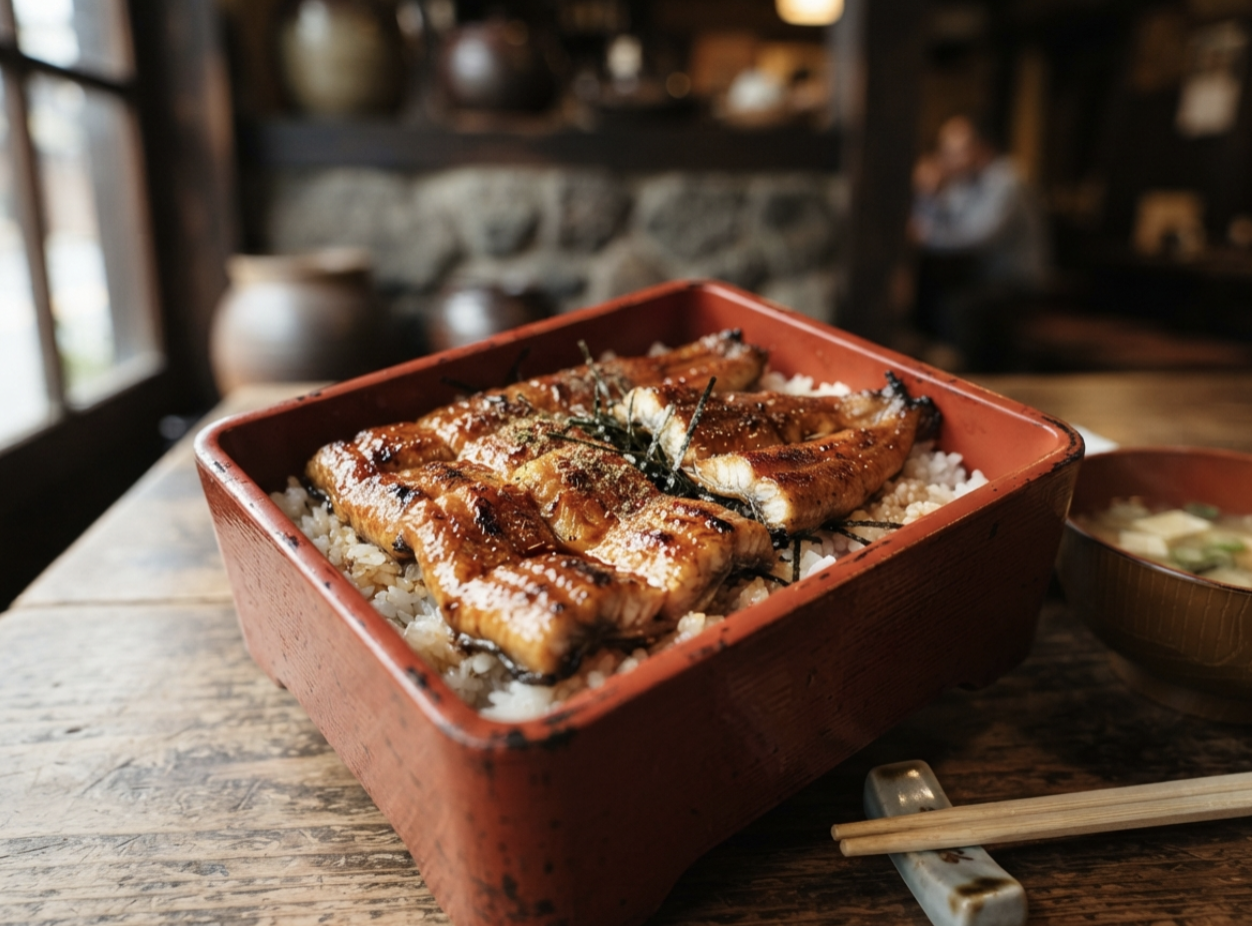
If you are wondering which city in Japan is most famous for unagi (うなぎ, freshwater eel), Hamamatsu (浜松市) in Shizuoka Prefecture is the strongest answer. The city is closely tied to Lake Hamana, called Hamanako (浜名湖) in Japanese, one of Japan’s most important historic areas for eel farming and eel cookery.
That does not make Hamamatsu the only destination for serious eel lovers. Nagoya (名古屋市), in neighbouring Aichi Prefecture, is synonymous with hitsumabushi (ひつまぶし), its celebrated dish of chopped grilled eel over rice. Hamamatsu is the better place to understand Lake Hamana unagi culture; Nagoya is the place to experience a formal, multi-stage way of eating it.
Both cities sit on the Tokyo–Kyoto–Osaka travel corridor, making them practical additions to a food-focused Japan trip. Start with our Japan travel guide for broader route planning, then use this article to decide whether you want grilled eel beside Lake Hamana, a quick meal close to Hamamatsu Station, or a classic hitsumabushi dinner in Nagoya.
Why Hamamatsu Is Famous for Unagi
Hamamatsu’s unagi reputation begins with Lake Hamana, a broad brackish lagoon in western Shizuoka. Eel cultivation around the lake began around 1890, supported by the local climate, groundwater and access to young eels. The industry has developed considerably since then, yet Lake Hamana remains one of the most recognisable names in Japanese eel culture.
It is useful to distinguish regional identity from individual restaurant sourcing. A Hamamatsu restaurant is not automatically serving eel raised beside Lake Hamana, as supply and procurement can vary. What Hamamatsu represents is a long-established network of eel farmers, wholesalers, cooks and specialist restaurants. That history is why the city remains a leading destination for travellers seeking the best unagi in Japan.
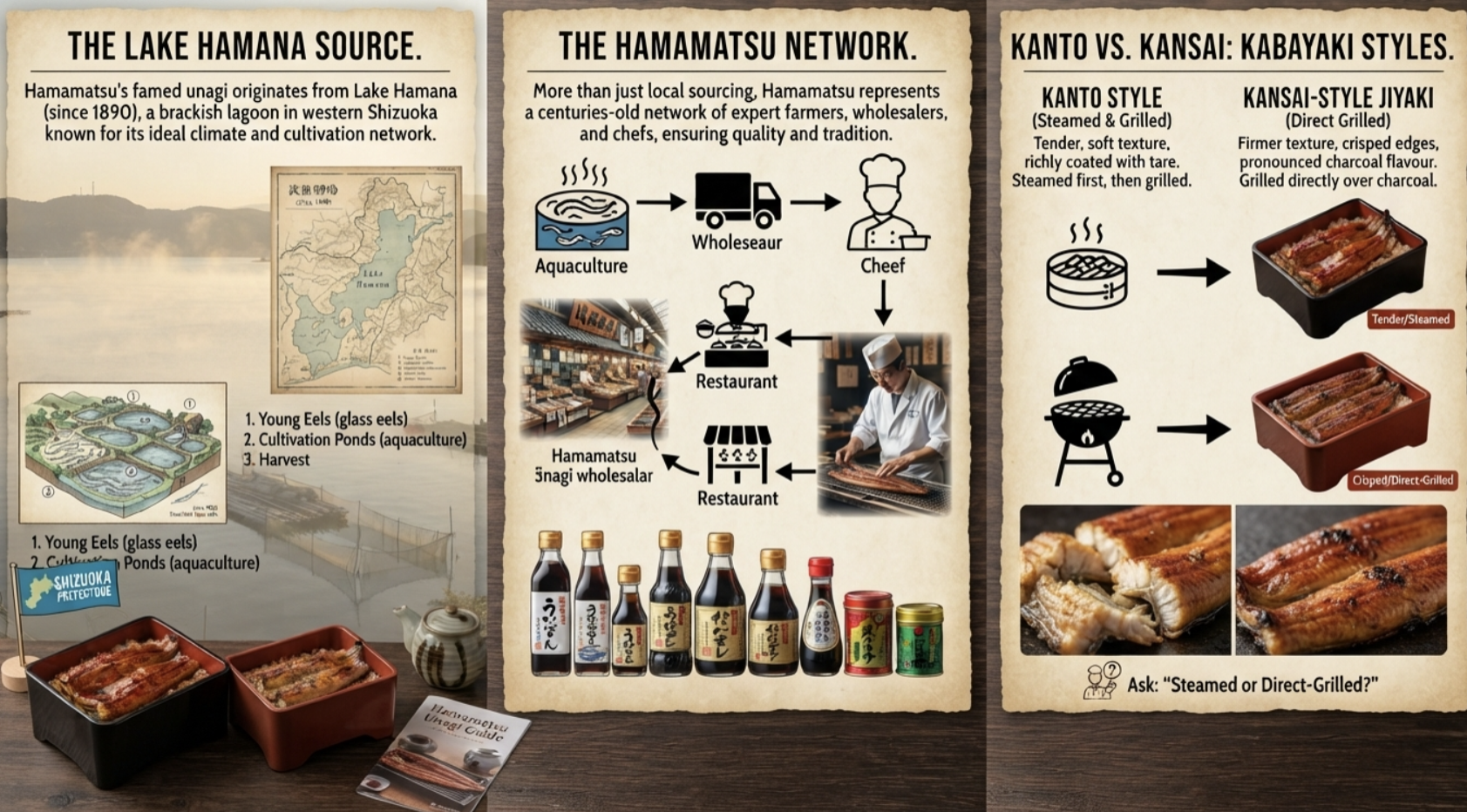
Hamamatsu also lies near the cultural boundary between eastern and western Japan. This gives diners the chance to compare approaches to kabayaki (蒲焼), eel grilled with a sweet-savoury tare sauce. In Kanto style, the method associated with Tokyo and eastern Japan, eel is normally steamed before its final grilling. In Kansai style, the eel is grilled directly over charcoal without steaming.
The difference is easy to taste. Kanto-style unagi is typically tender, soft and richly coated with sauce. Kansai-style jiyaki (地焼き) has a firmer texture, crisped edges and a more pronounced charcoal flavour. Neither is superior; choose according to your preference. In Hamamatsu, ask whether the restaurant uses a steamed or direct-grilled method rather than assuming all unagi-ya serve both.
What to Order in Hamamatsu
The standard order is unajū (うな重), grilled eel placed over rice in a lacquered box. Unadon (うな丼) is a similar dish served in a bowl. The difference is often presentation rather than a strict rule about quality, though restaurants may offer several portion sizes. Check the number of eel pieces, whether soup and pickles are included, and the rice quantity before choosing.
For a more direct appreciation of the ingredient, try shirayaki (白焼き). This is eel grilled without the usual tare, often served with salt, wasabi or soy sauce. It is a good choice for diners who want to notice the eel’s texture, fat and charcoal aroma without the sauce taking over.
You may also see kimosui (肝吸い), a clear soup containing eel liver, and uzaku (うざく), grilled eel served with cucumber in a light vinegar dressing. These smaller dishes balance a richer unajū meal, especially in hot weather. If you want confidence when reading menus or speaking to staff, see our guide to essential Japanese phrases for travel.
Unagipie and Hamamatsu Souvenirs
Hamamatsu’s most famous food souvenir is Unagipie (うなぎパイ), made by Shunkado since 1961. Despite the name, this is not a strongly fish-flavoured sweet. It is a crisp, buttery, sweet-and-savoury pastry made with ingredients including eel extract and garlic. It is designed as an omiyage gift, easy to carry home and widely available at Hamamatsu Station and souvenir shops in Shizuoka.
The official Unagi Pie Factory website provides current information for visitors. The factory is at 748-51 Okubocho, Chuo-ku, Hamamatsu, Shizuoka 432-8006, with free parking and free general admission. The reserved Kamadashi Unagipie Tour costs ¥500 and takes about 60 minutes, letting you taste the pastry freshly baked. Full details, including the self-guided option and the concierge-led tour, are on the official tour information page. Opening hours and production-line viewing days can change, so confirm the current schedule on the factory’s own homepage before travelling rather than relying on an older blog post.
Unagi is usually a planned splurge rather than a low-cost everyday meal. Budget for it accordingly, especially if you want a larger portion, a respected specialist restaurant or seasonal dining around late July. Our Japan travel budget guide can help you place premium food experiences within your wider spending plan.
Nagoya: The Hitsumabushi Heartland
Nagoya’s defining eel dish is hitsumabushi (ひつまぶし). Grilled eel is cut into smaller pieces and placed over rice in an ohitsu (お櫃), a traditional wooden rice container. The dish is particularly associated with Atsuta Horaiken (あつた蓬莱軒), founded in 1873 near Atsuta Jingu. It is widely linked with the development of hitsumabushi, although food history is rarely as simple as a single inventor or date.
This sequence is a recommendation, not a rule that should make dinner feel intimidating. Some people prefer the clean flavour of the first bowl, while others enjoy the aromatic wasabi and nori stage or the lighter ochazuke finish. A good hitsumabushi meal lets you experience several temperatures, textures and levels of seasoning from the same serving.
What makes hitsumabushi different from an ordinary eel bowl is the way it is eaten. Divide the serving into four portions. Eat the first portion plain, without condiments, to taste the eel, rice and sauce. For the second, add yakumi (薬味), usually spring onion, wasabi and shredded nori. For the third, add tea or dashi stock to create ochazuke (お茶漬け). The final portion is for whichever style you enjoyed most.
Atsuta Horaiken’s main restaurant is at 503 Godo-cho, Atsuta-ku, Nagoya, Aichi 456-0043. Its published lunch service runs from 11:30 to 14:00, with dinner from 16:30 to 20:30. As with every popular Japanese restaurant, check current holiday closures, queue arrangements and last orders before setting out. Avoid relying on copied opening times from old travel posts.
Hamamatsu vs Nagoya for Unagi
| Question | Hamamatsu | Nagoya |
|---|---|---|
| Most closely associated with | Lake Hamana, eel farming history and unagi culture | Hitsumabushi and Nagoya-style eel dining |
| Best dish to order | Unajū, unadon or shirayaki | Hitsumabushi with yakumi and ochazuke |
| Best for | Regional food heritage and comparing grilled styles | A classic, structured Japanese eel meal |
| Useful base | Hamamatsu Station or the Lake Hamana area | Nagoya Station, Sakae or Atsuta |
| Signature souvenir | Unagipie | Nagoya food gifts, including miso-based products and sweets |
Choose Hamamatsu if your priority is understanding the Lake Hamana unagi tradition and eating eel in Shizuoka. Choose Nagoya if hitsumabushi is your main goal. If you have two days, make both stops: eat a straightforward unajū or shirayaki meal in Hamamatsu, then compare it with hitsumabushi in Nagoya.
Klook.comHamamatsu Unagi Option
For a convenient option near the Shinkansen, Hamanako Unagi Maruhama is directly operated by the Lake Hamana eel fishery cooperative. Its official address is 322-4 Sunayamacho, Chuo-ku, Hamamatsu, Shizuoka 430-0926, around one minute on foot from the Shinkansen gates at Hamamatsu Station, with no midday break.
The restaurant’s official website currently states hours of 11:00 to 20:30, with last orders at 20:00. It does not accept seat reservations, so arrive with enough time before your train. Its current published menu, sold under the “Deshiko” eel brand, includes unajū from ¥2,400 for the standard set, ¥4,200 for the most popular larger set, and a ¥5,900 shirayaki-and-kabayaki combination set. Prices, hours and temporary closures can change, so check the official site rather than a third-party listing before visiting.
For further local restaurant research, the Hamamatsu unagi restaurant guide is a useful starting point. Save Japanese addresses in your map application, identify a first and second choice, and avoid tightly scheduled lunch plans if you are travelling during weekends, public holidays or the summer eel season.
When to Eat Unagi in Japan
Unagi is available all year, but it becomes especially popular on Doyō no Ushi no Hi (土用の丑の日), the Day of the Ox during the seasonal doyō period. Eating eel in high summer is a long-standing Japanese custom associated with maintaining stamina through humid weather.
In 2026, the summer Doyō no Ushi no Hi falls on Sunday 26 July. It is the only summer Day of the Ox that year. Expect busy restaurants, possible reduced menus and long queues in Hamamatsu, Nagoya, Tokyo and other major unagi destinations. Visiting on a weekday before or after that date is usually a better choice if you prefer a quieter meal.
It is also worth considering sustainability. Japanese eel has faced serious population pressures, so treat unagi as a considered regional meal rather than a casual novelty. Restaurants that communicate clearly about their suppliers and preparation are a better choice than businesses making vague claims about provenance.
Planning a Central Japan Food Trip
Hamamatsu is an easy Shinkansen stop between Tokyo and Nagoya. It works for a station lunch, an overnight stay or a slower Lake Hamana detour. Nagoya is a larger city and deserves at least one night if you want to combine hitsumabushi with Nagoya Castle, Atsuta Jingu, shopping or regional food such as miso katsu and tebasaki chicken wings.
Use our 7-day Japan itinerary to place Hamamatsu or Nagoya logically between Tokyo and Kyoto. For live train timings, walking directions, translation support and restaurant research, consult our guide to the best travel apps for Japan before departure.
Eel also appears in some sushi and celebratory roll preparations, though those dishes are very different from unajū or hitsumabushi. For related Japanese food context, read our guide explaining what is futomaki before ordering from a broader sushi menu.
Klook.comFrequently Asked Questions
Which Japanese city is most famous for unagi?
Hamamatsu is one of Japan’s best-known unagi cities because of Lake Hamana’s long eel-farming history and strong local food culture. Nagoya is most famous for hitsumabushi.
Is Hamamatsu or Nagoya better for eel?
Hamamatsu is ideal for Lake Hamana unagi and Shizuoka food culture. Nagoya is ideal for the classic hitsumabushi experience. Both are worthwhile on a central Japan itinerary.
What is the difference between unajū and hitsumabushi?
Unajū is grilled eel over rice, commonly served in a lacquered box. Hitsumabushi is chopped grilled eel over rice in a wooden container and is intended to be eaten plain, with condiments, as ochazuke and in your preferred final style.
What is Hamamatsu’s best unagi souvenir?
Unagipie is the classic choice. Made by Shunkado since 1961, it is a crisp sweet-and-savoury pastry that is easy to buy at Hamamatsu Station and souvenir shops across Shizuoka.