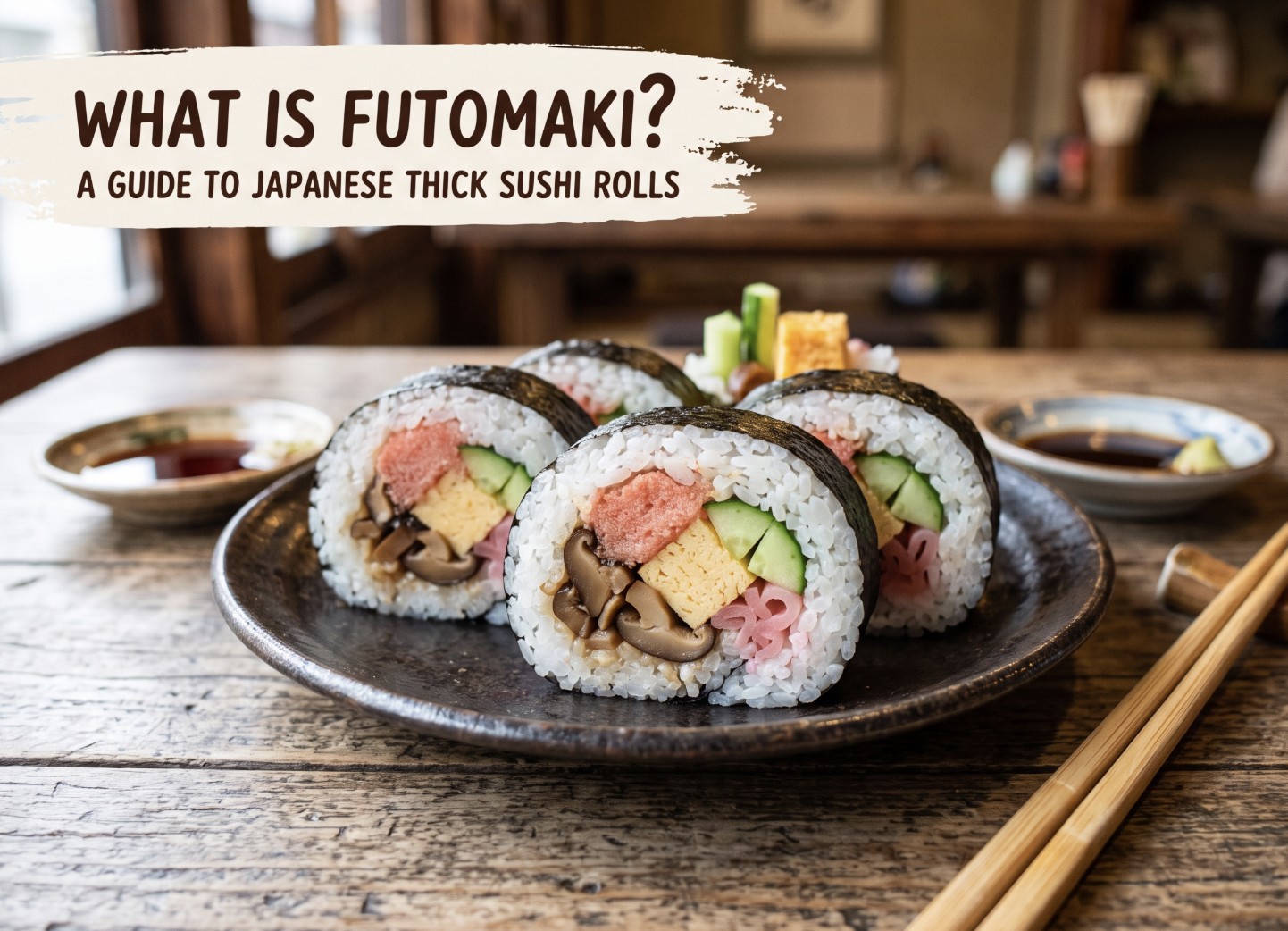
Futomaki (太巻き), literally meaning “thick roll”, is a large Japanese sushi roll made with seasoned sushi rice, a sheet of nori seaweed and several colourful fillings. It is thicker than a typical narrow sushi roll and is usually sliced into substantial pieces for sharing. Traditional futomaki often combines cooked or preserved ingredients such as tamagoyaki, simmered shiitake mushrooms, kanpyō gourd strips, cucumber and pickled vegetables.
Futomaki is a type of makizushi—rolled sushi. Its generous size and cross-section make it visually striking, and the fillings are chosen to create a balanced combination of colour, texture and flavour. Recipes vary by household, region and occasion, so there is no single mandatory filling list.
Futomaki Spelling and Meaning
The correct Japanese spelling is futomaki, not “fotomaki”. It is written 太巻き: futo (太) means thick, large or fat, and maki (巻き) means roll. English-language menus may translate it as a “thick roll” or “fat roll”, but “futomaki” is the clearest and most respectful name to use.
Futomaki is normally wrapped with nori on the outside. This differs from many Western-style inside-out rolls, known as uramaki, where rice is on the outside and nori sits inside. A California roll is commonly an uramaki-style roll and should not automatically be described as traditional futomaki.
How Big Is Futomaki?
Futomaki is noticeably larger than hosomaki, the narrow single-ingredient or simple-filled roll often seen on sushi platters. There is no universal official diameter, because size varies by chef, region and filling choice. In practice, futomaki is broad enough to hold several ingredients in one cross-section and is usually cut into thick, bite-sized slices.
Because it contains more fillings and rice than a narrow maki roll, one or two pieces can be satisfying. Serve it neatly with soy sauce, wasabi and pickled ginger if desired, but do not drown the roll in soy sauce: the fillings and seasoned rice are intended to contribute flavour on their own.
Futomaki, Hosomaki and Uramaki Compared
| Sushi roll type | Japanese name | Typical features |
|---|---|---|
| Thick roll | Futomaki (太巻き) | Nori on the outside, seasoned rice and several fillings; broad, colourful slices. |
| Thin roll | Hosomaki (細巻き) | Nori on the outside, rice and usually one main filling, such as cucumber or tuna. |
| Inside-out roll | Uramaki (裏巻き) | Rice on the outside and nori inside; common in many international sushi styles. |
| Hand roll | Temaki (手巻き) | Nori rolled into a cone shape and usually eaten by hand soon after preparation. |
Traditional Futomaki Fillings
Traditional futomaki recipes commonly use fillings that are cooked, simmered, pickled or preserved. These ingredients are practical, colourful and designed to complement the vinegared rice and nori. The exact combination differs by region and family, but the following are widely recognised in Japanese-style futomaki.
- Tamagoyaki: Japanese rolled omelette, often slightly sweet.
- Kanpyō: Dried gourd strips that are rehydrated and simmered in a seasoned broth.
- Shiitake mushrooms: Often simmered until savoury and slightly sweet.
- Cucumber: Adds crunch and freshness.
- Carrot: Usually cooked or seasoned, adding colour and sweetness.
- Spinach or mitsuba: Adds a green element and a fresh flavour.
- Sakura denbu: Sweet, pink seasoned fish flakes used in some traditional preparations.
- Kamaboko: Japanese fish cake, often pink and white, used for colour and texture.
- Anago or unagi: Cooked conger eel or freshwater eel, used in some regional recipes.
A Classic Vegetarian Futomaki Combination
A traditional-style vegetarian futomaki can be both colourful and satisfying. Use seasoned sushi rice and nori, then arrange thin strips of tamagoyaki, simmered shiitake, kanpyō, cucumber, carrot and spinach in a tidy line. The goal is not to overload the roll: too many wet or bulky ingredients can make the nori split and prevent clean slicing.
For a fully plant-based version, replace tamagoyaki and fish-based ingredients with tofu omelette, extra vegetables or a suitable plant-based filling. Check the ingredients of prepared products carefully, as some Japanese seasonings and processed foods may contain fish or other animal-derived ingredients.
Modern Futomaki-Inspired Fillings
Outside Japan, many sushi restaurants create larger rolls using ingredients such as avocado, cooked prawns, smoked salmon, imitation crab, cream cheese, mango, roasted vegetables or spicy mayonnaise. These can be delicious, but they are best described as modern or fusion futomaki-inspired rolls rather than presented as a fixed traditional recipe.
- Cooked prawn and avocado: Cooked prawn, avocado, cucumber and lettuce or shiso.
- Smoked salmon and cucumber: Smoked salmon, cucumber, avocado and a small amount of cream cheese if desired.
- Roasted vegetable roll: Roasted sweet potato, avocado, cucumber and shiitake mushrooms.
- Cooked salmon roll: Flaked cooked salmon, cucumber, avocado and a restrained amount of mayonnaise.
- Vegan vegetable roll: Marinated tofu, cucumber, avocado, carrot, spinach and pickled radish.
What Is Ehomaki?
Ehomaki (恵方巻) is a special type of thick sushi roll associated with Setsubun, the seasonal festival held around the beginning of spring in Japan. It is often made with several fillings and eaten uncut. A popular custom is to eat it while facing the auspicious direction for that year, although details of the tradition vary by household and region.
Futomaki and ehomaki are closely related, but the words are not exact synonyms. Futomaki describes the thick style of sushi roll, while ehomaki refers to a celebratory thick roll connected with Setsubun. A regular futomaki is generally sliced for serving; ehomaki is commonly eaten whole as part of the custom.
How to Make Futomaki at Home
- Prepare properly seasoned sushi rice and allow it to cool until it is safe and comfortable to handle.
- Prepare each filling in thin, even strips. Drain wet ingredients well to avoid a soggy roll.
- Place a full nori sheet shiny-side down on a bamboo sushi mat or a clean piece of baking paper.
- Spread a thin, even layer of sushi rice over the nori, leaving a small uncovered strip along the far edge to seal the roll.
- Arrange the fillings in a horizontal line slightly below the centre of the rice.
- Use the mat to roll firmly but gently away from you, keeping the fillings in place without crushing them.
- Seal the nori edge, then rest the roll seam-side down briefly before slicing with a clean, sharp knife dampened between cuts.
Food Safety for Homemade Sushi
Homemade futomaki is easy to make with cooked or vegetarian fillings. If you use fish, buy it from a reputable supplier, keep it properly chilled and follow food-safety guidance. The phrase “sushi-grade” is not a regulated safety guarantee in the UK, so it should not be treated as proof that raw fish is suitable to eat.
Pregnant people should follow NHS guidance and avoid sushi made with raw fish or raw shellfish. Cooked fish, cooked shellfish and vegetable sushi are safer alternatives. People with weakened immune systems, older adults and anyone concerned about food safety may also prefer cooked or vegetarian fillings.
Prepare sushi with clean hands and equipment, keep perishable ingredients chilled, and avoid leaving cooked rice or seafood at room temperature for extended periods. Make only what you can eat promptly, refrigerate leftovers safely where appropriate, and do not rely on smell alone to judge whether food is safe.
Final Thoughts
Futomaki is a Japanese thick sushi roll that celebrates contrast: sweet and savoury, soft and crisp, colourful and neatly arranged. Traditional versions often feature tamagoyaki, kanpyō, shiitake mushrooms and vegetables, while modern versions can use cooked seafood, avocado or plant-based fillings.
For the most satisfying homemade roll, keep the fillings balanced, avoid overfilling and choose ingredients that can be handled and stored safely. Whether you make a classic vegetarian futomaki or a modern variation, the result should be a cleanly sliced roll with a colourful centre and clearly defined flavours.
Frequently Asked Questions
- What does futomaki mean? Futomaki means “thick roll” in Japanese. It is a large makizushi roll wrapped in nori and filled with several ingredients.
- Is futomaki always vegetarian? No. Many traditional futomaki use mostly vegetables and cooked ingredients, but recipes can also include egg, fish cake, cooked eel or other seafood. Vegetarian and vegan versions are also common.
- What is the difference between futomaki and a California roll? Futomaki usually has nori on the outside and several fillings. A California roll is usually an inside-out uramaki roll with rice on the outside, and it is a modern international sushi style.
- Can I make futomaki with raw salmon? You can, but raw fish requires careful sourcing, handling and storage. If you are pregnant or prefer a lower-risk option, use cooked fish, cooked shellfish or vegetarian fillings instead.