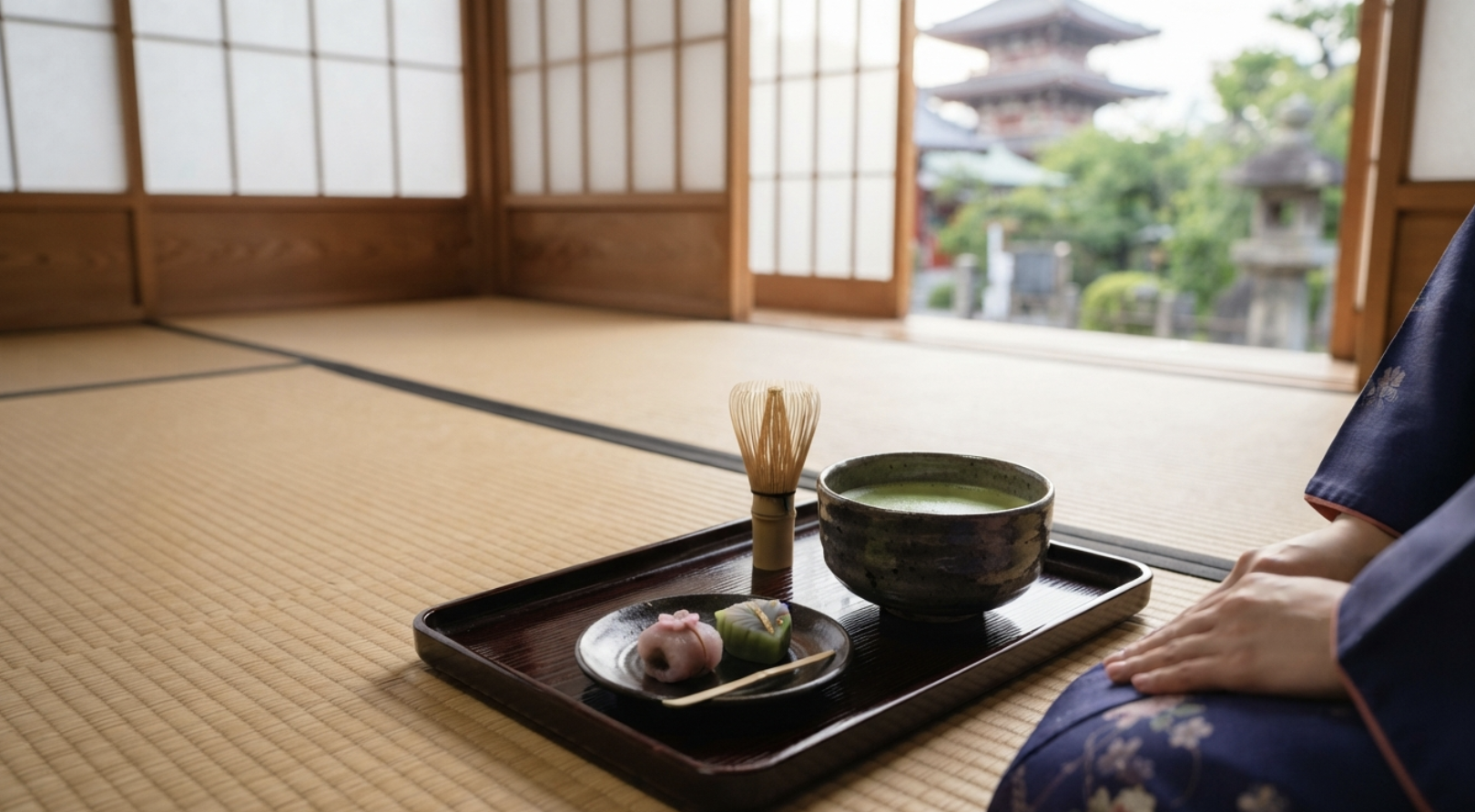
The best matcha experiences in Tokyo combine hands-on tea making, traditional Japanese sweets, kimono dressing and thoughtful introductions to tea ceremony. Whether you are sightseeing around historic 浅草 (Asakusa), shopping in 渋谷 (Shibuya) or exploring 原宿 (Harajuku), a matcha experience in Tokyo offers a calm, memorable and genuinely cultural break from the capital’s fast pace.
Tokyo is a city of striking contrasts. You can spend the morning at the ancient grounds of 浅草寺 (Sensō-ji), cross the immense scramble junction at Shibuya, browse contemporary fashion on Takeshita Street in Harajuku, then sit in a quiet room and prepare a bowl of 抹茶 (matcha) with a bamboo whisk. For many first-time visitors, that shift from energy to stillness during a Tokyo tea ceremony becomes one of the most memorable parts of a Japan trip, and it is worth building into your Tokyo itinerary planning from the outset.
Why a matcha experience belongs on your Tokyo itinerary
Matcha is finely milled green tea powder prepared by whisking it directly into hot water. Unlike leaf tea, where the leaves are steeped and then discarded, matcha is consumed whole, powder and all, straight from the bowl. Its preparation therefore matters enormously: water temperature, the rhythm of the whisk, the shape of the tea bowl and the Japanese sweet served alongside it all shape the final experience.
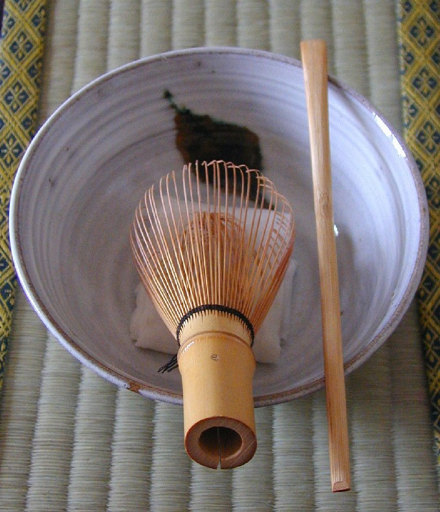
A Tokyo matcha experience helps visitors understand the drink beyond cafés and matcha lattes. You learn how to use a 茶筅 (chasen, bamboo whisk), how wagashi (和菓子) balance matcha’s savoury bitterness, and why tea gatherings prize care, seasonality and hospitality above all else. It is a cultural activity that is accessible to complete beginners while still rewarding travellers who already have a deeper interest in Japanese food and tradition, making it a natural addition alongside any food guide you are already following.
- It provides a peaceful indoor activity during rain, summer humidity or a busy sightseeing day.
- It pairs naturally with temple visits, food tours, shopping districts and neighbourhood walks.
- It gives travellers a useful introduction to Japanese etiquette without requiring prior knowledge.
- It offers a practical skill that can be recreated at home with matcha, a bowl and a whisk.
- It suits solo travellers, couples, friends and families seeking more than standard sightseeing.
Matcha, tea ceremony and Tokyo’s cultural history
Tea reached Japan from China many centuries ago, and powdered green tea became especially important among Zen Buddhist communities, who used it to stay alert during long periods of meditation. Over time, the practice grew into a wider cultural discipline shaped by art, architecture, ceramics and hospitality. The scholar-monk Murata Jukō is credited with laying the early foundations of this refined, understated style of tea drinking in the fifteenth century.
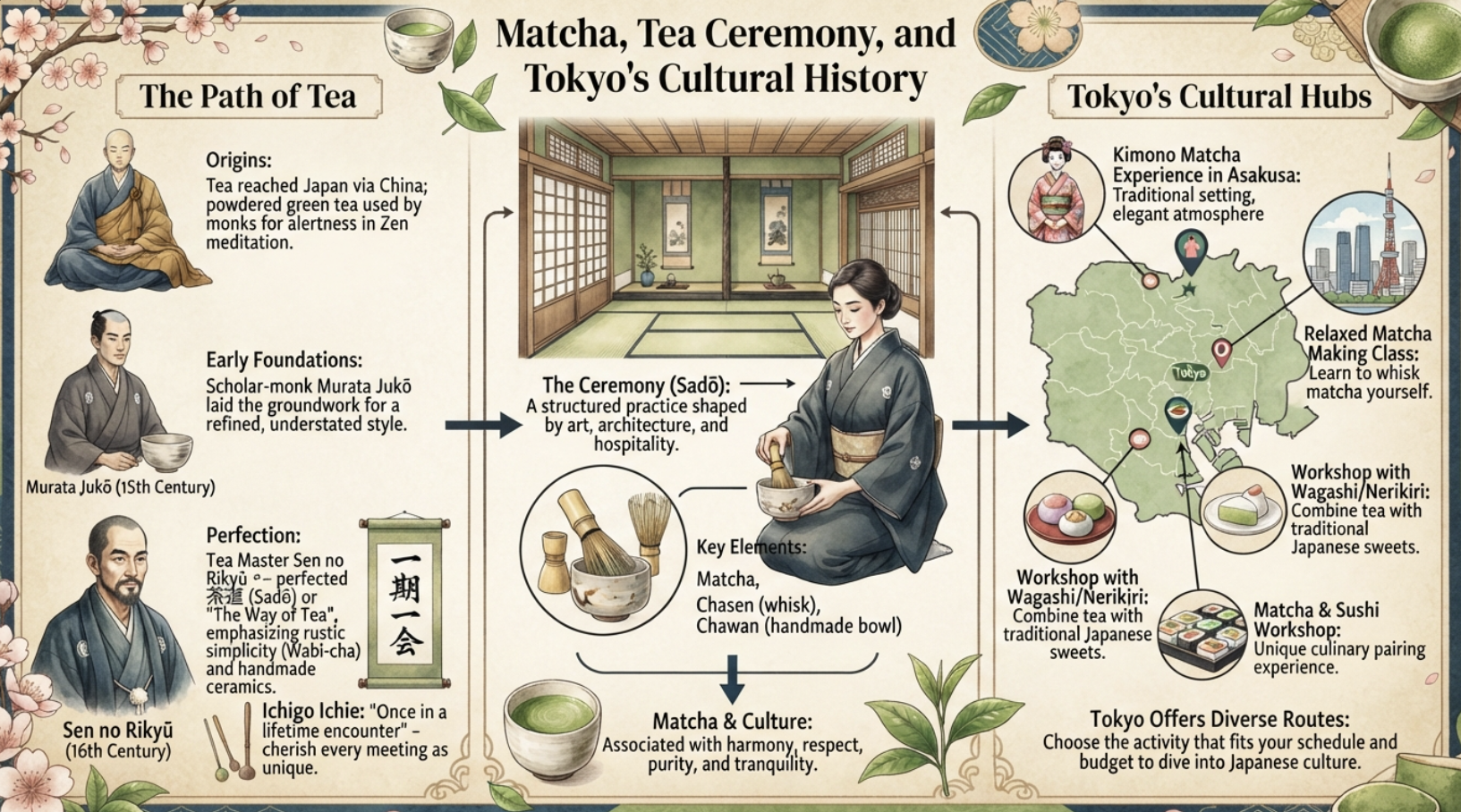
In the sixteenth century, the tea master 千利休 (Sen no Rikyū, 1522–1591) built on that foundation and is widely regarded as the figure who perfected 茶道 (sadō), often translated as “the way of tea”. Rikyū’s approach, known as wabi-cha, favoured rustic simplicity, modest tea rooms and handmade ceramics over expensive display. His teaching is closely associated with 一期一会 (ichigo ichie): the idea that a tea gathering, like any human encounter, happens only once and will never occur in exactly the same way again.
Tokyo is an excellent place to encounter this tradition because it offers several different routes into it. You can choose a relaxed matcha making class in Tokyo, a more structured tea ceremony, a kimono matcha experience in Asakusa, or a workshop that combines matcha with sushi or nerikiri sweets. Each format offers a distinct introduction to Japanese culture, so it is easy to pick an activity that suits your schedule, budget and existing knowledge. If you are also researching wider cultural stops, our guide to Japanese sweets and wagashi is a useful companion read.
Choose the right Tokyo matcha activity
| Experience | Best for | Area | Why book it |
|---|---|---|---|
| Matcha Making Class with Japanese Sweets | First-time visitors | Asakusa | Simple hands-on introduction to whisking tea and enjoying wagashi |
| Asakusa Sushi Making and Matcha Workshop | Food-focused travellers | Asakusa | Combines sushi, sake, matcha and traditional culture in one session |
| Matcha Making with Japanese Sweets Set | Asakusa sightseeing days | Asakusa | An easy cultural stop near Sensō-ji and Tokyo Skytree |
| Real Matcha Experience with an Expert | Tea enthusiasts | Tokyo | More detailed guidance on matcha, technique and tea culture |
| Harajuku Matcha Tea Ceremony | Visitors near Meiji Shrine | Harajuku | A quiet traditional experience near one of Tokyo’s liveliest districts |
| Asakusa Kimono Dressing and Matcha | Classic cultural memories | Asakusa | Combines kimono styling, matcha and time to explore the district |
| Matcha Kimono Tea Ceremony | Culture-led travellers | Tokyo | Introduces kimono, tea history, matcha and etiquette |
| Nerikiri Sweets and Matcha Workshop | Creative food lovers | Shibuya | Make traditional seasonal-style sweets before enjoying matcha |
1. Matcha Making Class in Tokyo with Authentic Japanese Sweets Set
This approachable matcha making class in Tokyo is an excellent first choice for visitors who want to understand the fundamentals without committing to a highly formal ceremony. You prepare matcha yourself, learn how the bamboo whisk is used, and enjoy the finished bowl with authentic Japanese sweets.
The pairing with wagashi matters more than it might first appear. Traditional sweets are not simply dessert; they are designed to prepare the palate for matcha. Their gentle sweetness softens the tea’s natural bitterness and helps you notice its grassy, nutty and umami-rich qualities. Book this session early in your Japan trip and you will be better prepared to appreciate tea houses, cafés and ryokan meals later in your itinerary.
2. Tokyo Asakusa Sushi Making Workshop with Sake and Matcha
This Asakusa workshop is the strongest option for travellers who want to combine two Japanese food experiences in one booking. Alongside learning sushi preparation, participants are introduced to matcha and wider Japanese food culture. It is particularly useful for visitors with limited time who want an activity that feels more substantial than a tasting alone.
Asakusa is the ideal setting for this kind of session. Begin at 雷門 (Kaminarimon, Thunder Gate), the 11.7-metre-tall gate famous for its 3.9-metre, 700-kilogram red lantern and its guardian statues of Fūjin and Raijin, the wind and thunder gods. Walk along the 250-metre 仲見世通り (Nakamise-dōri), a shopping street with roots in the Edo period lined with close to 90 stalls, towards Sensō-ji, then enjoy a hands-on food experience rather than rushing straight to another landmark. The workshop makes a satisfying pause before continuing towards 隅田公園 (Sumida Park), the Sumida River or 東京スカイツリー (Tokyo Skytree).
3. Matcha Making Tokyo with Japanese Sweets in Asakusa
For a dedicated Asakusa matcha experience, this Japanese sweets set is a practical choice. It focuses on tea preparation and traditional confectionery rather than combining several activities, making it suitable for travellers who want to spend more of the day exploring the historic district around Sensō-ji, Tokyo’s oldest temple.
Plan a morning or mid-afternoon session, then leave time for the area around the temple and Tokyo Skytree. This works particularly well on a rainy day, when Asakusa’s covered shopping streets, cafés and indoor experiences can keep an itinerary enjoyable. Ask your instructor about the sweet served with your tea; its colour, shape and ingredients often reflect Japanese seasonal ideas.
4. Tokyo: Learn from an Expert for a Real Matcha Experience
Travellers who have already tried matcha and want a deeper introduction should consider this expert-led experience. It focuses on the story behind matcha, its Zen associations and the technique of preparing tea with traditional equipment. This is the session to choose if you want more than a quick photograph and a bowl of tea.
Pay close attention to the whisking guidance. Good matcha should be evenly mixed with a light, fine foam rather than aggressively beaten. A knowledgeable instructor can also explain why different matcha grades taste different, how water quality affects the finished bowl, and why tea bowls are chosen with such care. These details give this matcha experience lasting value long after your Tokyo holiday ends.
5. Tokyo Matcha Tea Ceremony Experience in Harajuku
Harajuku is known for Takeshita Street, youthful fashion and contemporary cafés, but it also sits beside the forested grounds of 明治神宮 (Meiji Jingū, Meiji Shrine), a Shinto shrine dedicated to Emperor Meiji and Empress Shōken. That combination makes this Harajuku tea ceremony a compelling choice: you can move from one of Tokyo’s most energetic neighbourhoods into a quieter traditional setting within the same day.
Pair this matcha experience with Meiji Shrine, 代々木公園 (Yoyogi Park) and the tree-lined shops of 表参道 (Omotesandō). It is a thoughtful pause after a morning at the shrine or before an afternoon of shopping. Wear comfortable clothing that allows you to sit easily, arrive on time, and follow the host’s cues rather than worrying about getting every gesture right. For more on nearby stops, see our Harajuku and Shibuya walking guide.
6. Tokyo: Asakusa Kimono Dressing and Matcha Experience
Kimono dressing and matcha are two of the most recognisable cultural experiences in Japan, and Asakusa provides a fitting backdrop for both. This kimono matcha experience lets visitors wear a kimono, learn about matcha and then enjoy the traditional atmosphere of Tokyo’s oldest major sightseeing district on foot.
It is especially well suited to couples, friends and families looking for a celebratory travel memory. Build in time for dressing, hair styling if selected, and a relaxed walk around Sensō-ji and the surrounding backstreets. Check the current booking details for the kimono return deadline, any optional photography, included items and the meeting point before finalising your itinerary, and browse our kimono experience guide for Tokyo and Kyoto for extra styling tips.
7. Matcha Kimono Tea Ceremony in Tokyo
This matcha experience is a strong choice for visitors seeking a broader introduction to Japanese tea culture. It brings together kimono, tea ceremony, matcha and the ideas behind Japanese hospitality, rather than presenting the drink in isolation. The format is particularly appealing if you want a Tokyo tea ceremony with more explanation and a stronger cultural focus.
Do not be intimidated by the etiquette. Beginner-friendly tea activities are designed to guide international visitors through the process step by step. Listen to the host, accept the sweet before the tea if it is offered first, and learn how to receive and turn the bowl before drinking. Tea ceremony is not a test of perfection; it is an opportunity to show respect for the host, the shared setting and the moment you are experiencing together.
8. Make Traditional Nerikiri Sweets and Matcha in Shibuya
This nerikiri workshop in Shibuya is the best option for creative food lovers. Nerikiri (練り切り) is a refined type of wagashi made by kneading shiroan (白餡), a smooth white bean paste, together with gyūhi (求肥), a soft pounded-mochi ingredient, then colouring and shaping it into designs inspired by flowers, plants and seasonal scenes.
Making nerikiri before drinking matcha gives visitors a fuller appreciation of the relationship between tea and confectionery in Tokyo. The workshop is also an excellent rainy-day choice in Shibuya, where it can be combined with the Hachikō statue (ハチ公像) outside Shibuya Station, the Shibuya Scramble Crossing, department stores and an evening meal. It adds a calm, tactile and distinctly Japanese activity to one of the world’s busiest urban districts, and complements our Shibuya food and shopping guide nicely.
Tea ceremony etiquette for beginners
You do not need to memorise Japanese tea ceremony etiquette before attending a Tokyo matcha experience. Your host will explain the expected steps as you go. However, a few simple habits will help you feel more comfortable and show consideration for the setting.
- Arrive a few minutes early and keep your phone silent throughout the session.
- Tell the host about allergies, dietary requirements or mobility needs before the experience begins.
- Eat the sweet before drinking matcha when the host presents it in that order.
- Watch how the host handles the bowl, then follow their guidance when it is your turn.
- Ask questions respectfully after the demonstration if you want to know more about the tea, tools or sweets.
Plan your Tokyo matcha experience
Choose an activity in the same neighbourhood as your other plans. Asakusa pairs naturally with Sensō-ji, Nakamise-dōri and Tokyo Skytree. Harajuku works well with Meiji Shrine, Yoyogi Park and Omotesandō. Shibuya is ideal for shopping, city views from the Scramble Crossing and evening dining. Tokyo’s rail network is excellent, but reducing cross-city travel gives you more time to enjoy each district properly, a principle covered further in our best travel apps for Japan guide.
Before travelling, use the Japan National Tourism Organization and the official Japan travel guide for destination planning. Complete pre-arrival procedures through Visit Japan Web, consult the Japan Meteorological Agency for earthquake and weather information, and check routes through the Tokyo Metro official website and JR East official website.
For an onward journey beyond Tokyo, the JR Hokkaido official website, the Hokkaido official tourism portal, the Sapporo City official tourism site and the Narita International Airport official website provide reliable transport and travel-planning information.
Save this guide before your Tokyo trip, then return when you are ready to choose the matcha experience that best fits your Asakusa, Harajuku or Shibuya itinerary. A single bowl of properly prepared matcha can turn an already exciting Tokyo day into a more personal connection with Japan’s living traditions.
Frequently Asked Questions
- Is a matcha experience worth doing in Tokyo? Yes. It gives visitors a hands-on introduction to Japanese tea culture, traditional sweets and simple etiquette while providing a calm alternative to crowded sightseeing.
- Which Tokyo area is best for a tea ceremony? Asakusa is best for traditional scenery and temple sightseeing, Harajuku suits visitors combining Meiji Shrine with modern shopping, and Shibuya is ideal for creative food workshops such as nerikiri making.
- Do I need to speak Japanese to join a Tokyo matcha class? No. Many visitor-focused activities provide guidance in English, but always review the current listing for language details before booking.
- What is the difference between matcha making and a formal tea ceremony? Matcha making focuses on preparing and drinking powdered green tea. A formal tea ceremony includes a wider set of customs involving hospitality, utensils, seasonal details, sweets and carefully considered movements.
- What is nerikiri and why is it served with matcha? Nerikiri is a hand-shaped wagashi made from white bean paste and gyūhi mochi. Its mild sweetness balances matcha’s bitterness and its seasonal designs reflect the same attentiveness to nature valued in tea ceremony.