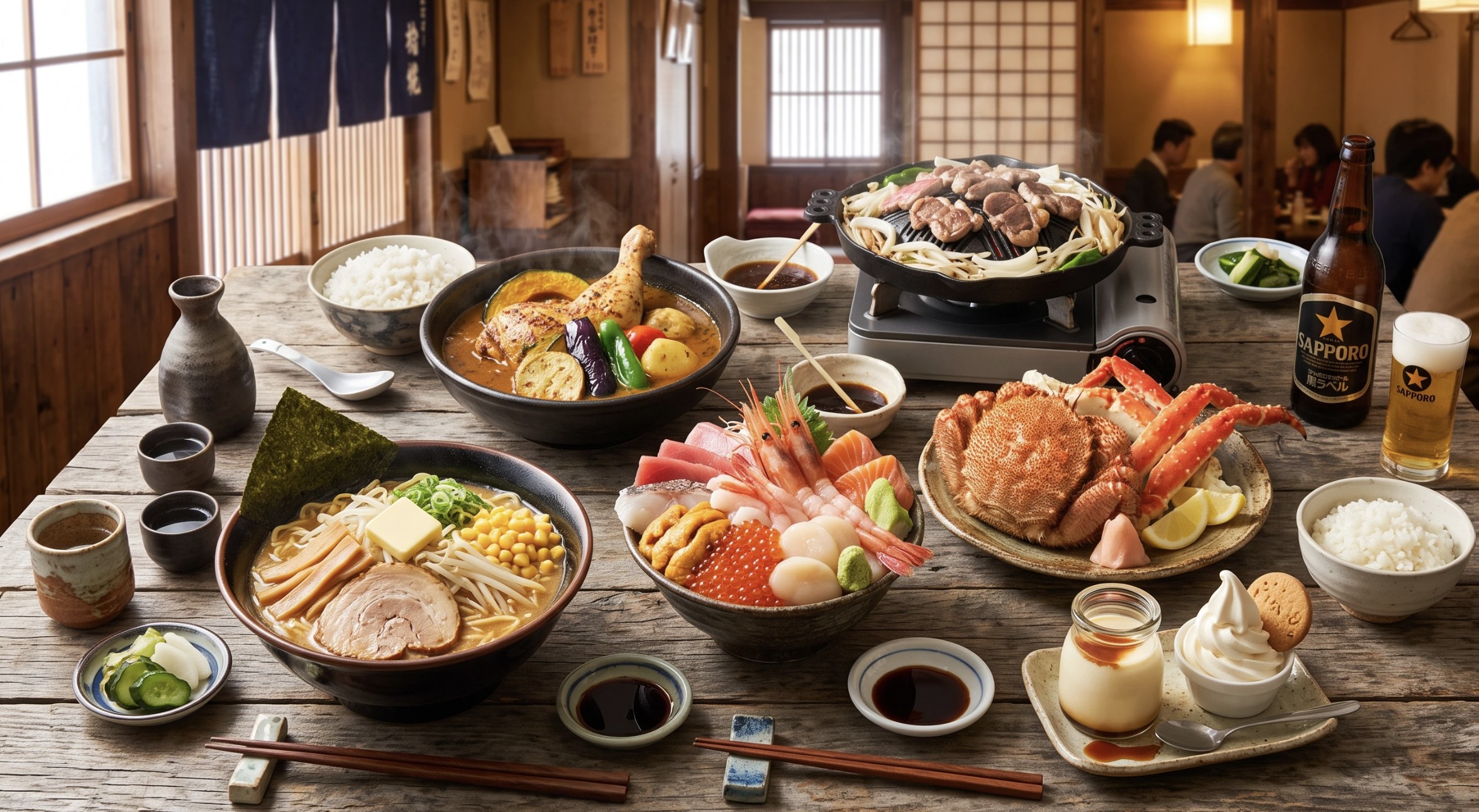
Sapporo (札幌), Hokkaido’s capital, is one of Japan’s best cities for hearty regional food. The essential dishes are Sapporo miso ramen, soup curry and jingisukan grilled lamb, while fresh seafood, crab, potatoes, dairy desserts and Sapporo Beer add the wider taste of Hokkaido (北海道). For UK travellers, the most practical approach is to plan one or two signature meals each day rather than trying to chase every speciality in a single weekend.
The 10 Foods to Try
Not every item below was invented in Sapporo or is exclusive to the city. These are the foods and drinks most worthwhile on a first visit because they are strongly associated with Sapporo or make excellent use of Hokkaido ingredients.
| Speciality | Japanese name | What to expect | Best time to try it |
|---|---|---|---|
| Sapporo miso ramen | 札幌味噌ラーメン | Rich miso broth, noodles and warming toppings | Lunch, late evening or a cold day |
| Soup curry | スープカレー | Spiced soup with large vegetables, rice and a chosen protein | Lunch or dinner |
| Jingisukan | ジンギスカン | Grilled lamb or mutton with vegetables | Dinner |
| Seafood bowl | 海鮮丼 | Raw seafood over rice, often salmon, scallops, uni and ikura | Breakfast or lunch |
| Hokkaido crab | 北海道のカニ | Hairy crab, snow crab or king crab, depending on season | Dinner or a market lunch |
| Hokkaido potatoes | じゃがいも・じゃがバター | Potatoes served simply, often with butter | Snack or izakaya side dish |
| Hokkaido dairy desserts | 北海道ソフトクリーム | Milk-rich soft serve and other dairy sweets | Afternoon or after dinner |
| Shiroi Koibito | 白い恋人 | Langue de chat biscuits with white chocolate | Souvenir or tea break |
| Zangi | ザンギ | Hokkaido-style seasoned fried chicken | Izakaya dinner or snack |
| Sapporo Beer | サッポロビール | Beer with historic roots in Sapporo | With jingisukan or izakaya food |
1. Sapporo Miso Ramen
Sapporo miso ramen (札幌味噌ラーメン) is the city’s best-known noodle dish. A typical bowl combines a miso-based broth with medium-thick or wavy noodles, pork, spring onion and vegetables. Sweetcorn, butter and bean sprouts are common additions, although not every shop uses the same toppings.
The style is especially satisfying in winter, but ramen is an all-year meal in Sapporo. Susukino (すすきの) has a high concentration of ramen shops and is home to Ganso Sapporo Ramen Yokocho (元祖さっぽろラーメン横丁), a narrow alley with several small ramen counters.
- Expect to order from a ticket vending machine at some ramen shops.
- Queues are normal at well-known venues, especially at lunch and late in the evening.
- Many small ramen counters do not accept reservations.
- Ask about allergens where necessary, as broths may contain pork, fish, shellfish, soy, wheat or sesame.
For a popular independent bowl, Ramen Shingen (らーめん信玄) is a frequently recommended choice. Check its current opening hours and queue conditions before travelling, as they can change.
2. Sapporo Soup Curry
Soup curry (スープカレー) is a modern Sapporo speciality: a thin, aromatic curry soup served with rice, large-cut vegetables and a protein such as chicken, pork, seafood or tofu. Diners can often choose the spice level and add extra toppings.
Unlike a thick Japanese curry, soup curry is closer to a spiced broth. It is an excellent option for visitors who want a filling meal without the richness of ramen, and it makes use of Hokkaido vegetables such as pumpkin, potatoes, carrots and peppers.
- Start with a medium spice level if you are unsure; heat levels vary substantially between restaurants.
- Chicken leg with seasonal vegetables and rice is a reliable first order.
- Ask staff about allergens because spice pastes and stocks can contain ingredients not obvious from an English menu.
- Popular specialist shops may have queues at lunch and dinner, so arrive early where possible.
Magic Spice (マジックスパイス) and Soup Curry SAMA (スープカレーSAMA) are established names with Sapporo locations. Check the individual branch before travelling, as menus, opening hours and reservation policies vary.
3. Kaisen Don
Kaisen don (海鮮丼) is a seafood rice bowl topped with raw fish and shellfish. It is not unique to Sapporo, but the city is an accessible place to try Hokkaido seafood, including salmon, scallops, sea urchin (uni, うに), salmon roe (ikura, いくら) and crab.
Nijo Market (二条市場) is central and convenient for a seafood breakfast or lunch. It is a retail market rather than a single restaurant, so freshness, prices, English support and opening hours differ by stall. Visit early if a market breakfast is a priority, but do not assume every outlet opens at the same time.
- Ask for the price before ordering premium ingredients such as uni or crab.
- Seafood availability and quality are seasonal, so a menu can change from one visit to the next.
- Raw seafood may not suit people who are pregnant, immunocompromised or advised to avoid raw shellfish and fish.
- Carry some cash, as smaller market vendors may have limited payment options.
4. Jingisukan Grilled Lamb
Jingisukan (ジンギスカン), often written in English as Genghis Khan, is Hokkaido’s iconic grilled lamb or mutton dish. Thin slices of meat and vegetables cook on a distinctive domed grill, with the vegetables often placed around the edge to absorb flavour and juices.
The dish is social, smoky and best enjoyed at dinner. Some restaurants serve marinated meat, while others offer unmarinated lamb with a dipping sauce. If you are unfamiliar with lamb, start with a standard lamb set rather than ordering the most unusual cuts.
Sapporo Beer Garden (サッポロビール園) is a well-known place to combine jingisukan with beer. It can be busy at weekends, during the Sapporo Snow Festival and in peak summer travel periods, so reserve directly where the restaurant offers bookings.
5. Hokkaido Crab
Hokkaido is known for several crab varieties, including king crab (tarabagani, タラバガニ), snow crab (zuwaigani, ズワイガニ) and hairy crab (kegani, 毛ガニ). They differ in texture, sweetness, availability and price, and no single crab is automatically “best”.
Crab can appear grilled, boiled, in hot pots, on sushi or as part of a multi-course meal. It is usually one of the more expensive dining experiences in Sapporo, so look at set-course prices, service charges and the weight-based pricing of whole crab before ordering.
Kani Honke (かに本家) is a long-running crab restaurant group with Sapporo branches. Book ahead for an evening course, especially on Fridays, weekends and Japanese public holidays.
6. Shiroi Koibito
Shiroi Koibito (白い恋人) is one of Hokkaido’s most recognisable souvenirs. The classic version combines two thin langue de chat biscuits with white chocolate in the middle, although the brand also produces other variations.
Shiroi Koibito Park (白い恋人パーク) is a themed visitor attraction operated by the confectionery company. It offers a mixture of exhibition, shopping, gardens and paid experience areas; check the official website for the latest ticket, opening and production-tour arrangements before visiting.
7. Jaga Butter
Jaga butter (じゃがバター) is a simple dish of hot Hokkaido potato served with butter. It is not exclusive to Sapporo, but Hokkaido’s potato production makes it a natural local snack, side dish or winter-event comfort food.
You may see it at food festivals, casual restaurants, izakaya and tourist-focused markets. Different outlets may add salt, cheese, corn, seafood or fermented squid, so order the plain version first if you want the classic flavour.
8. Hokkaido Soft Serve
Hokkaido soft serve (北海道ソフトクリーム) is prized for its rich milk flavour. It is available across Sapporo in cafés, department-store food halls, tourist attractions and around major stations, with milk, vanilla and seasonal fruit flavours commonly available.
Soft serve is a good year-round snack, even in cold weather. If you have a dairy allergy or lactose intolerance, ask carefully: “milk” and “soft cream” labels do not guarantee that a product is suitable for your dietary needs.
9. Zangi Fried Chicken
Zangi (ザンギ) is Hokkaido-style seasoned fried chicken. It is especially associated with Kushiro (釧路), eastern Hokkaido, but is widely available in Sapporo’s izakaya, casual restaurants and takeaway counters. The chicken is commonly marinated with soy sauce, ginger and garlic before frying, though recipes differ.
Think of zangi as a regional cousin of karaage (唐揚げ), rather than a dish invented exclusively in Sapporo. It is an easy option for visitors who want a familiar, savoury snack alongside beer, ramen or izakaya dishes.
10. Sapporo Beer
Sapporo Beer (サッポロビール) has deep roots in the city. The Kaitakushi Beer Brewery was completed in Sapporo in 1876, beginning the history of the Sapporo Beer brand. Beer is a natural match for jingisukan, zangi and grilled seafood, but always drink responsibly and check the legal drinking age requirements in Japan.
The Sapporo Beer Museum (サッポロビール博物館) explores the company’s history and is Japan’s only museum dedicated to beer. Museum tours, tastings, restaurant access and opening arrangements can change, so confirm the official information before travelling.
Where to Eat in Sapporo
- Susukino (すすきの): Best for late-night ramen, izakaya, jingisukan and a high concentration of restaurants.
- Nijo Market (二条市場): Useful for seafood breakfasts, seafood bowls and market browsing; individual shop hours vary.
- Sapporo Station: Convenient for department-store food halls, restaurants and quick meals before or after a train.
- Odori (大通): A central area for cafés, shopping, restaurants and seasonal food events.
- Sapporo Factory: Useful for combining the Sapporo Beer Museum area with shops and restaurants.
Practical Food Tips
- Reserve key dinners: Popular jingisukan and crab restaurants can book out on weekends, during festivals and around public holidays.
- Expect queues for ramen: Queueing is normal at famous ramen and soup-curry shops, and many do not accept bookings.
- Check market hours: Nijo Market does not operate as one business; opening hours and closing days are set by individual shops.
- Carry some cash: Larger restaurants and department stores usually accept cards, but small markets and older casual outlets may prefer cash.
- Know your dietary needs: Seafood, stock, sauces and broths can contain fish, shellfish, soy, gluten, sesame and dairy. Ask before ordering rather than relying only on menu labels.
- Do not tip routinely: Tipping is not standard in Japanese restaurants. Pay the stated total unless a venue explains a specific service charge.
Frequently Asked Questions
- What food is Sapporo most famous for?
Sapporo is most strongly associated with miso ramen, soup curry and jingisukan grilled lamb. Seafood, crab, dairy desserts and Sapporo Beer are also major parts of the city’s food identity. - Is Sapporo good for seafood?
Yes. Sapporo is a convenient base for Hokkaido seafood, with seafood bowls, sushi, crab and izakaya dishes available across the city. Nijo Market is popular, but it is not the only place to find good seafood. - Do I need to reserve restaurants in Sapporo?
Reserve popular jingisukan and crab restaurants for weekend dinners, festival periods and public holidays. Ramen and soup-curry shops often operate on a walk-in, queue-based basis instead. - What is the difference between zangi and karaage?
Both are Japanese fried chicken styles. Zangi is a Hokkaido speciality, particularly associated with Kushiro, and is often more heavily seasoned before frying. Recipes vary by restaurant. - Where can I try several Sapporo foods in one area?
Susukino is the most practical evening area for ramen, izakaya dishes, jingisukan and bars. Nijo Market is more suitable for breakfast or lunch seafood, while Sapporo Station is convenient for food halls and restaurant floors.
Save this Sapporo food guide before your trip, then check each restaurant’s current opening hours, booking rules and menu shortly before you go. The city rewards a flexible appetite: one brilliant bowl of ramen, a relaxed jingisukan dinner and a seafood breakfast will tell you more about Hokkaido than a rushed attempt to eat everything in one day.