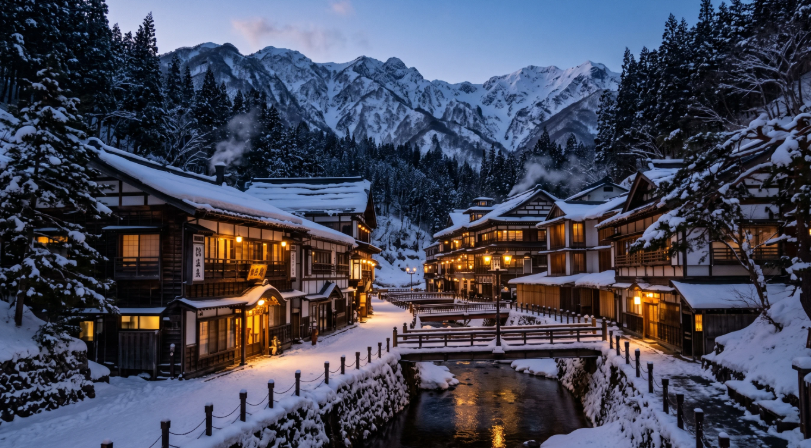
Winter in Japan brings together skiing, snowboarding and traditional hot spring bathing. Hokkaido, Tohoku and Japan’s mountain regions receive regular snowfall, while onsen towns offer a relaxing contrast to time on the slopes.
This guide introduces practical ski and hot spring destinations for a winter trip to Japan. Snowfall, lift operations, road conditions, transport services and accommodation availability vary each season, so check official information before booking.
What to Expect in Winter
Japan’s winter travel season generally runs from December to March, although snow conditions depend on the region, altitude and weather patterns. Northern Japan and mountain areas are the main destinations for winter sports, while cities such as Tokyo, Kyoto and Osaka can be cold without receiving significant snow.
- Pack for winter weather: Bring insulated layers, waterproof outerwear, gloves, a warm hat and footwear with reliable grip.
- Allow flexibility: Heavy snowfall and strong winds can affect roads, local buses, flights and ski-lift operations.
- Book popular dates early: Accommodation may be limited during weekends, Christmas and New Year, Japanese school holidays and major winter events.
- Check conditions directly: Review the official snow report, lift status and transport information shortly before travelling.
- Carry cash as well as cards: Major resorts and hotels commonly accept cards, but rural businesses, local buses and smaller facilities may still prefer cash.
Japan’s Leading Ski Destinations
Japan has ski resorts for beginners, families, skiers, snowboarders and travellers who want to combine snow sports with hot spring stays. These destinations are widely known for their mountain access and winter travel appeal.
Niseko United, Hokkaido
Niseko United is one of Japan’s best-known ski areas. It consists of four resorts on Niseko Annupuri: Grand Hirafu, Hanazono, Niseko Village and Annupuri.
Best for: Travellers seeking a major Hokkaido ski destination with varied accommodation and several connected resort areas.
Nearest major airport: New Chitose Airport.
Practical tip: Reserve accommodation, airport transfers, ski lessons and equipment hire well in advance for peak winter dates.
Hakuba Valley, Nagano
Hakuba Valley includes 10 ski resorts in the Northern Japanese Alps. The area hosted events during the 1998 Nagano Winter Olympics and is a popular mountain destination for travellers arriving from Tokyo.
Best for: A multi-resort ski trip with varied terrain and accommodation areas.
Nearest rail hub: Nagano Station, followed by an onward bus connection.
Practical tip: Select your preferred ski area before booking accommodation, as Hakuba Valley covers several separate resort zones.
Nozawa Onsen, Nagano
Nozawa Onsen combines a ski resort with a traditional hot spring village. The town has 13 community public baths, known as soto-yu, which are maintained by the local community.
Best for: Travellers wanting skiing and a traditional onsen-town stay in one location.
Nearest rail hub: Iiyama Station, with onward transport to Nozawa Onsen.
Practical tip: Public baths are part of everyday local life, so observe the rules and check notices at each facility before entering.
Furano Ski Resort, Hokkaido
Furano Ski Resort is in central Hokkaido. It is a useful choice for travellers who want to combine skiing with a wider Hokkaido itinerary that includes Furano, Asahikawa or Sapporo.
Best for: A ski holiday in central Hokkaido.
Nearest airport options: Asahikawa Airport and New Chitose Airport, depending on your route.
Practical tip: Check the official resort access information to compare airport transfers and public-transport options for your dates.
Zao Onsen, Yamagata
Zao Onsen brings together skiing and a historic hot spring town in Yamagata Prefecture. The area is also known for juhyo, trees covered in snow and ice that are often called “snow monsters”.
Best for: Travellers seeking skiing, hot springs and a distinctive winter landscape in Tohoku.
Nearest city: Yamagata, with onward transport to Zao Onsen.
Practical tip: Juhyo conditions are weather-dependent, so do not plan around a guaranteed viewing.
Myoko Kogen, Niigata
Myoko Kogen is a mountain area in Niigata Prefecture with several ski resorts and hot spring villages. It can suit travellers looking for a quieter mountain stay than Japan’s largest international ski destinations.
Best for: Skiers and snowboarders interested in a traditional mountain-resort atmosphere.
Nearest rail hub: Joetsumyoko Station, followed by local transport.
Practical tip: Confirm onward bus times before travelling, as winter services may be less frequent than those in major cities.
Winter Hot Spring Destinations
Japan’s hot springs, known as onsen, are a popular winter experience. Many towns have public bathhouses and ryokan with indoor or outdoor baths, but facilities differ in their rules, opening times and tattoo policies.
Kusatsu Onsen, Gunma
Kusatsu Onsen is one of Japan’s most recognisable hot spring towns. Its central Yubatake, often translated as “hot water field”, channels naturally heated spring water through the town centre.
Best for: A traditional onsen-town stay from Tokyo or Karuizawa.
Practical tip: Kusatsu is generally reached with an onward bus journey, so confirm the final connection before leaving Tokyo or Karuizawa.
Yufuin and Beppu, Oita
Yufuin and Beppu are major hot spring destinations in Oita Prefecture, Kyushu. Yufuin is known for its townscape below Mount Yufu, while Beppu is known for its many hot spring facilities and Jigoku, or “hells”, viewing sites.
Best for: A warm-weather winter trip in Kyushu with varied hot spring experiences.
Practical tip: Consider the character of each town before choosing where to stay, rather than assuming they offer the same experience.
Noboribetsu Onsen, Hokkaido
Noboribetsu Onsen is a leading hot spring destination in Hokkaido. Nearby Jigokudani, also known as Hell Valley, is a volcanic landscape associated with the area’s hot spring activity.
Best for: A dedicated onsen stay during a Hokkaido itinerary.
Practical tip: Check public-transport connections from Sapporo or New Chitose Airport before booking a short stay, particularly during periods of heavy snow.
Onsen Etiquette
Many traditional public onsen are gender-separated and require bathers to enter without swimwear. Private baths, often called kashikiri baths, may be available at some ryokan and onsen facilities for guests who prefer privacy.
- Wash before entering: Clean yourself at the washing area and rinse away all soap before using the bath.
- Keep towels out of the water: Do not place your small towel, hair or head in the communal bath.
- Do not take photographs: Photography is generally prohibited in changing rooms and bathing areas.
- Check tattoo rules directly: Many onsen still do not permit tattooed guests. Some facilities accept small covered tattoos or offer private baths, but policies are set individually.
- Respect other bathers: Keep noise low, avoid splashing and do not treat the bath as a swimming pool.
Winter Transport Tips
Japan’s rail network provides convenient access to many winter regions, but ski resorts and onsen towns often require a final bus or taxi transfer. Build extra time into your itinerary during snowstorms, and avoid relying on the final connection if you are arriving from a flight or long-distance train.
- Tokyo to Nagano resorts: Use rail services to Nagano or Iiyama, then continue by bus to destinations such as Hakuba Valley or Nozawa Onsen.
- Hokkaido ski areas: New Chitose Airport is a common gateway for Niseko and Sapporo-area itineraries, while Asahikawa Airport may suit some central Hokkaido routes.
- Regional rail passes: Compare individual fares with the cost and validity of any official regional rail pass before purchasing.
- Luggage delivery: Consider a reputable luggage-delivery service if you are travelling between cities and ski resorts with bulky cases or ski equipment.
- Winter driving: Hire a car only if you are confident driving in snow and ice, and confirm that suitable winter equipment is included.
Winter Food to Try
Cold weather is an excellent reason to try warming regional dishes. Look for local specialities, check recent opening hours and make reservations where necessary during busy periods.
- Nabemono: Japanese hot-pot dishes made with vegetables, tofu, meat or seafood.
- Hoto: A miso-based noodle dish associated with Yamanashi Prefecture.
- Sapporo ramen: Sapporo is particularly associated with miso ramen.
- Oyaki: Nagano-style filled dumplings, often made with seasonal vegetables.
- Hokkaido seafood: Menus often feature regional seafood, although ingredients and availability depend on the season and restaurant.
Ski and Onsen Comparison
| Destination | Region | Best suited to | Winter highlight | Planning point |
|---|---|---|---|---|
| Niseko United | Hokkaido | Ski and snowboard holidays | Four resort areas on Niseko Annupuri | Book accommodation and transfers early |
| Hakuba Valley | Nagano | Multi-resort skiing | Ten ski resorts in the Japanese Alps | Choose accommodation near your preferred resort |
| Nozawa Onsen | Nagano | Skiing with an onsen-town stay | Thirteen community public baths | Observe public-bath etiquette |
| Furano Ski Resort | Hokkaido | Central Hokkaido winter trips | Mountain resort near Furano | Compare airport and public-transport options |
| Zao Onsen | Yamagata | Skiing and hot springs in Tohoku | Juhyo snow-and-ice formations | Viewing conditions are weather-dependent |
| Myoko Kogen | Niigata | Traditional mountain stays | Several ski areas and onsen villages | Confirm local transport times |
| Kusatsu Onsen | Gunma | Classic onsen-town breaks | Yubatake hot-water field | Plan the final bus connection |
| Noboribetsu Onsen | Hokkaido | Dedicated Hokkaido onsen stays | Volcanic Jigokudani landscape | Allow for winter travel disruption |
Frequently Asked Questions
When should I book a winter trip?
Book as early as possible for Christmas and New Year, weekends, Japanese school holidays and major winter events. Availability varies by destination, room type and season, so confirm accommodation before committing to non-refundable transport.
Are tattoos allowed in Japanese onsen?
Policies vary by facility, but many public onsen still do not admit tattooed guests. Some properties allow small covered tattoos or offer private bathing options, so check directly with the facility before visiting.
Can beginners ski in Japan?
Yes. Many large ski areas have beginner slopes, equipment rentals and lessons. Check the official resort website for current lesson languages, age limits, booking requirements and lift-access conditions.
Is winter transport reliable?
Rail travel is generally dependable, but severe weather can disrupt flights, roads, local buses and mountain lifts. Keep plans flexible, monitor official transport alerts and avoid scheduling a resort transfer too close to an international departure.
Official Planning Resources
- Japan National Tourism Organization
- JR East
- JR Hokkaido
- Niseko United
- Hakuba Valley
- Nozawa Onsen Ski Resort
- Zao Onsen Tourism Association
- Visit Japan Web
Japan in winter rewards careful planning. Choose a destination that suits your skiing ability, preferred accommodation and travel route, then check official weather, snow and transport information immediately before departure.