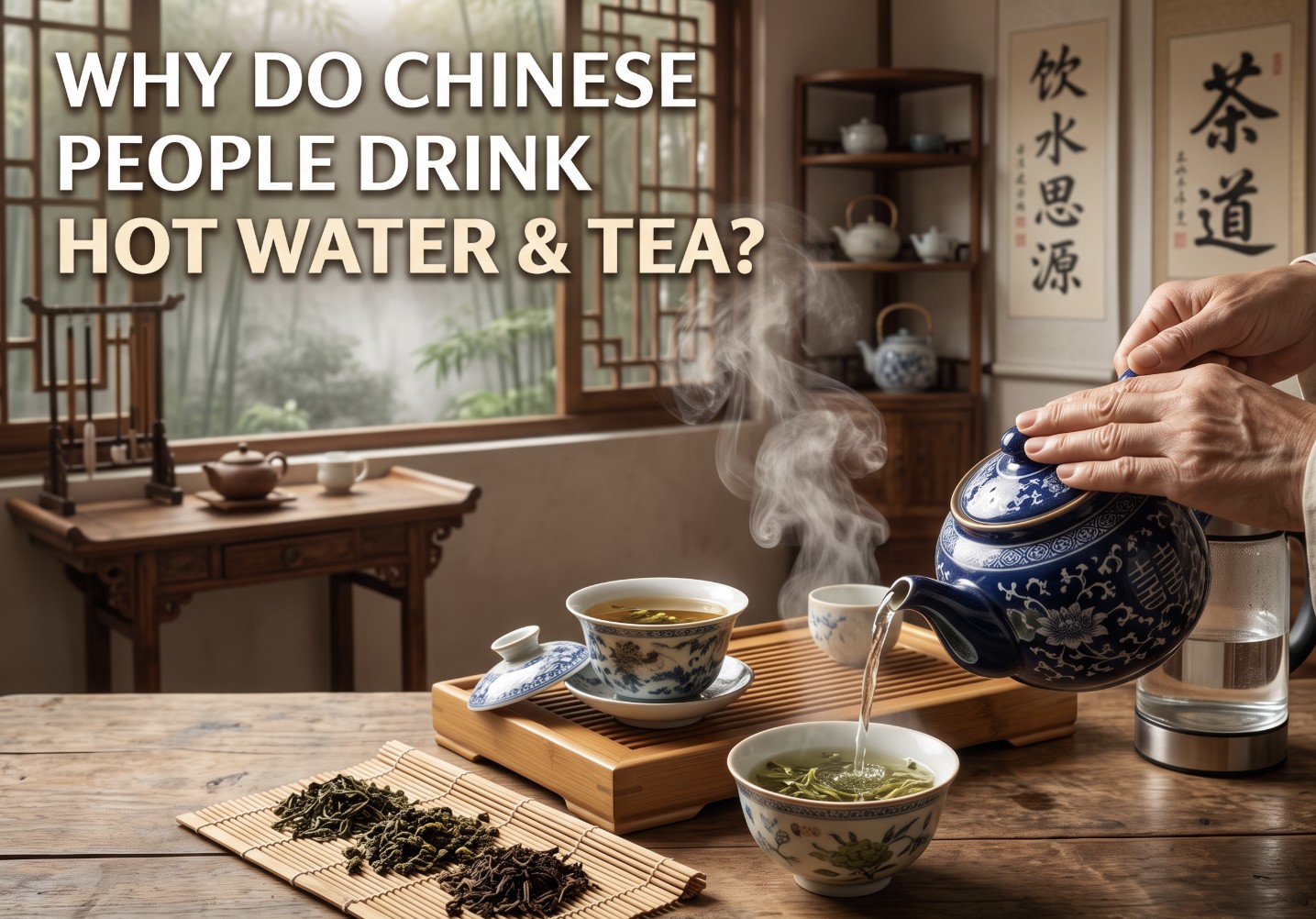
Many Chinese people enjoy hot water, warm tea and other warm drinks throughout the day, including in summer. The habit has cultural, historical and practical roots: tea is central to Chinese food culture, boiling water was historically important for safer drinking water, and Traditional Chinese Medicine has long associated warmth with balance and comfort. However, preferences vary widely across China, Asia and the global Chinese diaspora, so it is not accurate to say that all Asian people drink hot water or avoid cold drinks.
Hot water is best understood as a familiar everyday drink and a gesture of hospitality, rather than a medical cure. Modern health advice does not support claims that warm drinks remove “toxins”, prevent cancer, cure infections or cause weight loss. The most important things are safe drinking water, enough fluid, a balanced diet and appropriate medical care when you are unwell.
It Is Not an “Asian” Rule
Asia is made up of many countries, languages, climates and food cultures. Tea drinking traditions exist in China, Japan, Korea, India, Sri Lanka, Vietnam, Central Asia and many other places, but they are not identical. Some people prefer hot tea, others drink iced tea, coffee, room-temperature water, chilled soft drinks or a combination of all of these.
Even within China, habits differ by region, generation, season, household and personal health beliefs. It is common to be served hot water or tea in some restaurants, workplaces and homes, but cold drinks are also widely available and enjoyed. Avoid treating a cultural tendency as a rule that every Chinese or Asian person follows.
Tea Is Central to Chinese Culture
Tea has a long history in China and remains an important part of hospitality, family life, business meetings and meals. Green tea, black tea, oolong tea, pu-erh tea, white tea, scented teas and herbal infusions all have different flavours, preparation methods and regional associations. A person may drink tea at home, carry tea leaves in a flask, or refill a cup with hot water throughout the day.
Offering tea can be a simple sign of welcome and respect. In a restaurant, tea may be served alongside a meal; in a family setting, it can create an opportunity to sit and talk. Tea customs also vary: the type of tea, water temperature, brewing time and whether tea is served in a cup, pot or lidded gaiwan all depend on local practice and personal preference.
Why Boiled Water Became Common
One practical reason for the popularity of hot water is the long history of boiling water before drinking it. Before modern water-treatment systems were widespread, boiling water helped reduce the risk from many disease-causing microorganisms. This made boiled water a sensible and important household practice in many parts of the world, not only in China.
Boiling water and drinking it while hot or warm can become a lasting habit, even as water infrastructure changes. In some places, people may still prefer boiled water because of concerns about local tap-water quality, the taste of untreated water or family custom. Travellers should never assume that tap water is safe simply because local people drink hot water: ask your accommodation provider or check reliable destination-specific advice.
Boiling can make water safer from many biological hazards, but it does not remove every possible chemical contaminant. If official local advice says tap water is not safe to drink, follow that advice and use an appropriate safe water source.
Traditional Chinese Medicine and Warm Drinks
Traditional Chinese Medicine, often shortened to TCM, is a broad system of historical health practices and theories. In TCM language, warm drinks and foods may be described as supporting balance, warming the body or helping the movement of qi (气 / 氣), often translated as vital energy. Cold drinks may be viewed as less suitable for some people or at certain times, such as during cold weather or menstrual discomfort.
These are traditional cultural and medical beliefs, not the same thing as conclusions from modern biomedical research. Some people find a warm drink soothing when they have a sore throat, feel cold or have minor digestive discomfort. That personal comfort does not mean hot water treats infections, improves fertility, prevents serious disease or replaces medical assessment.
Respectful travel means recognising that TCM remains meaningful to many people. At the same time, health claims should be evaluated carefully. If you have ongoing pain, unusual bleeding, unexplained weight change, persistent digestive symptoms or other concerning symptoms, seek advice from a qualified healthcare professional rather than relying on a drink temperature or home remedy.
Does Hot Water Improve Digestion?
A warm drink may feel pleasant with or after a meal, and drinking enough fluid is important for normal body function. However, there is no good evidence that hot water “melts fat”, flushes toxins from the body or makes food disappear from the stomach. The liver, kidneys, lungs and digestive system already have important roles in processing waste and maintaining normal body function.
For some people, warm drinks may feel gentler than iced drinks when they have a sensitive stomach or a sore throat. Others prefer cold water, especially in hot weather or after exercise. Choose the temperature that is comfortable for you and focus on drinking enough safe fluid rather than treating one temperature as medically superior.
Hot Drinks, Hydration and Caffeine
Water is an excellent everyday choice for hydration, but tea and coffee can also count towards fluid intake. The NHS notes that water, lower-fat milk and sugar-free drinks, including tea and coffee, contribute to daily fluid intake. People may need more fluids in hot weather, during prolonged activity, while unwell or when pregnant or breastfeeding.
Tea can contain caffeine, with the amount varying by type and preparation. Many people tolerate tea well, but caffeine can affect sleep, anxiety, heart rhythm and some health conditions. If you are pregnant, follow current healthcare advice on caffeine intake. Herbal drinks also vary: “herbal” does not automatically mean suitable for everyone, especially during pregnancy or when taking medicines.
Let Very Hot Drinks Cool Down
Hot water does not need to be boiling hot to be enjoyable. Let tea, coffee and hot water cool to a comfortable drinking temperature before taking a sip. Extremely hot drinks can burn the mouth and throat. Repeatedly drinking beverages at very high temperatures may also increase the risk of oesophageal cancer.
The International Agency for Research on Cancer has classified drinking very hot beverages, at temperatures above approximately 65°C, as probably carcinogenic to humans. This classification concerns the temperature of the drink rather than tea itself. Waiting a few minutes, using a smaller sip and avoiding drinks that feel painfully hot are sensible precautions.
What About Fever and Illness?
A fever is part of the body’s response to illness, but it should not be encouraged by deliberately trying to overheat the body or force sweating. Drinking enough fluid can help prevent dehydration during a fever, and water is often a good choice. Rest, monitoring symptoms and seeking medical advice when appropriate are more reliable approaches than attempting to “sweat out toxins”.
Follow current medical advice for fever, particularly for babies, children, older adults, pregnant people and anyone with serious health conditions. Seek urgent medical help for severe symptoms, breathing difficulties, confusion, a stiff neck, a rash that does not fade when pressed, signs of dehydration or a fever that is worrying or persistent.
How to Order Respectfully in China
If you are visiting China or dining in a Chinese restaurant, it is completely fine to ask for the drink you prefer. Hot water is 热水 (rè shuǐ) in Mandarin, while tea is 茶 (chá). You may be offered hot water automatically, particularly in casual restaurants, but you can politely request a cold drink if one is available.
If someone offers you tea or hot water in their home, accepting it can be a warm social gesture, but you do not have to drink something that is too hot or that you do not want. Allow it to cool, take a small sip, or politely explain your preference. Good manners are about appreciation and consideration, not forcing yourself to follow a custom incorrectly.
The Main Takeaway
Chinese hot-water and tea habits are shaped by tea culture, hospitality, the historical importance of boiled water and Traditional Chinese Medicine beliefs about warmth and balance. They are meaningful cultural practices, but they are not proof that hot water cures disease or that cold drinks are harmful for everyone.
Enjoy tea or hot water at a comfortable temperature, drink enough safe fluid and seek evidence-based medical advice when you are unwell. The most respectful and accurate answer is that drinking preferences are personal, while the traditions behind them are rich, varied and worth understanding.
Frequently Asked Questions
- Why do Chinese people drink hot water? Reasons vary, but common influences include the cultural importance of tea, the historical practice of boiling water for safety, personal preference and Traditional Chinese Medicine beliefs about warmth and balance.
- Do all Asian people drink hot water? No. Asia includes many different cultures and drinking habits. Some people prefer hot drinks, some enjoy iced drinks and many choose both depending on the weather, meal and personal preference.
- Does hot water cure illness or remove toxins? No. Hot water can be comforting and contributes to hydration, but it does not cure infections, remove toxins, prevent cancer or replace medical care.
- Is drinking very hot tea safe? Let hot drinks cool before drinking them. Very hot beverages, above about 65°C, can burn the mouth and throat and may increase the risk of oesophageal cancer when consumed repeatedly.
- Does tea count towards hydration? Yes. Tea and coffee can contribute to daily fluid intake, although water remains an excellent choice and caffeine should be consumed in moderation.