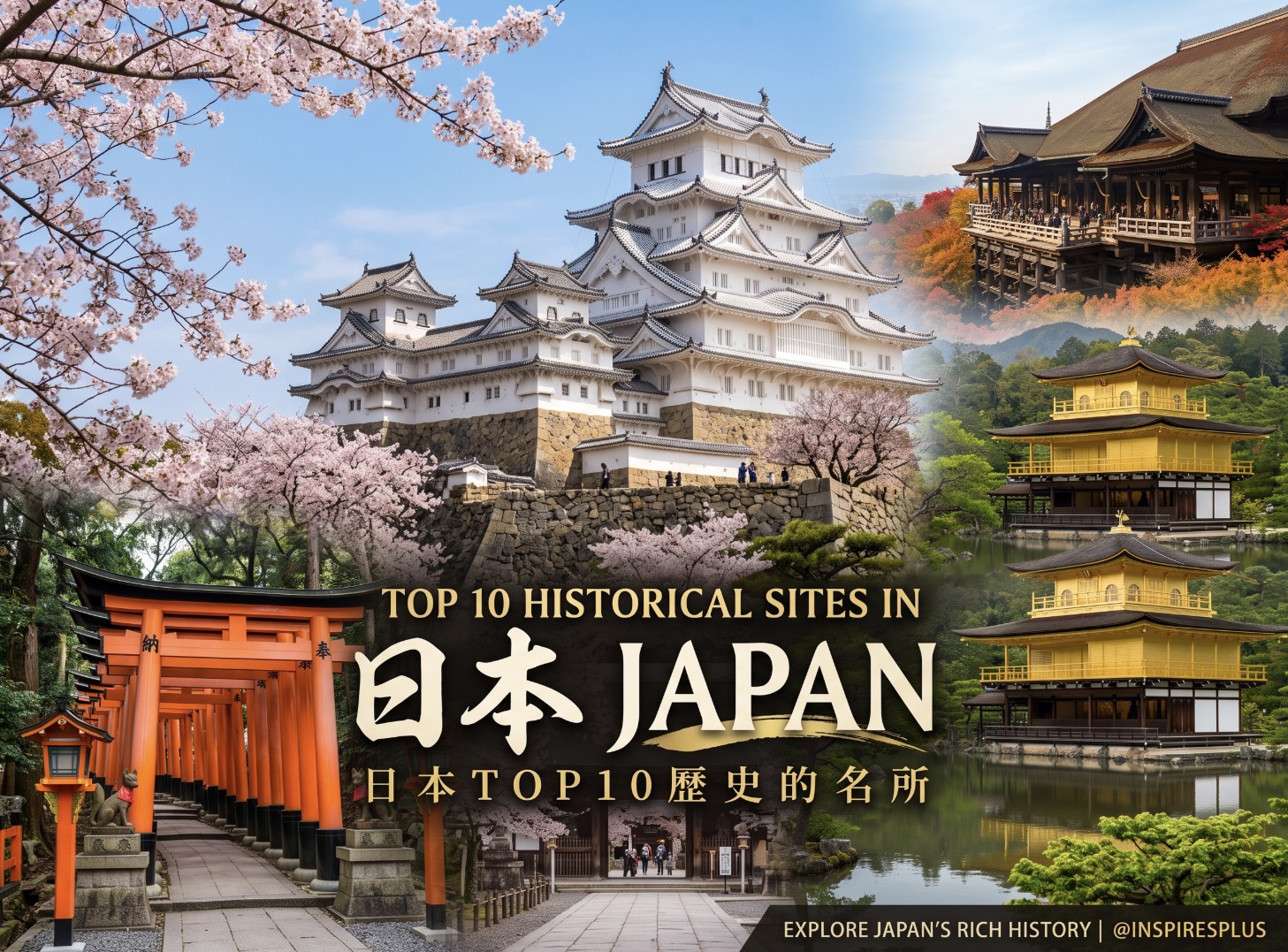
Japan’s historical sites reveal centuries of religious tradition, imperial culture, samurai rule, trade, conflict and rebuilding. From castles and Buddhist temples to Shinto shrines and memorial sites, these landmarks offer meaningful ways to understand the country beyond its modern cities.
This guide highlights ten important historical sites in Japan and gives practical advice for visiting respectfully. Opening hours, access arrangements, special events, photography rules and admission conditions can change, so check each official website before making a special journey.
Top 10 Historical Sites in Japan
This is a curated list rather than an official ranking. Each site represents a different part of Japan’s history, from early religious architecture and the Tokugawa shogunate to twentieth-century peace memorials.
- Himeji Castle (姫路城), Hyogo: Often called the White Heron Castle because of its white exterior, Himeji Castle is Japan’s best-known surviving original castle complex. Its main keep and defensive design date largely from the early seventeenth century, and it is a UNESCO World Heritage Site.
- Itsukushima Shrine (厳島神社), Hiroshima: Located on Miyajima, Itsukushima Shrine is famous for its large torii gate standing in the sea. The shrine is a UNESCO World Heritage Site and is closely associated with the sacred landscape of the island.
- Fushimi Inari Taisha (伏見稲荷大社), Kyoto: This important Shinto shrine is dedicated to Inari, associated with rice, agriculture and prosperity. It is known for its thousands of vermilion torii gates leading up Mount Inari.
- Todai-ji (東大寺), Nara: Todai-ji is a major Buddhist temple complex, best known for the Great Buddha in the Daibutsuden, or Great Buddha Hall. It is part of the Historic Monuments of Ancient Nara UNESCO World Heritage Site.
- Nijo-jo Castle (元離宮二条城), Kyoto: Built in 1603 as Tokugawa Ieyasu’s Kyoto residence, Nijo-jo Castle illustrates the power of the Tokugawa shogunate. Its Ninomaru Palace is known for painted sliding doors and “nightingale floors” that make a chirping sound when walked on.
- Hiroshima Peace Memorial and Peace Memorial Park (広島平和記念公園), Hiroshima: The Atomic Bomb Dome is preserved as a powerful reminder of the atomic bombing of Hiroshima in 1945. The wider Peace Memorial Park and museum encourage reflection on the human cost of war and the importance of peace.
- Senso-ji (浅草寺), Tokyo: Senso-ji is Tokyo’s oldest temple and one of its most visited religious sites. The temple precinct includes the Kaminarimon, or Thunder Gate, Nakamise shopping street and the main hall dedicated to Kannon.
- Nikko Toshogu (日光東照宮), Tochigi: Toshogu is the ornate mausoleum of Tokugawa Ieyasu, founder of the Tokugawa shogunate. It is part of the UNESCO-listed Shrines and Temples of Nikko and is known for elaborate decoration, including the Three Wise Monkeys carving.
- Matsumoto Castle (松本城), Nagano: Matsumoto Castle is one of Japan’s outstanding surviving original castles. Its black exterior gives it the nickname “Crow Castle”, and visitors can climb through the historic wooden keep.
- Osaka Castle (大阪城), Osaka: Originally associated with Toyotomi Hideyoshi, Osaka Castle played an important role in Japan’s late sixteenth- and early seventeenth-century political history. The current main keep is a 1931 reconstruction and contains a museum.
Why These Sites Matter
Japan’s historical sites are not all the same kind of attraction. Castles help explain the political and military power of samurai-era rulers, temples and shrines show the continuing importance of Buddhism and Shinto, and Hiroshima’s memorial sites address the impact of war and the pursuit of peace.
- Castles: Himeji, Matsumoto, Nijo-jo and Osaka Castle reveal different aspects of fortification, political power and restoration.
- Buddhist heritage: Todai-ji and Senso-ji are active places of worship as well as historical landmarks.
- Shinto heritage: Itsukushima Shrine, Fushimi Inari Taisha and Nikko Toshogu show the variety of shrine architecture and practice.
- Modern history: Hiroshima Peace Memorial Park provides a place for reflection on the destruction caused by the atomic bomb and the value of peace.
How to Plan Your Visits
These sites are spread across Japan, so plan them by region rather than trying to visit all ten on one short trip. Kyoto, Nara and Osaka combine naturally; Hiroshima and Miyajima work well together; Tokyo and Nikko can be paired; and Himeji can be reached from Kyoto, Osaka or Hiroshima by rail.
- Kyoto and Nara: Combine Fushimi Inari Taisha, Nijo-jo Castle and Todai-ji over several days rather than rushing them into one day.
- Hiroshima and Miyajima: Allow separate time for the Peace Memorial Park, museum and the ferry journey to Itsukushima Shrine on Miyajima.
- Tokyo and Nikko: Visit Senso-ji while exploring central Tokyo, then allow a full day or overnight stay for Nikko Toshogu and the wider Nikko area.
- Castle route: Himeji, Matsumoto and Osaka Castle are best treated as separate stops within a larger regional itinerary.
- Check access before travelling: Some sites have steep paths, uneven stone surfaces, narrow stairs or historic buildings with limited step-free access.
Important Visiting Tips
- Check official opening information: Hours, final-entry times, closures and special exhibitions can change by season or due to maintenance.
- Arrive early at popular sites: Fushimi Inari Taisha, Senso-ji, Himeji Castle and Itsukushima Shrine can be especially busy during weekends, holidays and peak travel seasons.
- Respect active worship sites: Shrines and temples are religious places, not only tourist attractions. Keep voices low in prayer areas and follow posted rules.
- Follow photography rules: Photography may be prohibited in temple halls, palace interiors, museum galleries or special exhibition areas. Do not use flash unless it is clearly permitted.
- Wear practical footwear: Historic castles can have steep wooden stairs, while shrine and temple grounds may have gravel paths, stone steps or slopes.
- Carry water and allow time: Large shrine precincts, castle grounds and temple complexes can involve more walking than expected.
- Check festival dates: Major annual festivals may be rewarding to see but can bring road closures, large crowds and accommodation demand.
Shrine and Temple Etiquette
Basic etiquette helps you visit respectfully. Rules vary by site, so always follow signs and staff instructions.
- Do not walk down the centre of a shrine approach if the site asks visitors to keep to the side.
- At a purification fountain, follow the posted instructions or observe how other visitors use the ladles.
- Remove shoes when required before entering an interior area.
- Dress respectfully and avoid obstructing worshippers or ceremonies.
- Do not touch historic carvings, painted doors, statues or fragile structures unless a site explicitly permits it.
- Keep drones away unless the site has clearly granted permission; they are prohibited at many major attractions.
Frequently Asked Questions
What is the best season to visit Japan’s historical sites?
Spring and autumn are popular because of mild weather and seasonal scenery, but they can also be very busy. Winter often brings fewer visitors, while summer can be hot and humid. The best choice depends on the region, your tolerance for crowds and the site you most want to see.
Do I need to book historical sites in advance?
Many shrine grounds, temple precincts and castle parks can be visited without advance booking. However, museums, palace interiors, guided tours, special exhibitions and peak-season entry arrangements may require a timed ticket or reservation. Check each site’s official website before travel.
Is the Japan Rail Pass worth buying for this itinerary?
The Japan Rail Pass may be useful for some multi-city itineraries involving eligible long-distance JR journeys, but it is not automatically the cheapest option. Compare the cost of your planned rail tickets with current official Japan Rail Pass conditions before purchase.
Can I visit shrines and temples without speaking Japanese?
Yes. Major sites commonly have some English information, but the amount of detail varies. Use official visitor information, maps and audio guides where available, and follow signs and staff guidance.
Which historical sites are best for visitors with limited mobility?
Accessibility varies significantly. Historic castles can have steep staircases and uneven surfaces, while large parks and some museum facilities may be more accessible. Contact the individual attraction directly before travelling if step-free access, accessible toilets or loan wheelchairs are essential.
Official Resources
- Japan National Tourism Organization: official travel guide
- UNESCO World Heritage Sites in Japan
- Himeji Castle official website
- Itsukushima Shrine official website
- Todai-ji Temple official website
- Nijo-jo Castle official website
- Hiroshima Peace Memorial Museum official website
- Senso-ji Temple official website
- Nikko Toshogu official website
- Matsumoto Castle official website
- Osaka Castle official website
Japan’s historical sites are most rewarding when you allow time to understand their context. Choose a few places that fit your route, check official information shortly before travelling, and leave enough space in your itinerary to explore each site without rushing.