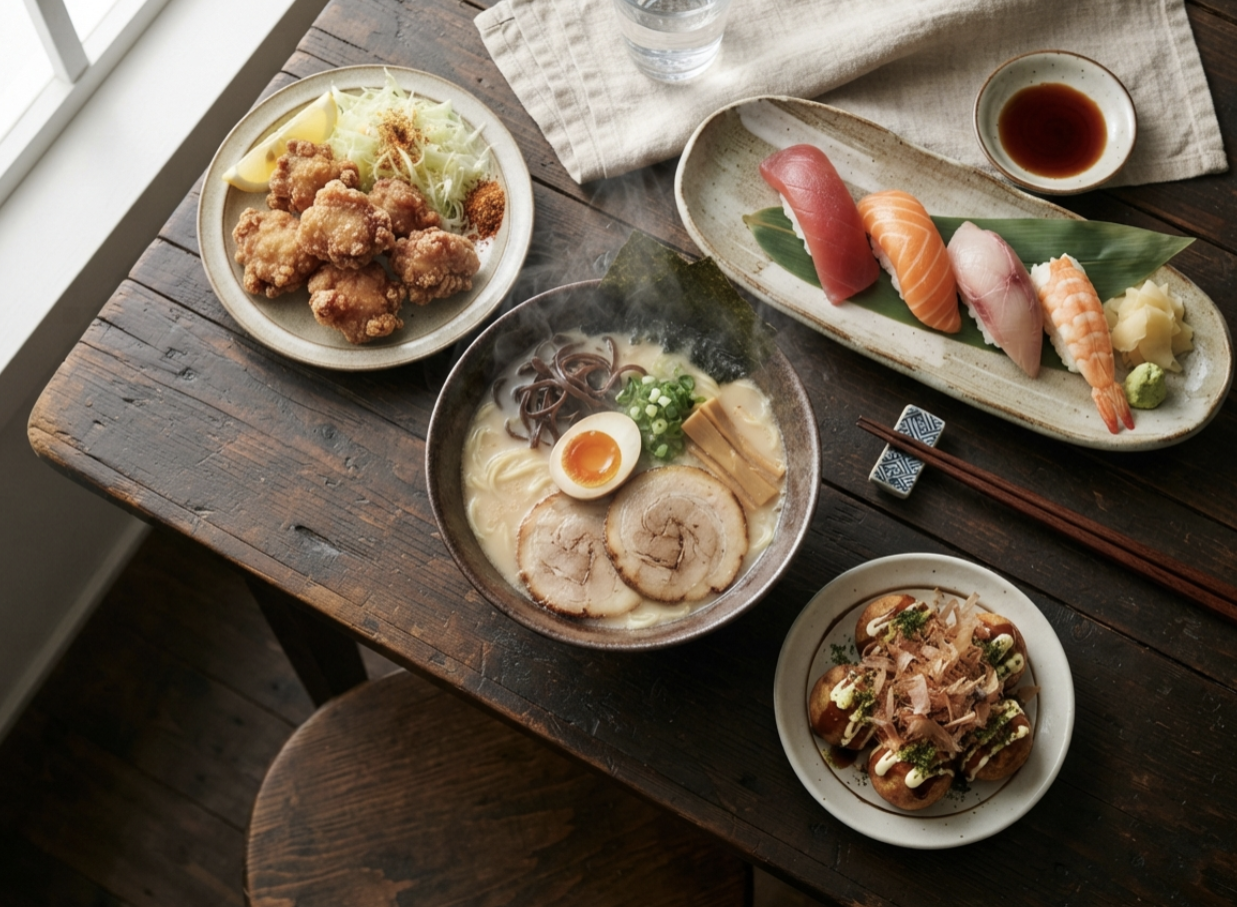
Japanese food stretches far beyond sushi and ramen. This Japanese food guide introduces 50 popular dishes, including noodles, rice bowls, grilled specialities, street snacks, hot pots and traditional sweets. Use it to recognise Japanese menu names, decide what to order in each region and build a more memorable food itinerary, whether it is your first trip to Tokyo or a return visit to Japan.
Editor’s note: the dishes covered here make an ideal starting point for exploring traditional Japanese food, but not every dish qualifies as “washoku” in the strict cultural sense. Japanese food culture blends long-established native traditions with modern adaptations and dishes influenced by other cuisines. The Ministry of Agriculture, Forestry and Fisheries describes washoku cuisine as a traditional dietary culture shaped by Japan’s geography, climate, regional ingredients and respect for seasonal produce, recognised by UNESCO as an Intangible Cultural Heritage in December 2013.
Why Japanese food is worth exploring
Japan is one of the world’s most rewarding places to eat because the experience changes dramatically from one region to the next. Tokyo excels at sushi, soba, ramen and contemporary dining; Osaka is synonymous with sociable flour-based street foods; Hiroshima has its own layered okonomiyaki; Nagoya is famous for richly flavoured miso dishes; and Hokkaido food culture is a superb showcase of seafood, dairy produce and lamb. If you are mapping out a wider trip, our 7-Day Japan Itinerary covering Tokyo, Kyoto and Osaka pairs neatly with this Japanese food guide.
At its heart, traditional Japanese food often follows the ichiju-sansai (一汁三菜) pattern: rice, one soup, a main dish and several side dishes. This is not a rigid daily rule, but it is a useful lens for understanding why rice, miso soup, grilled fish, pickles and small vegetable dishes work so naturally together in Japanese cuisine.
For destination ideas, use the official Japan National Tourism Organization travel guide. Before flying, complete entry procedures through the official Visit Japan Web portal, and always verify current entry requirements directly before departure.
Klook.comJapanese food at a glance
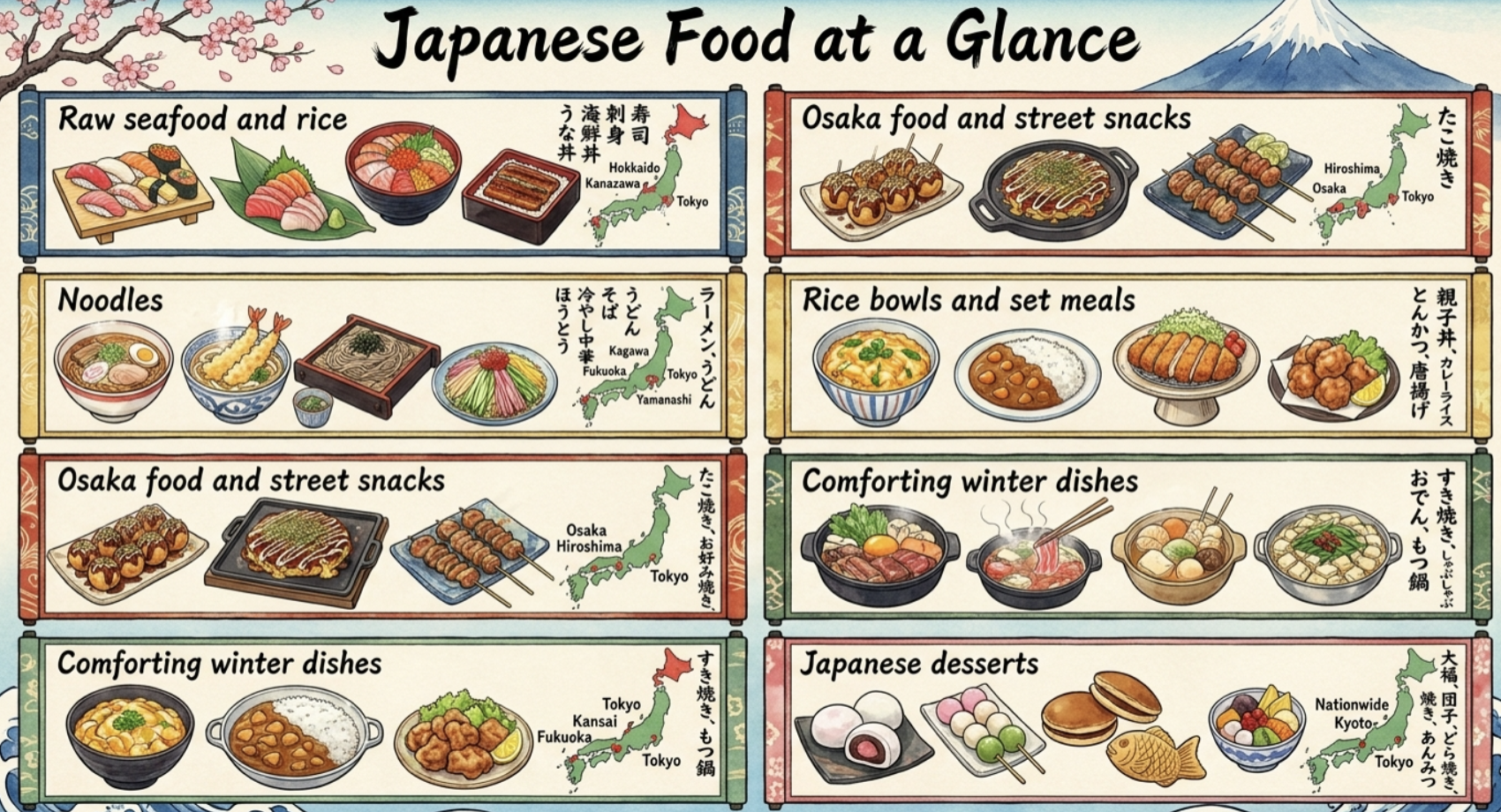
| Food group | Dishes to prioritise | Best-known areas | Useful Japanese menu words |
|---|---|---|---|
| Raw seafood and rice | Sushi, sashimi, kaisendon, unadon | Tokyo, Hokkaido, Kanazawa, Fukuoka | 寿司, 刺身, 海鮮丼, うな丼 |
| Noodles | Ramen, udon, soba, hiyashi chuka, hoto | Fukuoka, Kagawa, Tokyo, Yamanashi | ラーメン, うどん, そば, 冷やし中華 |
| Osaka food and street snacks | Takoyaki, okonomiyaki, yakitori | Osaka, Hiroshima, Tokyo | たこ焼き, お好み焼き, 焼き鳥 |
| Rice bowls and set meals | Oyakodon, curry rice, tonkatsu, karaage | Available nationwide | 親子丼, カレーライス, とんかつ, 唐揚げ |
| Comforting winter dishes | Sukiyaki, shabu-shabu, oden, motsunabe | Tokyo, Kansai, Fukuoka | すき焼き, しゃぶしゃぶ, おでん, もつ鍋 |
| Japanese desserts | Daifuku, dango, dorayaki, taiyaki, anmitsu | Nationwide, especially Kyoto and Tokyo | 大福, 団子, どら焼き, たい焼き, あんみつ |
1. Sushi, sashimi and seafood

Sushi (寿司)
Sushi pairs seasoned vinegared rice with toppings such as tuna, salmon, prawn, eel, egg or vegetables. The classic format is nigiri-zushi (握り寿司), where a hand-formed rice base supports a slice of fish. For an affordable introduction, look for kaiten-zushi (回転寿司), conveyor-belt sushi restaurants; for a special meal, reserve a counter seat at a specialist sushi restaurant in Tokyo.
Sashimi (刺身)
Sashimi is sliced raw seafood, or occasionally meat, served without rice. It works particularly well in coastal cities and at market restaurants, where the appeal lies in the quality, freshness and precise cutting of the fish. If raw seafood is not for you, ask for grilled fish, cooked prawns, tamagoyaki or vegetable sushi instead.
Klook.comKaisendon (海鮮丼)
Kaisendon is a seafood rice bowl topped with a colourful assortment of sashimi, roe, shellfish or cooked seafood. It is one of the simplest ways to sample several local catches from Japanese cuisine in one meal, and it appears frequently around seafood markets in Hokkaido, Tokyo, Kanazawa and coastal towns.
Unadon (うな丼)
Unadon is grilled eel glazed in a sweet-savoury sauce and served over rice. Eel is usually steamed and grilled in the Kanto region, while Kansai preparation often skips steaming for a firmer, more deeply charred finish. It is a premium choice, so check the price before entering a specialist restaurant.
2. Japan’s essential noodle dishes

Ramen (ラーメン)
Ramen is a bowl of Chinese-style wheat noodles in a deeply flavoured soup, commonly topped with sliced pork, spring onions, egg, seaweed and bamboo shoots. Major soup styles include soy sauce (shoyu), salt (shio), miso and pork-bone (tonkotsu). Sapporo is renowned for miso ramen, Hakata for creamy tonkotsu ramen and Tokyo for soy-based styles — our guide to the best ramen in Sapporo covers ten highly rated shops for anyone building a Hokkaido food itinerary.
Udon (うどん)
Udon are thick, chewy wheat noodles served hot in broth or cold with a dipping sauce. Their gentle flavour makes them a reliable option for travellers who want a quick, filling meal without intense spice. Tempura udon combines noodles with crisp battered seafood or vegetables.
Soba (そば)
Soba are noodles containing buckwheat flour, with a nutty character and a slimmer shape than udon. Try chilled zaru soba (ざるそば) in warmer months, when the noodles are served with dipping sauce, or hot soba in a fragrant broth during colder weather. Anyone with a serious buckwheat allergy should avoid soba altogether.
Hiyashi chuka (冷やし中華)
Hiyashi chuka is a refreshing summer noodle dish: chilled ramen noodles topped with strips of egg, cucumber, ham or chicken, tomato and a tangy dressing. Its bright appearance and cool temperature make it particularly welcome during Japan’s humid summer months.
Hoto (ほうとう)
Hoto is a Yamanashi speciality of broad, flat wheat noodles simmered with pumpkin and vegetables in a miso-based broth. It is rustic, filling and ideal after a day around Mount Fuji or the Fuji Five Lakes. Unlike ordinary udon, the noodles are often cooked directly in the soup, which gives the dish a thicker texture.
Klook.com3. Fried, grilled and everyday favourites

Tempura (天ぷら)
Tempura is seafood or vegetables coated in a light batter and fried until crisp. Prawns, squid, white fish, aubergine, sweet potato and seasonal vegetables are common choices. Eat it with tentsuyu dipping sauce and grated daikon, or order it over rice as tendon (天丼).
Tonkatsu (とんかつ)
Tonkatsu is a breaded, deep-fried pork cutlet, typically served sliced with finely shredded cabbage, rice, miso soup and a fruity brown sauce. The two main cuts are ro-su (ロース), a richer loin cut, and hire (ヒレ), a leaner fillet cut.
Karaage (唐揚げ)
Karaage is Japanese-style fried chicken, usually marinated with soy sauce, ginger and garlic before being coated in potato starch and fried. It appears everywhere, from izakaya pubs and bento counters to convenience stores. Add a squeeze of lemon, but do not assume the restaurant will supply mayonnaise.
Yakitori (焼き鳥)
Yakitori means grilled chicken skewers, although some restaurants use the word loosely for other grilled skewers too. Choose shio (salt) for a clean, smoky flavour or tare (a sweet soy-based glaze) for a richer finish. Order a mixture of thigh, breast, leek, skin and meatballs if you are sharing.
Chicken nanban (チキン南蛮)
Chicken nanban is a Kyushu dish, especially associated with Miyazaki, featuring fried chicken in a sweet-vinegary sauce and creamy tartare sauce. It is more indulgent than karaage and commonly appears in generous lunch sets with rice and salad.
Ebi fry (エビフライ)
Ebi fry is a large breaded fried prawn, often served with tartare sauce and shredded cabbage. It is especially popular in Nagoya, where it features in the city’s lively yoshoku (Western-influenced Japanese cuisine) culture.
Klook.com4. Osaka food and street-food essentials
No trip to Osaka is complete without exploring its flour-based Japanese street food culture, best sampled around Dotonbori and Namba.
Okonomiyaki (お好み焼き)
Okonomiyaki translates roughly as “grilled as you like it”. The Osaka-style version combines cabbage, flour, egg, dashi and optional meat or seafood on a hotplate, then finishes it with sauce, mayonnaise, seaweed powder and bonito flakes. Hiroshima-style okonomiyaki layers its ingredients and usually includes noodles and a fried egg.

Takoyaki (たこ焼き)
Takoyaki are piping-hot balls of batter containing pieces of octopus, cooked in a special moulded griddle. They are usually topped with takoyaki sauce, mayonnaise, aonori seaweed and bonito flakes. Let them cool before eating, since the centre can be far hotter than the crisp outer shell.
Jingisukan (ジンギスカン)
Jingisukan, often written “Genghis Khan” in English, is Hokkaido food at its most iconic: a grilled lamb meal cooked on a distinctive domed metal grill. Diners cook thin lamb slices and vegetables at the table, and our full guide to the best jingisukan restaurants in Sapporo narrows down five reliable choices with addresses and booking advice.
For a classic Susukino experience, Daruma (成吉思汗だるま) has operated since 1954 at Crystal Building 1F, Minami 5-jo Nishi 4-chome, Chuo-ku, Sapporo, Hokkaido 064-0805, open daily from 17:00 to 23:00 (last order 22:30) except New Year’s holidays.
For a spacious, family-friendly setting paired with beer, Sapporo Beer Garden (サッポロビール園) is located within Sapporo Garden Park at Kita 7-jo Higashi 9-chome, Higashi-ku, Sapporo, Hokkaido, open 11:30 to 22:00 daily (closed 31 December).
Klook.com5. Rice bowls, eggs and comfort food

Onigiri (おにぎり)
Onigiri are hand-formed rice balls, often wrapped in nori seaweed and filled with salmon, tuna mayonnaise, pickled plum or kombu seaweed. They make an inexpensive, practical breakfast or train snack. Convenience stores have excellent ranges, but check the label because some fillings contain fish or meat.
Oyakodon (親子丼)
Oyakodon is a comforting bowl of rice topped with chicken and softly cooked egg. Its name means “parent and child bowl”, referring to chicken and egg. It is mild, satisfying and a good first choice for cautious eaters.
Japanese curry rice (カレーライス)
Japanese curry is generally thick, mildly spiced and slightly sweet compared with many South Asian curries. It is served over rice, sometimes with a tonkatsu cutlet as katsu curry. Ask for the spice level if the restaurant offers a choice.
Omurice (オムライス)
Omurice is a classic yoshoku dish of ketchup-seasoned fried rice covered by an omelette. Some restaurants serve the egg fully set; others slice a softly cooked omelette open over the rice at the table. It is an approachable, family-friendly option.
Tamagoyaki (卵焼き)
Tamagoyaki is a layered rolled omelette that may be lightly sweet or savoury. It is served at breakfast, in bento boxes and as a sushi topping. At Tokyo’s Tsukiji Outer Market, specialist stalls often sell it by the warm, skewered slice.
6. Hot pots, soups and vegetables
Miso soup (味噌汁)
Miso soup is made with dashi stock and fermented soybean paste, usually with tofu, seaweed, spring onions or seasonal vegetables. It often accompanies set meals and is drunk directly from the bowl after lifting it with both hands.
Sukiyaki (すき焼き)
Sukiyaki is a shared pot of thin beef, tofu, mushrooms, vegetables and noodles simmered in a sweet-savoury soy sauce broth. Diners may dip cooked ingredients into raw beaten egg, although this is optional and may not suit everyone.
Shabu-shabu (しゃぶしゃぶ)
Shabu-shabu is a lighter hot pot in which diners swish thin slices of beef or pork through simmering broth, then dip them in sesame or ponzu sauce. It is a social meal and an excellent way to try quality Japanese beef without committing to an expensive steakhouse.
Oden (おでん)
Oden is a gently simmered winter stew of daikon radish, boiled egg, tofu, konjac and fish cakes in a light dashi broth. It is available at specialist counters and, during colder months, in many convenience stores. Ask staff if you need help identifying individual items.
Motsunabe (もつ鍋)
Motsunabe is a Fukuoka hot pot featuring beef or pork offal with cabbage, garlic chives and a savoury broth. It is rich, intensely flavoured and particularly popular in cooler weather, though it is not ideal for travellers who prefer mild flavours or avoid offal.
Horenso no ohitashi (ほうれん草のおひたし)
Horenso no ohitashi is blanched spinach dressed with dashi, soy sauce and sometimes bonito flakes. It is a modest but excellent side dish that captures the restrained, ingredient-led side of traditional Japanese food.
Nasu dengaku (なす田楽)
Nasu dengaku is grilled aubergine topped with sweet miso paste. The contrast between smoky soft aubergine and caramelised miso makes it one of the best vegetable dishes to order at an izakaya.
Kabocha no nimono (かぼちゃの煮物)
Kabocha no nimono is Japanese pumpkin gently simmered in dashi, soy sauce and mirin. Its natural sweetness and soft texture make it a dependable vegetable side dish in home-style restaurants.
Klook.com7. Japanese sweets and tea-time treats

Daifuku (大福)
Daifuku is soft mochi rice cake wrapped around sweet bean paste, sometimes with fresh strawberry or cream. Mochi is delightfully chewy, but eat small bites and chew carefully, since its sticky texture requires particular care for young children and older diners.
Dango (団子)
Dango are small chewy rice-flour dumplings served on skewers. They may be covered in sweet soy glaze, bean paste, sesame or seasonal toppings. Try mitarashi dango (みたらし団子) for the familiar glossy sweet-savoury sauce.
Dorayaki (どら焼き)
Dorayaki consists of two soft, pancake-like cakes filled with sweet red bean paste. It travels well, making it a convenient souvenir or train snack. Modern versions may contain custard, chestnut or matcha cream.
Taiyaki (たい焼き)
Taiyaki is a fish-shaped cake traditionally filled with red bean paste, though custard, chocolate and sweet-potato fillings are now common. Buy one freshly cooked from a street stall for the best contrast between crisp exterior and warm filling.
Anmitsu (あんみつ)
Anmitsu is a chilled dessert of agar jelly, sweet red bean paste, fruit, rice-flour dumplings and sweet syrup. It is a refreshing choice among Japanese desserts after a rich meal, especially in summer.
Matcha ice cream (抹茶アイスクリーム)
Matcha ice cream has a grassy, slightly bitter green-tea flavour balanced by creaminess. Kyoto is an obvious place to seek high-quality matcha desserts, but good versions are sold throughout Japan.
Kakigori (かき氷)
Kakigori is finely shaved ice topped with flavoured syrup, fruit, condensed milk or matcha. Premium shops may use exceptionally soft ice and make syrups from fresh fruit. It is one of Japan’s best summer treats.
How to order Japanese food confidently
- Look for set meals: a teishoku (定食) commonly includes a main dish, rice, soup and small side dishes, making it excellent value and easier to order than several separate plates.
- Use menu photos and display models: plastic food displays outside restaurants are often remarkably accurate and make ordering simple, even without Japanese language skills.
- Check dietary needs early: dashi frequently contains fish, sauces can include alcohol, and noodle broths may use pork or chicken, so state allergies clearly rather than relying on a dish sounding vegetarian.
- Carry cash: card acceptance is improving, but independent noodle shops, market stalls and ticket-machine restaurants may still be cash-focused, as outlined in our step-by-step guide to planning a trip to Japan.
- Use ticket machines carefully: buy a meal ticket first where required, then hand it to staff, and keep the ticket until your order is served.
Frequently Asked Questions
- What Japanese food should first-time visitors try? Start with sushi, ramen, tempura, tonkatsu, onigiri, udon, okonomiyaki and matcha ice cream. This combination gives you raw seafood, noodles, fried food, rice dishes, street food and dessert without requiring an adventurous palate.
- What is the most famous street food in Japan? Takoyaki and okonomiyaki are essential Osaka street-food experiences, while yakitori, taiyaki, karaage and onigiri are widely available in cities across Japan.
- Is Japanese food suitable for vegetarians? It can be, but travellers must ask about dashi because many apparently vegetable dishes use fish-based stock. Seek specialist vegetarian or vegan restaurants when dietary requirements are strict.
- Which Japanese foods are best in Hokkaido? Prioritise seafood bowls, sushi, miso ramen, dairy-based desserts and jingisukan grilled lamb. Sapporo, Otaru and Hakodate are especially rewarding bases for food-focused travellers.
Bookmark this Japanese food guide before your next trip: it is designed to help you decode menus, order with confidence and choose a regional speciality instead of defaulting to the same familiar dishes. Return before planning Tokyo, Osaka, Kyoto, Sapporo or Fukuoka, then build your itinerary around the foods each destination does best.
Klook.com