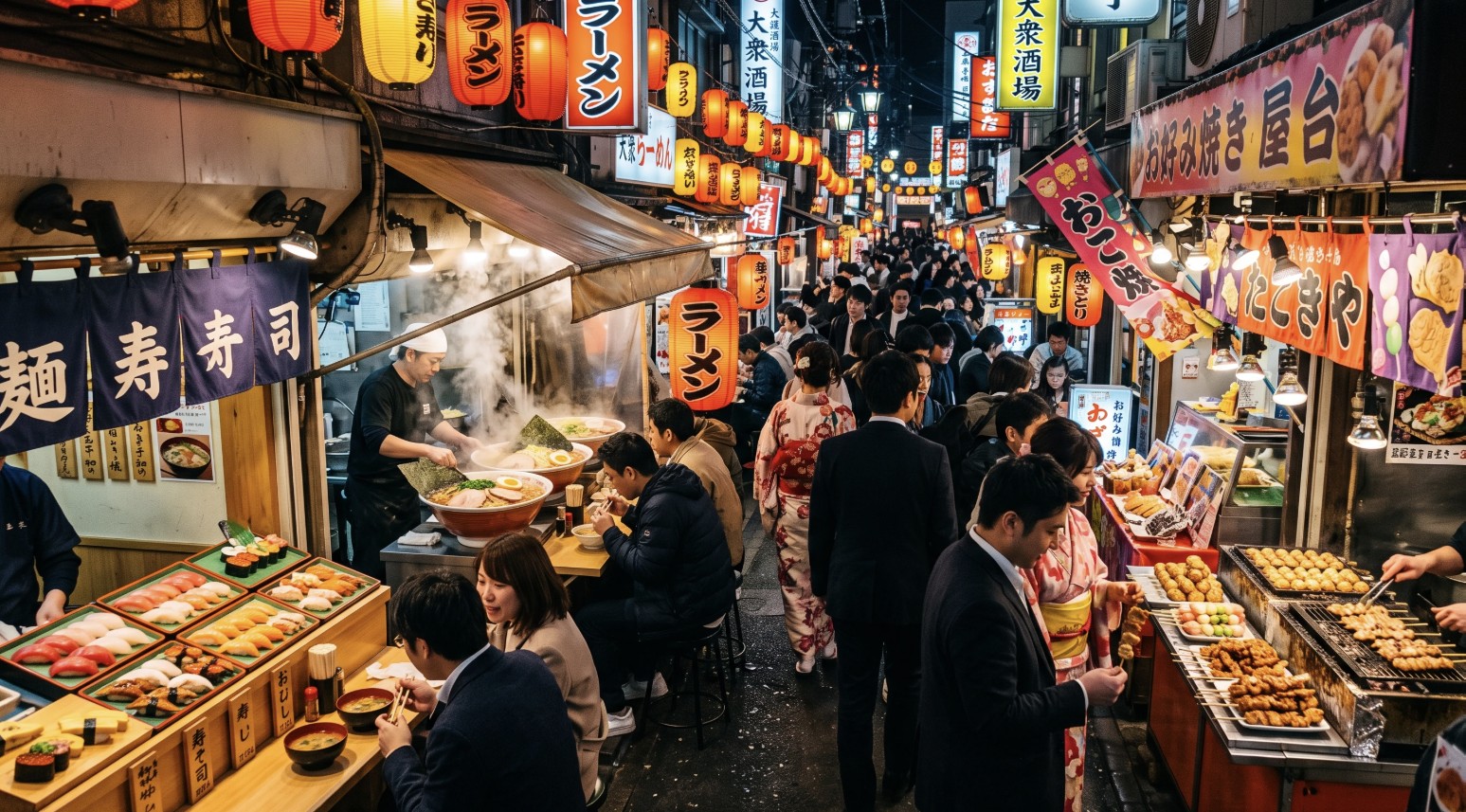
Tokyo is one of the world’s great food cities. From sushi and ramen to tempura, yakitori and traditional sweets, the city offers quick meals, specialist restaurants and food markets for every type of traveller.
This Tokyo food guide explains what to eat, where to look for different food experiences, how to order, and what to consider if you have dietary requirements. Menus, opening hours and reservation policies can change, so always check a venue’s current information before making a special journey.
What to Eat in Tokyo
Tokyo is known for Edomae-style sushi, ramen, soba, tempura, yakitori, tonkatsu, unagi, Japanese curry and izakaya small plates. The city also has excellent regional Japanese food because people from across Japan live and work in Tokyo.
- Sushi: Vinegared rice served with seafood, vegetables or egg. Try conveyor-belt sushi for a casual meal or reserve a specialist counter for a formal experience.
- Ramen: Wheat noodles in broth. Common styles include shoyu, shio, miso, tonkotsu and chicken-based ramen.
- Soba and udon: Buckwheat noodles and thick wheat noodles served hot or cold. Ask about broth ingredients if you avoid fish.
- Tempura: Lightly battered and fried seafood or vegetables, served as a casual rice bowl or formal meal.
- Yakitori: Grilled skewers, often chicken, served in izakaya restaurants with drinks and small plates.
- Tonkatsu: Breaded and deep-fried pork cutlet, commonly served with rice, cabbage and soup.
- Wagashi: Traditional Japanese sweets, often made with beans, rice flour and seasonal ingredients.
Where to Eat in Tokyo
- Tsukiji Outer Market: A food-shopping district with seafood, Japanese ingredients, cooked snacks, restaurants, tea and cooking-related shops. The wholesale fish market moved to Toyosu, but the outer market remains open.
- Shinjuku: Good for ramen, izakaya meals, yakitori, department-store food halls and late-evening dining.
- Shibuya: A useful area for casual restaurants, standing noodle shops, conveyor-belt sushi, cafés and modern Japanese food.
- Asakusa: Known for traditional snacks, Japanese sweets, soba, tempura and historic Tokyo atmosphere.
- Ginza: A well-known area for high-end sushi, tempura, kaiseki, cafés and department-store food halls.
- Ueno and Ameyoko: A lively market and shopping area with snacks, Japanese sweets, seafood products and casual restaurants.
Official Tsukiji Outer Market website
How to Order Food in Tokyo
You do not need fluent Japanese to eat well in Tokyo. Many restaurants offer picture menus, plastic food displays, translated menus or tablet ordering. At smaller restaurants, pointing to a menu item or showing a saved Japanese phrase can be helpful.
- Check for plastic food displays: Some restaurants show realistic sample dishes outside. Pointing to an item is acceptable.
- Use ticket machines: Some ramen shops require you to buy a meal ticket before sitting down.
- Wait to be seated: Staff may guide you to a table, give you a queue number or ask you to wait outside.
- Check menu details: Prices may be before or after tax. Some restaurants may have a cover charge or service charge.
- Pay as instructed: Some restaurants take payment at the table, while others require payment at a till near the entrance.
Useful Japanese Food Phrases
- すみません (Sumimasen): Excuse me; may I get your attention?
- これをください (Kore o kudasai): This one, please.
- おすすめは何ですか? (Osusume wa nan desu ka?): What do you recommend?
- 英語のメニューはありますか? (Eigo no menyuu wa arimasu ka?): Do you have an English menu?
- お水をお願いします (Omizu o onegaishimasu): Water, please.
- お会計をお願いします (Okaikei o onegaishimasu): The bill, please.
- ごちそうさまでした (Gochisousama deshita): Thank you for the meal.
Reservations and Queues
Reservation requirements depend on the restaurant, date and season. High-demand sushi counters, kaiseki restaurants and venues with few seats may need booking well in advance. Casual ramen shops, cafés, soba restaurants and many conveyor-belt sushi restaurants are usually walk-in, although queues are common.
- Reserve ahead for high-end restaurants, special occasions, omakase counters or group dinners.
- Try lunch if dinner is unavailable, but check the restaurant’s current hours first.
- Eat outside peak lunch and dinner periods to reduce queue times.
- Check the restaurant directly for booking policy, cancellation rules and dietary requests.
Markets and Food Halls
Markets and department-store food halls are useful when you want variety without committing to one restaurant. They are also good places to see food before choosing what to buy.
- Tsukiji Outer Market: Browse seafood, Japanese ingredients, tea, snacks and restaurants. Shop hours vary.
- Depachika food halls: Department-store basement food halls sell bento, sushi, grilled food, bakery items, seasonal sweets, tea and gifts.
- Ameyoko: The market streets around Ueno are known for shopping and casual food options.
- Asakusa: Explore snacks and sweets, but use designated eating spaces where available and avoid blocking shop entrances or narrow streets.
Carry some cash for small stalls and older shops. Card and contactless payment are increasingly common, but payment options vary by business.
Dietary and Allergy Advice
Do not assume that a dish is vegetarian, vegan, halal or allergy-safe based on its name or appearance. Japanese sauces, soups and seasonings can contain fish-based dashi, meat extract, egg, dairy, alcohol or other ingredients that are not obvious from the menu.
- Vegetarian and vegan travellers: Ask specifically about dashi, fish, meat stock, gelatine, egg and dairy.
- Halal travellers: Seek clearly identified halal-certified venues or confirm current preparation procedures directly with the restaurant.
- Food allergies: Carry a written allergy card in Japanese that lists every allergen and explains the seriousness of your reaction.
- Severe allergies: Do not rely on verbal reassurance alone. Avoid food if staff cannot confirm that it is safe.
Food Etiquette in Tokyo
- Wait for staff to show you where to sit if a restaurant is busy.
- Do not tip. Tipping is not customary in Japan.
- Avoid sticking chopsticks upright in a bowl of rice.
- Do not pass food directly from one pair of chopsticks to another.
- Follow restaurant rules on photography, queuing, ordering and eating areas.
Frequently Asked Questions
What should I eat first in Tokyo?
Start with food that matches your preferences. Sushi, ramen, soba, tempura, yakitori and Japanese curry are all approachable choices. Add a visit to a department-store food hall or Tsukiji Outer Market for variety.
Is Tsukiji still worth visiting?
Yes. The wholesale fish market moved to Toyosu, but Tsukiji Outer Market remains open with food shops, seafood vendors, restaurants and Japanese cooking-related businesses.
Can I eat in Tokyo without speaking Japanese?
Yes. Picture menus, plastic display food, translation tools and basic phrases make eating in Tokyo manageable for many visitors.
Should I tip in Tokyo restaurants?
No. Tipping is not customary in Japan. Pay the stated bill and thank staff politely.
Is Tokyo suitable for vegetarian, vegan or halal travellers?
Tokyo has more specialist options than in the past, but you must verify ingredients and preparation practices with each restaurant. Carry a written dietary or allergy card in Japanese if your needs are strict.
Official Food Resources
- Tsukiji Outer Market official website
- Tokyo Official Travel Guide
- Japan National Tourism Organization
- JNTO medical and emergency information
Tokyo rewards curiosity. Try one familiar dish, one regional speciality and one seasonal sweet, then keep notes on the places and flavours you would like to revisit on your next trip.