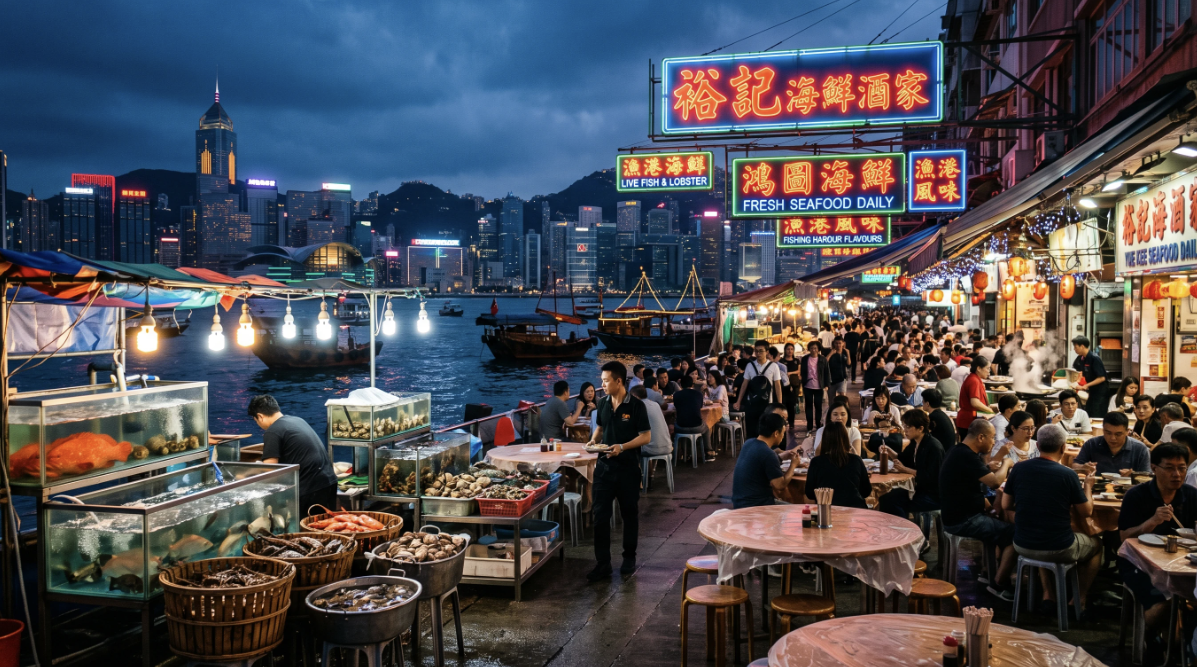
The Essential Guide to the Best Seafood Experiences in Hong Kong / 香港
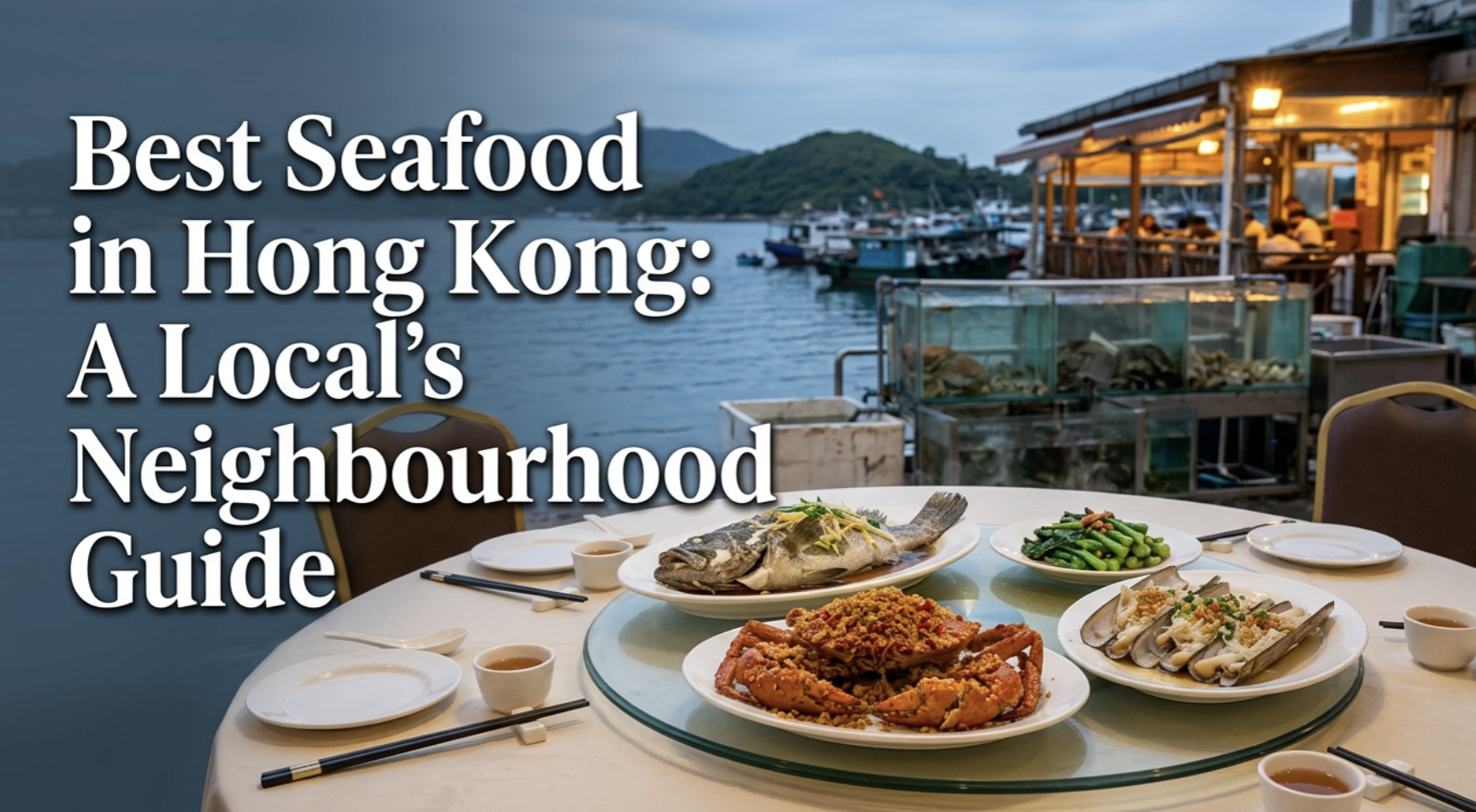
Forget the postcard version of Hong Kong seafood. This guide let you know the dishes a local actually orders.
Before touching down, it’s worth sorting the boring logistics so energy can be spent on the food. If flying long-haul from other countries, sorting in-flight audio setup for the long flight before landing jet-lagged matters more than expected on a 12-hour sector.
Sort Transport First: Octopus Card & Airport Express
Every seafood run in this guide depends on getting transport right. Buy a Tourist Octopus / 八達通 (baat3 daat6 tung1) at the airport arrivals hall for HK$39, no stored value required. It covers the MTR, buses, minibuses and most ferries, but not taxis, so carry HK$50-100 in cash. The Airport Express reaches Hong Kong Station on Hong Kong Island in about 24 minutes and costs HK$120 by Octopus or HK$130 for a paper ticket — and if tapping back through before midnight on the same day, the return leg is free.

Klook.com
Lei Yue Mun / 鯉魚門: The Classic Seafood Bazaar
Lei Yue Mun / 鯉魚門 (lei5 jyu4 mun4) is the one every tour guide mentions, and for once, they’re right. Take the MTR Tseung Kwan O Line to Yau Tong / 油塘 Station, leave via Exit A2, and follow Cha Kwo Ling Road for around 15 minutes to the two stone carp statues marking the village entrance — no bridge crossing involved. The market runs along Hoi Pong Road, where live seafood is picked from tanks before carrying it to a cooking restaurant next door, which charges a preparation fee per dish.
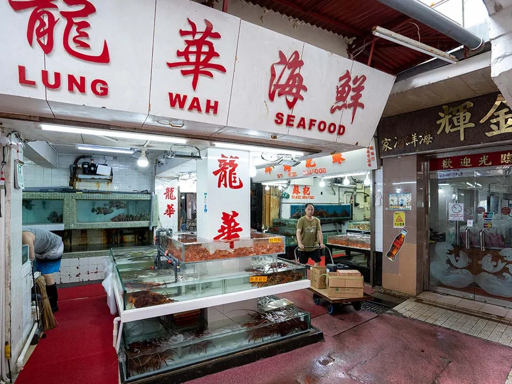
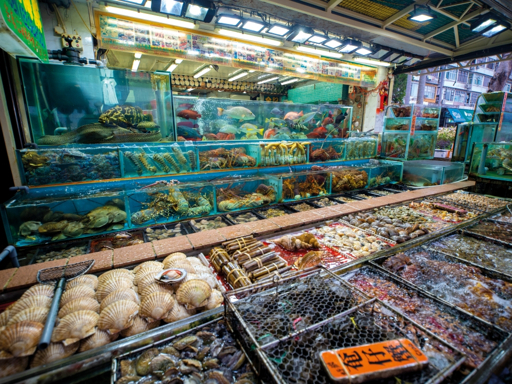
Expect HK$80-500 per catty (斤; gan1, roughly 0.6kg) depending on species — live garoupa / 石斑 (sek6 baan1) and mantis shrimp / 瀨尿蝦 (laai6 niu6 haa1) run HK$150-250 per catty, crab / 蟹 (haai5) and lobster HK$200-500. Go on a weekday evening for a table without a 30-minute wait.
Sai Kung / 西貢: Harbour-Front Dining, Michelin Names Included
Sai Kung / 西貢 (sai1 gung3) has the best harbour atmosphere of the lot — fishing boats moor right against the promenade and sell straight off the deck. Take the MTR Kwun Tong Line to Choi Hung / 彩虹 Station, Exit C2, then the green minibus route 1A (roughly every four minutes, 06:30-00:30) for a 20-minute ride into Sai Kung town. Bus 92 from Diamond Hill Exit C2 is a slower alternative.
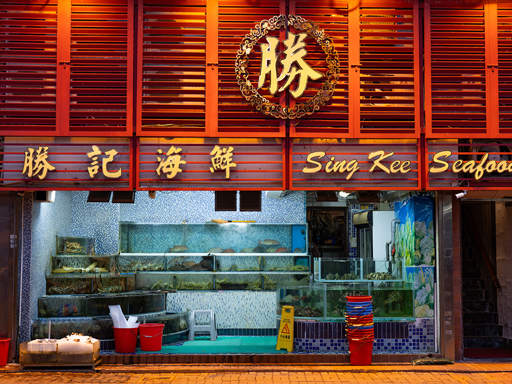
Two names locals actually book ahead for: Chuen Kee Seafood, 53 Hoi Pong Street, a Michelin-recommended fixture on the waterfront for years; and Sing Kee Seafood Restaurant, 33-39 Sai Kung Tai Street, a striking red-fronted building that has held a Michelin One Star for five consecutive years. Tung Kee Seafood & Restaurant, at 11-15 Sai Kung Hoi Pong Square, is the quieter local alternative when the big two are full. Set menus for two typically run HK$298-549 per head depending on how much lobster and abalone / 鮑魚 (baau1 jyu4) are added.
Causeway Bay’s Two Icons: Under Bridge Spicy Crab & Forum
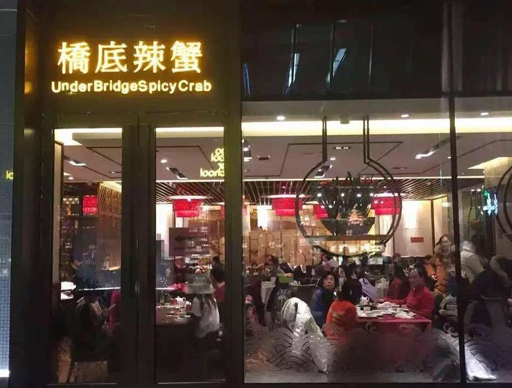
If only eating at one place on Hong Kong Island, make it Under Bridge Spicy Crab / 橋底辣蟹, at G/F & 1/F, Golden Jubilee House, 391 Lockhart Road — a five-minute walk from Causeway Bay MTR Exit C. It’s open daily from 11am to 1am, and it’s the spiritual home of typhoon shelter crab, the dish that gave the restaurant its name.
For something more formal, Forum Restaurant (富臨飯店) at 1/F, Sino Plaza, 255-257 Gloucester Road has held three Michelin stars since 2020 and remains the city’s definitive address for whole braised abalone, a legacy of founder Yeung Koon-yat, Hong Kong’s late “Abalone King.”
Lamma Island / 南丫島: Ferry, Feast, Repeat
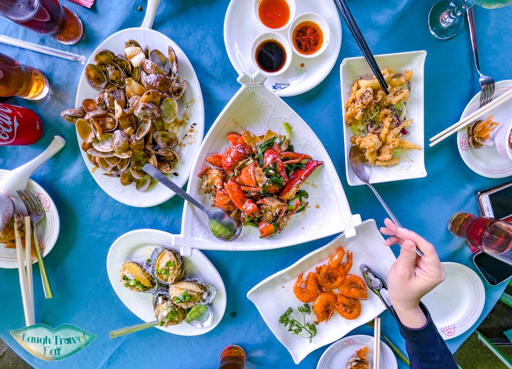
Lamma Island / 南丫島 (naam4 aa1 dou2) rewards anyone willing to combine a short hike with their seafood. Ferries leave from Central Pier 4: the Yung Shue Wan / 榕樹灣 route takes about 27 minutes and runs roughly every 30 minutes; the Sok Kwu Wan / 索罟灣 route takes 30-40 minutes and sails less frequently, so check the timetable before committing. Fares sit around HK$14.50-25 depending on the day.
The standard move: ferry to Yung Shue Wan, walk the paved Family Trail for about an hour past Hung Shing Yeh Beach, then arrive at Sok Kwu Wan hungry and eat at Rainbow Seafood Restaurant, 23-27 First Street, the island’s largest open-air waterfront restaurant since 1984 and now Halal-friendly with its own free shuttle boat from Central. Take the return ferry from Sok Kwu Wan Pier back to Central.
Klook.comAberdeen / 香港仔 & Ap Lei Chau / 鴨脷洲
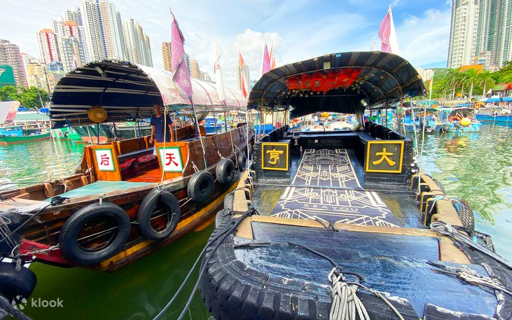
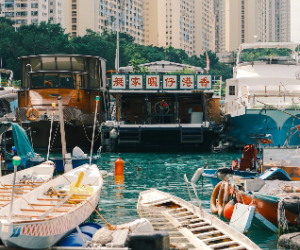
Aberdeen / 香港仔 (hoeng1 gong2 zai2) still has working fishing boats moored in the typhoon shelter, and a sampan ride through the harbour is worth doing before eating. Take the South Island Line to Wong Chuk Hang / 黃竹坑 Station, Exit A2, then a short bus or minibus ride (routes 38, 72 or 77) to Aberdeen Promenade — about a 15-minute walk if stretching legs is preferred.
Across the water, Ap Lei Chau / 鴨脷洲 (aap3 lei6 zau1) is quieter and cheaper — its market and cooked-food centre sell straight to residents rather than tour groups, connected directly by MTR to Lei Tung / 利東 Station, Exit A1.
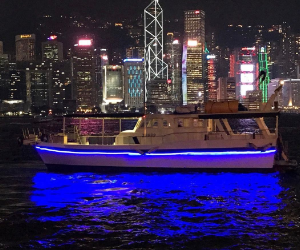
If basing near the harbour rather than doing a day trip, it’s worth comparing rooms before landing.
Hidden Gems: Where Locals Actually Shop
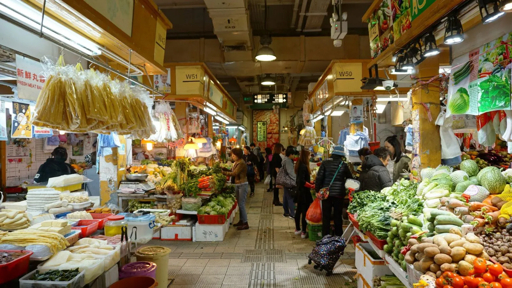
- Shau Kei Wan Wholesale Fish Market / 筲箕灣魚類批發市場: MTR Island Line to Shau Kei Wan / 筲箕灣, Exit A2. The market on Tam Kung Temple Road runs 04:00-16:00 daily; arrive before 07:00 for the freshest catch and a fried-fish breakfast from the surrounding stalls.
- Sham Tseng Roast Goose & Seafood / 深井燒鵝: Green minibus 96 from Tsuen Wan MTR (Chung On Street), 15-20 minutes, or bus 53, 52X, 234A or 234B. Sham Tseng Chan Kee Roasted Goose, Shop A, G/F, Chan Kee Commercial Centre, 48 Castle Peak Road, pairs its famous roast goose / 燒鵝 (siu1 ngo2) with steamed seafood dishes.
- Tai Po Market / 大埔墟: MTR East Rail Line to Tai Po Market / 大埔墟, Exit A3, straight into Tai Po Hui Market and Cooked Food Centre for a low-key cooked-seafood lunch.
- Kowloon City Wet Market / 九龍城街市: MTR Tuen Ma Line to Sung Wong Toi / 宋皇臺, Exit B3, which leads directly onto Nga Tsin Wai Road where the market sits at number 100.
Must-Try Local Seafood Dishes (And Which Ones Are Genuinely From Hong Kong)
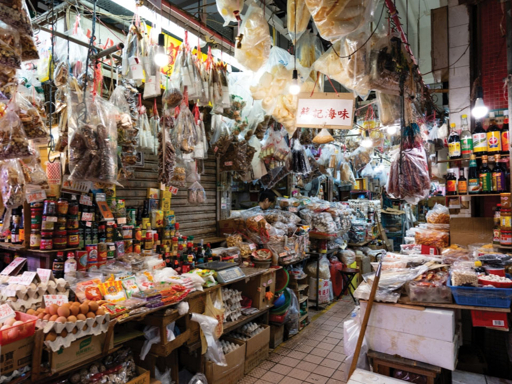
Ordering blind off a Cantonese menu is intimidating the first time. Here’s what to actually ask for, and which dishes can honestly be told were invented right here in Hong Kong rather than borrowed from wider Cantonese cuisine.
- Typhoon Shelter Crab / 避風塘炒蟹 (bei6 fung1 tong4 caau2 haai5) — genuinely from Hong Kong. Invented in the 1960s-70s by boat-dwelling fishing families sheltering in the Causeway Bay typhoon shelter, who deep-fried whatever catch was left over with garlic, chilli and fermented black beans to mask the fishiness. It’s now considered one of the Ten Classic Chinese Dishes, and Under Bridge Spicy Crab still serves the definitive version.
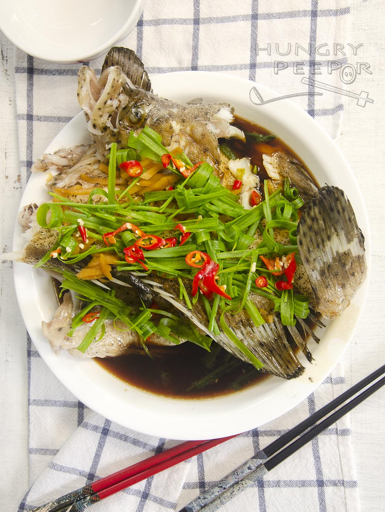
- Steamed Garoupa with Ginger & Soy / 清蒸石斑 (cing1 zing1 sek6 baan1). The benchmark test of a Cantonese kitchen — the fish should be so fresh it needs nothing more than soy, spring onion and hot oil poured over at the table.
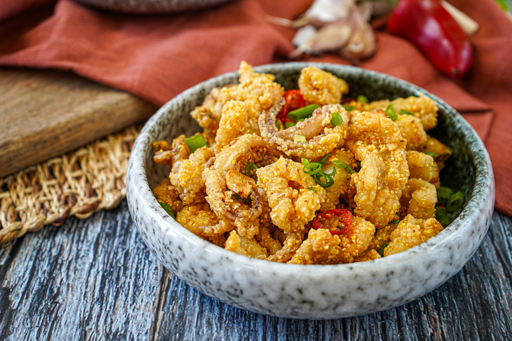
- Salt and Pepper Squid / 椒鹽鮮魷 (ziu1 jim4 sin1 jau4). A Cantonese seafood-restaurant staple, deep-fried with garlic, chilli and Sichuan peppercorn salt.
- Baked Lobster with Cheese / 芝士焗龍蝦 (zi1 si6 guk6 lung4 haa1). A Hong Kong seafood-restaurant favourite that grew out of the city’s love of “soy sauce Western” (豉油西餐) cooking, blending baked cheese with fresh lobster over noodles.
- Steamed Razor Clams with Garlic Vermicelli / 蒜蓉粉絲蒸蟶子 (syun3 jung4 fan2 si1 zing1 sin1 zi2). A Sai Kung and Lei Yue Mun menu regular; the vermicelli soaks up the clam juices.
- Braised Whole Abalone / 原隻鮑魚 (jyun4 zek3 baau1 jyu4). The dish that made Forum Restaurant’s Yeung Koon-yat famous — order it here if wanting the real deal rather than the dried, imported version served elsewhere.
- Live Prawns in Wine / 醉蝦 (zeoi3 haa1). Prawns doused in Chinese wine at the table, served still moving — not for the squeamish, but a genuine local delicacy.
How to Order Seafood Like a Local
- Pick and weigh: point at the tank, ask the price per catty (斤; gan1) or tael (兩; loeng2), and confirm the final weight before it’s netted out.
- Round out the table: order stir-fried gai lan / 芥蘭 (gaai3 laan4), fried rice, and finish with a seafood congee / 粥 (zuk1).
- No English menu, no problem: photograph the tank, point, smile. Staff in these areas deal with tourists daily.
If stringing this into a longer East Asia trip, it’s worth sorting out the wider planning side of the journey early, especially if Hong Kong is a stopover rather than the main event. The step-by-step Japan planning framework covers visas, rail passes and seasonal timing if continuing north afterwards.
Etiquette, Payment & Sustainability
- Octopus Card: covers MTR, buses, minibuses and most ferries. Wet markets and dai pai dong / 大排檔 (daai6 paai4 dong3) are cash-only.
- Minibus manners: press the red stop button ahead of the stop, pay exact fare on boarding, no eating or drinking on board.
- Sustainability: ask what’s local and in season. The WWF Hong Kong Sustainable Seafood Guide is a genuinely useful reference.
- Tipping: not obligatory, but rounding up or leaving loose change is appreciated.
Frequently Asked Questions
Is it common to bring own drinks?
Some Sai Kung and Lei Yue Mun restaurants allow BYOB with a corkage fee — always ask before sitting down.
Are cards accepted?
Larger restaurants like Forum and Sing Kee take Visa, Mastercard and e-wallets; market eateries and dai pai dong are almost always cash-only.
What if there’s no English menu?
Point at the tanks, use a translation app, and stay friendly — staff in every area covered here are used to visitors.
Is this suitable for solo travellers?
More variety comes with a group since dishes are shared, but solo diners are welcome everywhere on this list.
Final Word
None of the best seafood memories in this city came from a five-star address. They came from a plastic stool in Sai Kung, a stilted restaurant in Sok Kwu Wan, and a fish market stall in Shau Kei Wan at six in the morning. Get the Octopus Card sorted, learn the exit codes, order the typhoon shelter crab, and go where the boats actually dock. For a deeper dive into pairing Hong Kong with a wider Japan itinerary, comparing Klook attraction passes for the rest of the trip, or to understand how this site researches its East Asia guides, the rest of InspiresPlus has it covered.