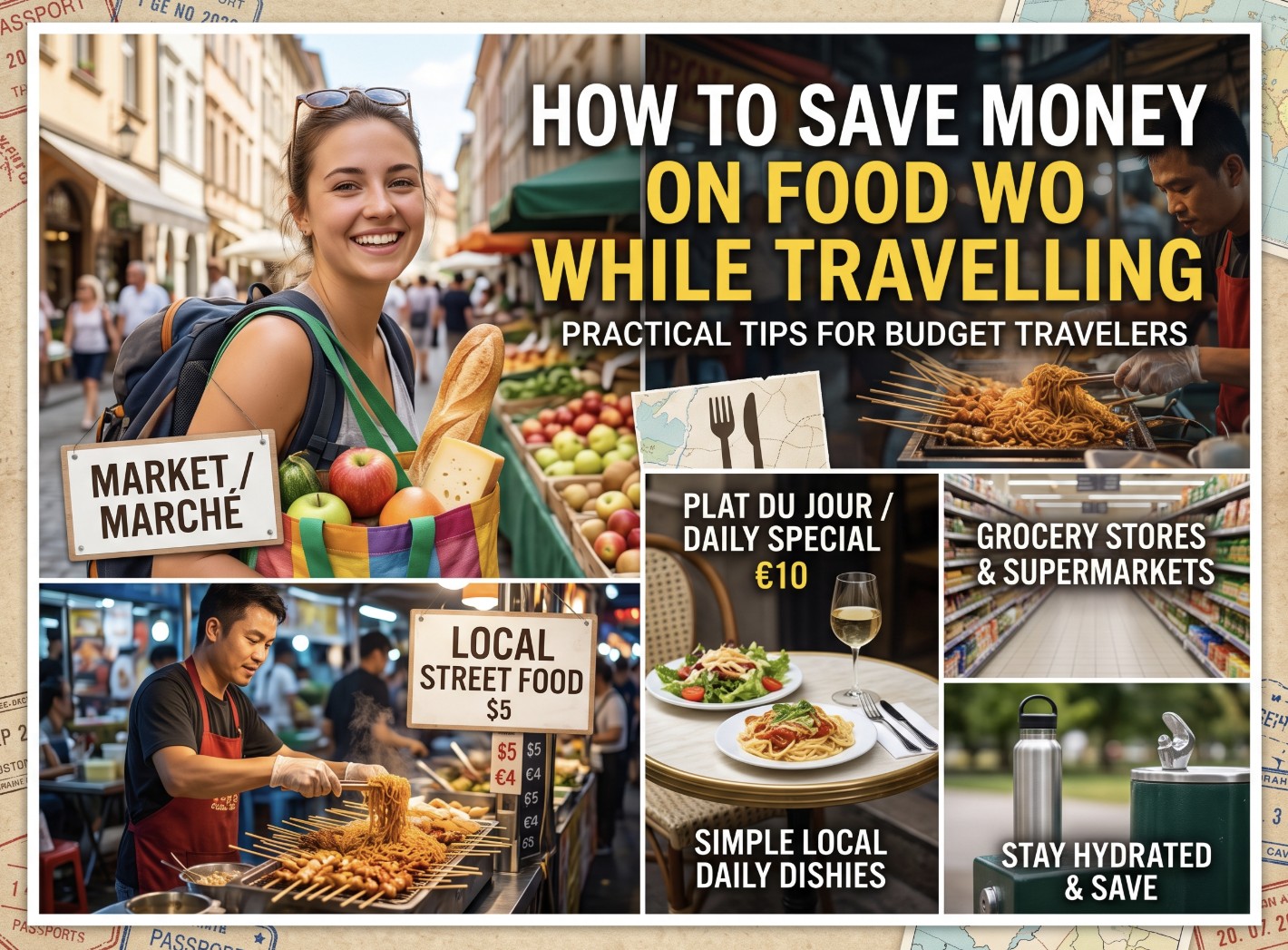
Food and drink can take a sizeable share of any holiday budget, especially when you eat every meal in restaurants or buy snacks and drinks in tourist areas. The best way to save money on food while travelling is to plan a realistic mix of supermarket food, simple meals, local cafés and a few memorable restaurant experiences. You do not need to skip the dishes that make a destination special; you simply need to choose where your money makes the biggest difference.
Good food budgeting starts before you travel. Check whether your accommodation includes breakfast, has a fridge or kitchen facilities, and sits near a supermarket or market. Once you arrive, prioritise food safety, drink enough safe water and avoid buying more perishable food than you can store or eat safely.
1. Research Food Costs Before You Go
Before booking accommodation, research the area around it. Look at restaurant menus, supermarkets, bakeries, food markets and cafés within walking distance. Restaurant websites and official social-media pages can be useful for checking opening days, menu style and whether reservations are required. Remember that menus and prices can change, so treat online information as a planning guide rather than a guaranteed final cost.
Build a simple daily food allowance covering breakfast, lunch, dinner, snacks and drinks. You may choose to make one meal a day your main restaurant experience and keep the other meals simple. This allows room in your budget for a special local dish, a market visit or a restaurant you genuinely want to try.
Do not assume that a restaurant near a major attraction will always be poor value, but compare it with options a few streets away. Location, views and convenience can affect prices. A short walk away from the busiest tourist area may reveal a neighbourhood café, bakery or market with a more affordable menu.
2. Choose Accommodation With Food in Mind
The right accommodation can reduce your food costs without making your holiday feel restrictive. A hotel with breakfast included may be convenient, particularly for early sightseeing days or family trips. An apartment, aparthotel, hostel with a guest kitchen or room with a fridge can make it easier to store fruit, yoghurt, milk, sandwiches or other simple foods.
Check what facilities are actually available before booking. “Kitchenette” can mean anything from a full kitchen to a kettle and small fridge. If cooking is important to your plans, look for a hob, microwave, basic cookware, plates and cutlery. Also check whether there is a nearby food shop, as an apartment far from all amenities may create extra taxi or delivery costs.
Enjoy any breakfast included in your reservation, but do not assume you can pack food from the buffet for later. Hotel rules vary, and perishable food may become unsafe if it is not kept at the right temperature. Ask staff first if you need a packed breakfast because of an early departure or excursion.
3. Buy a Few Basics Locally
A small supermarket shop after arrival can prevent expensive impulse purchases from hotel minibars, convenience shops and tourist kiosks. Choose only what you will realistically use. Fruit, breakfast items, bread, crackers, cheese, yoghurt, nuts and other foods can work well when they can be stored safely and suit your dietary needs.
Local supermarkets are also part of the travel experience. They can introduce you to regional fruit, bread, drinks, snacks and ready-to-eat food at a lower cost than a restaurant meal. If you have no refrigeration, choose shelf-stable items or buy smaller quantities more often rather than stockpiling perishable food.
4. Plan One Main Meal Each Day
Rather than paying for three restaurant meals every day, decide which meal matters most to you. Some travellers prefer a substantial breakfast, a simple picnic lunch and a restaurant dinner. Others find that a filling lunch is better value, followed by a lighter evening meal. There is no universal rule: lunch menus are not always cheaper, and special offers vary by restaurant and destination.
Choose the pattern that suits your itinerary. On a day packed with museums or sightseeing, a bakery lunch or supermarket picnic may be convenient. On a quieter day, you might reserve your spending for a local restaurant. Planning this balance stops food spending from becoming accidental while still leaving room for enjoyable meals.
5. Use Markets, Bakeries and Casual Local Cafés
Food markets, bakeries, delicatessens and casual cafés can offer excellent value, especially when you want a quick meal without a formal restaurant bill. Look for places with clear pricing and good hygiene practices. Freshly prepared food that is served hot is generally a sensible choice, while fruit that you can peel yourself can be useful in destinations where food and water hygiene needs extra care.
Ask hotel staff, hosts, guides or local residents for suggestions, but remember that everyone’s budget and tastes differ. Use recommendations as a starting point, then check recent reviews, opening hours and menus yourself. A popular local place may be excellent, but it may also need a reservation or only accept certain payment methods.
6. Be Careful With Buffets and “All You Can Eat” Deals
A buffet is only good value if you genuinely want the food offered and the price suits your budget. It is not automatically cheaper than ordering a normal meal, especially for children or light eaters. Check whether drinks, service charges or other items are extra before deciding.
Do not take food away from a buffet unless the venue explicitly permits it. Buffet food is intended to be eaten on site, and perishable food should not be carried around for hours without safe temperature control. Taking more than you can eat also creates waste and can breach restaurant rules.
7. Pack Useful Snacks, Not a Full Pantry
Keep a few travel-friendly snacks in your day bag so you are less likely to buy expensive food when you are hungry and far from a shop. Suitable choices depend on your itinerary and dietary needs, but sealed nuts, oat bars, crackers, dried fruit or similar shelf-stable snacks can be practical. Always check airline, border and destination rules before carrying food internationally.
A reusable water bottle can also reduce spending and plastic waste where safe drinking water is available. Do not assume tap water is safe in every destination. Check reliable local and official health guidance for your destination, and use sealed bottled water or another safe option where necessary. Purification products are not a universal solution and should be used only as directed for the local water risk.
Avoid packing foods that need refrigeration unless you can keep them properly chilled. In hot weather, food can become unsafe quickly. Wash your hands before eating or preparing food, and choose freshly prepared, thoroughly cooked food when hygiene standards are uncertain.
8. Make Drinks a Deliberate Choice
Drinks can quietly increase a holiday food budget. Coffee, soft drinks, cocktails and bottled water bought several times a day can add up. Decide in advance when a drink experience is worth paying for, such as a local coffee, a vineyard visit or a special cocktail bar, and keep other drinks simple.
Stay hydrated, particularly in hot climates, but choose safe water for your destination. Alcohol can add significant cost and may contribute to dehydration in warm weather. If you drink alcohol, do so responsibly and check local laws and venue rules. Do not try to reduce costs by diluting a shared soft drink into water glasses; order what you want and pay attention to hygiene and safe hydration instead.
9. Use Leftovers Safely
Restaurant portions can be generous, and taking leftovers may prevent waste if the restaurant allows it. Only take food that you can refrigerate promptly and reheat safely where appropriate. If you have no fridge, a long journey ahead or very hot weather, it is usually safer not to take perishable leftovers with you.
Bring a reusable container only if it is clean, practical to carry and permitted by the venue. Do not treat leftovers as a guaranteed next-day meal when you cannot store them safely. Saving money is never worth the risk of food poisoning during a holiday.
A Simple Daily Food Budget
A flexible daily plan can help you keep food spending predictable without making every meal feel restricted. Adjust the categories to your destination, accommodation and dietary requirements.
| Part of the day | Budget-friendly approach | When to spend more |
|---|---|---|
| Breakfast | Use included breakfast or simple food from a nearby shop. | Choose a café breakfast when it is a local experience you value. |
| Lunch | Try a bakery, market, café, picnic or casual local meal. | Spend more if lunch is your main restaurant meal of the day. |
| Dinner | Choose a simple meal after an expensive activity day. | Reserve money for one or two restaurants you genuinely want to try. |
| Snacks | Carry a small amount of shelf-stable food from a supermarket. | Try a regional snack or dessert that is part of the destination. |
| Drinks | Use safe drinking water and limit impulse purchases. | Choose a special local drink deliberately, not automatically. |
Final Tips for Eating Well on a Budget
Saving money on food while travelling does not mean avoiding restaurants or missing local flavours. It means choosing a few meals that are worth the spend, keeping other meals practical and avoiding unnecessary convenience costs. Research your neighbourhood, use accommodation facilities responsibly, carry sensible snacks and treat food safety as non-negotiable.
Before travelling, check destination-specific health guidance and food-and-water advice, especially if you are visiting a place where tap water or food hygiene may be a concern. A little planning protects both your budget and your holiday.
Frequently Asked Questions
- How can I save money on food when travelling? Plan a mix of supermarket food, simple meals and selected restaurant experiences. Choose accommodation with breakfast, a fridge or kitchen facilities where useful, and research affordable options near where you are staying.
- Is it safe to take leftovers from a restaurant while travelling? Only take leftovers if the restaurant allows it and you can refrigerate the food promptly. Avoid carrying perishable food for long periods, particularly in hot weather.
- Can I take food from a hotel breakfast buffet for lunch? Do not assume this is allowed. Hotel policies differ, and buffet food may not be safe to carry without refrigeration. Ask staff if you need a packed breakfast for an early departure.
- Should I drink tap water while travelling? Only drink tap water when it is known to be safe at your destination. Check current official or local health guidance, and choose a safe alternative when necessary.