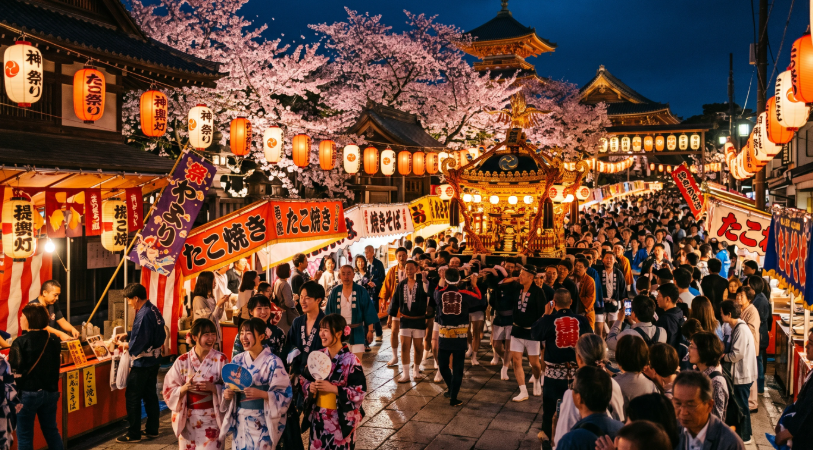
Japan’s seasonal festivals, known as matsuri (祭り), are an excellent way to experience local traditions, regional food and community life. From spring cherry blossom celebrations to summer dance events, autumn float processions and winter snow festivals, each season offers something distinct. Festival dates, routes, access rules and ticket arrangements can change annually, so always check the official organiser’s latest information before making travel plans.
Understanding Japan’s Festival Culture
Japanese festivals draw on Shinto and Buddhist traditions, seasonal customs and local history. Some are centred on a shrine or temple, while others celebrate a city’s craftsmanship, culture or winter landscape. Depending on the event, you may see portable shrines called mikoshi (神輿), decorated floats, traditional dancing, music, lanterns and food stalls.
- Spring: Cherry blossom celebrations, shrine festivals and seasonal events linked to renewal.
- Summer: Major parades, folk dancing, fireworks and busy evening food stalls.
- Autumn: Historic processions, harvest traditions and ornate float festivals.
- Winter: Snow-and-ice displays, candle-lit events and fire ceremonies.
Japan’s Best Festivals by Season
Spring Festivals
- Sumida Park Cherry Blossom Festival, Tokyo
Usually: Late March to early April
Sumida Park runs beside the Sumida River near Asakusa and offers cherry blossom views with Tokyo Skytree in the background. Flowering dates vary according to the weather, so check blossom forecasts before finalising your itinerary. A weekday morning is usually calmer than an evening or weekend visit. - Takayama Spring Festival (高山春祭り), Gifu
Usually: 14–15 April
Also known as the Sannō Festival, Takayama’s spring festival is known for ornate yatai (屋台) floats and mechanical puppet performances. The evening float event is a highlight, but elements of the programme may be changed or cancelled in poor weather. - Hirosaki Cherry Blossom Festival (弘前さくらまつり), Aomori
Usually: Mid- or late April to early May
Hirosaki Park is one of Japan’s most celebrated cherry blossom locations, with trees surrounding Hirosaki Castle and its moats. Festival dates may be adjusted according to blossom conditions, so confirm the latest announcement before booking non-refundable travel. Aomori is renowned for apples, and local apple sweets are widely available in the city.
Summer Festivals
- Gion Matsuri (祇園祭), Kyoto
Usually: Throughout July, with major float processions on 17 and 24 July
Gion Matsuri is associated with Yasaka Shrine and is one of Kyoto’s most important annual events. Its yamaboko (山鉾) float processions are the main spectacle, while the evenings before each procession, known as yoiyama, bring street closures and a lively atmosphere. Central Kyoto can be particularly busy during the festival period. - Tenjin Matsuri (天神祭), Osaka
Usually: 24–25 July
One of Osaka’s major summer festivals, Tenjin Matsuri includes shrine rituals, a land procession and a river procession. Timetables, routes and any fireworks arrangements should be checked with the official organiser shortly before attending, especially if rain is forecast. - Awa Odori (阿波おどり), Tokushima
Usually: 12–15 August
Tokushima’s Awa Odori is one of Japan’s best-known dance festivals. Groups of dancers, called ren, perform to shamisen, flute and drum music across the city. The event can include both paid and free viewing areas, but the arrangements vary by year. - Nebuta Matsuri (ねぶた祭り), Aomori
Usually: 2–7 August
Large illuminated floats depicting historical and mythical figures move through central Aomori alongside musicians and dancers. The main parades generally take place from 2 to 6 August, with daytime and evening events on the final day. Check the official programme for annual timings and any reserved-viewing options.
Autumn Festivals
- Kishiwada Danjiri Matsuri (岸和田だんじり祭), Osaka Prefecture
Usually: September
Teams pull heavy, intricately carved danjiri (だんじり) floats through the streets of Kishiwada. It is an exciting but high-energy event: remain behind barriers, follow official instructions and avoid standing close to corners where floats turn. - Jidai Matsuri (時代祭), Kyoto
Usually: 22 October
Jidai Matsuri, or Festival of the Ages, features a historical procession associated with Heian Shrine. Participants wear costumes representing periods of Kyoto’s history. The event may be postponed in severe weather, so check the official announcement before travelling to the parade route. - Kawagoe Festival (川越まつり), Saitama
Usually: The third weekend of October
Kawagoe Festival features tall floats in the atmospheric warehouse-district streets of “Little Edo”. Kawagoe is especially known for sweet-potato products, which are widely sold around the historic district. - Hakone Daimyo Gyoretsu (箱根大名行列), Kanagawa
Usually: 3 November
This procession recreates a feudal lord’s formal journey through Hakone. It works well with an overnight stay in the hot-spring area, although accommodation can be busy during the autumn season.
Winter Festivals
- Sapporo Snow Festival (さっぽろ雪まつり), Hokkaido
Usually: Early February
Large snow sculptures fill Odori Park, while Susukino is known for ice sculptures. Winter pavements can be icy, so wear insulated layers and footwear with reliable grip. Check the official website for the current year’s dates, venues and programme. - Otaru Snow Light Path Festival (小樽雪あかりの路), Hokkaido
Usually: February
Otaru’s winter light festival uses snow lanterns and candle displays around the canal and other locations in the city. Weather conditions can affect outdoor installations and operating dates, so confirm the annual schedule before travelling from Sapporo or elsewhere in Hokkaido. - Nozawa Onsen Fire Festival (野沢温泉道祖神祭り), Nagano
Usually: 15 January
Also called the Dosojin Fire Festival, this dramatic event culminates in the burning of a large wooden structure. Access arrangements can be restricted: in 2026, admission tickets were issued only to Nozawa Onsen residents and guests staying overnight in the village. Confirm the current year’s access policy, observe all barriers and follow staff instructions.
Festival Planning Guide
| Festival | Location | Usual timing | Planning advice |
|---|---|---|---|
| Gion Matsuri | Kyoto | July | Reserve accommodation early and check procession routes before travelling. |
| Awa Odori | Tokushima | 12–15 August | Check the annual programme for viewing areas and evening schedules. |
| Nebuta Matsuri | Aomori | 2–7 August | Confirm parade times and any official reserved-viewing arrangements. |
| Jidai Matsuri | Kyoto | 22 October | Check for weather-related changes shortly before the event. |
| Sapporo Snow Festival | Sapporo, Hokkaido | Early February | Allow extra time for winter walking and wear suitable footwear. |
| Nozawa Onsen Fire Festival | Nozawa Onsen, Nagano | 15 January | Confirm the year’s admission policy before booking transport or accommodation. |
Practical Tips for Festival-Goers
- Check the official annual programme: Confirm dates, procession routes, weather notices, accessibility information, admission rules and any ticket arrangements directly with the organiser.
- Book popular destinations early: Kyoto in July, Aomori in early August and Sapporo in February can be particularly busy.
- Carry some cash: Mobile and card payments are increasingly common, but smaller food stalls and local vendors may accept cash only.
- Respect crowd controls: Do not cross barriers, obstruct a procession route or use photography equipment that blocks pedestrian space.
- Dress for the season: Summer festivals can be hot and humid, while Hokkaido and mountain areas can be icy and very cold in winter.
- Use public transport where possible: Road closures are common around major events. IC cards can make local travel more convenient where they are accepted.
- Bring a portable charger: Festival maps, translation tools, digital tickets and transport updates can drain your phone battery quickly.
Festival Food and Souvenirs
Food stalls are part of the appeal of many matsuri, although the selection differs by region and event. Try local specialities where possible, and allow time for queues at popular stalls during the busiest evening hours.
- Takoyaki (たこ焼き): Grilled batter balls containing octopus, commonly associated with Osaka.
- Yakisoba (焼きそば): Stir-fried noodles frequently served from festival stalls.
- Ringo ame (りんご飴): Candied apples on sticks, often sold at festivals.
- Sakura mochi (桜餅): A spring sweet with red-bean paste and a pickled cherry leaf; regional styles vary.
- Omamori (お守り) and tenugui (手ぬぐい): Shrine amulets and cotton cloths make compact souvenirs. Purchase shrine items respectfully from the shrine office.
Frequently Asked Questions
When is the best time to visit Japan for festivals?
There is no single best season. Spring suits cherry blossom events, summer has the greatest concentration of large dance and float festivals, autumn combines historic processions with cooler weather, and winter offers snow and fire festivals. Choose according to your preferred weather, destinations and festival style.
Are Japanese festivals free to attend?
Many street processions and public festival areas are free. Reserved seating, special viewing areas, exhibitions and indoor performances may require tickets. Check the official festival website for the current year’s access rules and authorised ticket information.
Are festivals suitable for children?
Many festivals can suit families, but conditions vary widely. Large summer events can be crowded, hot and noisy, while fire festivals may have strict safety restrictions. Check the event timetable, toilet provision, accessibility information and expected crowd levels before attending with children or a pushchair.
What etiquette should first-time visitors follow?
Follow staff instructions, queue patiently, avoid blocking walkways and processions, and ask before taking close-up photographs of performers or worshippers. At shrines and temples, observe posted guidance and keep noise to a respectful level during religious rituals.
Official Festival Resources
- Japan National Tourism Organization
- Gion Matsuri Official Website
- Hida Takayama Official Tourist Information
- Hirosaki Park Cherry Blossom Festival Information
- Tokushima Awa Odori Official Website
- Aomori Nebuta Festival Official Website
- Sapporo Snow Festival Official Website
- Otaru Tourism Association
- Heian Shrine Official Website
- Kawagoe Festival Official Website
- Nozawa Onsen Tourism Association
- Visit Japan Web