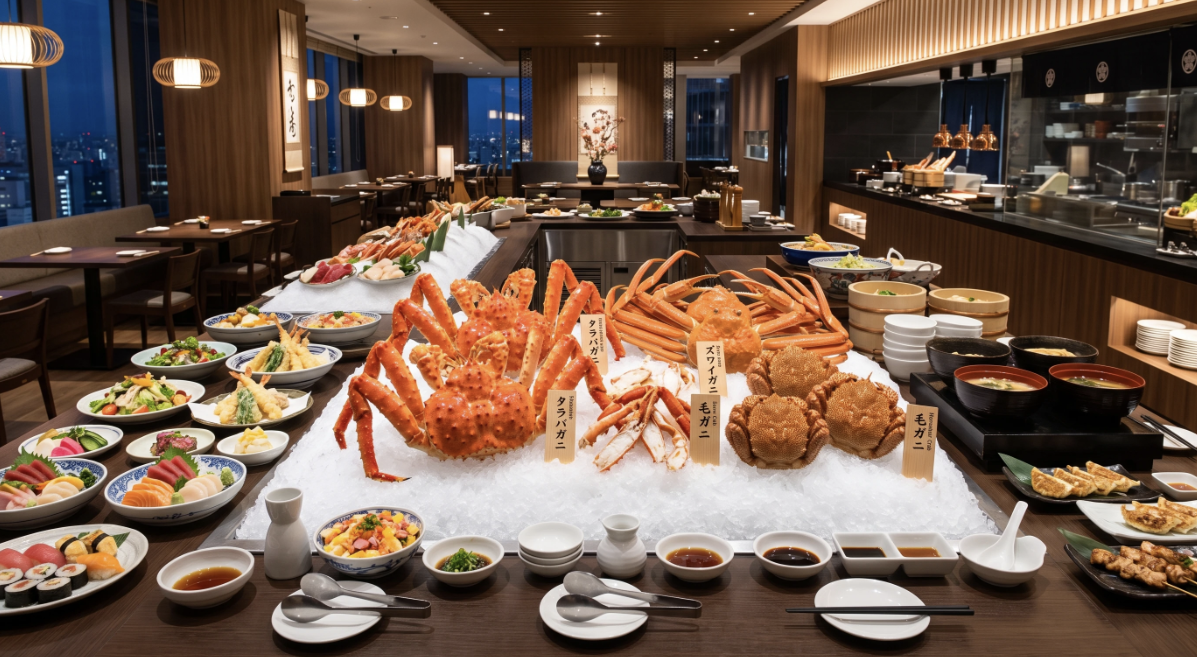
Looking for the best Sapporo crab buffet? Hokkaido’s largest city is one of Japan’s leading places to try king crab, snow crab and horsehair crab. Whether you want a full kani tabehōdai (蟹食べ放題, all-you-can-eat crab) meal or a more formal crab course, the city is ground zero for Japan’s legendary big three: king crab, snow crab, and horsehair crab.
Sapporo restaurants range from busy seafood buffets in Susukino to long-established crab specialists near Sapporo Station, while the Central Wholesale Market area offers daytime seafood meals for travellers who prefer a market-style lunch.
Please note, not every famous Sapporo crab restaurant is an all-you-can-eat venue. Some serve unlimited crab within a stated time limit, while others specialise in kaiseki (会席), a structured Japanese meal in which crab is prepared and served across several courses. This guide explains the difference, helps you select the right format and gives practical advice on where to eat crab in Sapporo without booking a meal that does not match your expectations.
What does kani tabehōdai mean?
Kani tabehōdai (蟹食べ放題) means “all-you-can-eat crab”. At a genuine Sapporo crab buffet, diners pay one stated price and eat within a fixed period. The dining duration, included crab varieties, drinks policy and final admission time differ by restaurant and reservation plan, so read the current conditions before committing.
The exact inclusion matters. One plan may offer a broad seafood buffet with some crab dishes, while another may include repeated servings of premium varieties such as king crab. Look for tabehōdai (食べ放題, all-you-can-eat) and nomihōdai (飲み放題, all-you-can-drink), then check the dining period, drinks policy, child price, cancellation conditions and whether premium crab refills are included.
A buffet is usually the best format for groups, families and first-time visitors who want to compare crab with sushi, grilled seafood, meat, salads and desserts in one sitting. A crab course is often better for diners who prefer table service, a calmer setting and more careful preparation. Knowing the difference makes it far easier to choose the best all-you-can-eat crab in Sapporo for your budget and dining style.
Klook.comHokkaido crab varieties explained
A good Hokkaido crab restaurant should make clear which crab varieties are included. They differ in size, texture, richness and ideal cooking method, so a claim of “three types of crab” does not necessarily mean that every variety is available without limits on every dining plan.
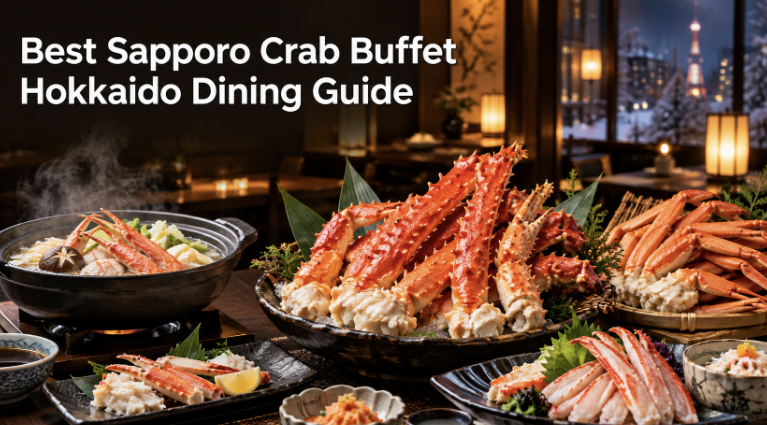
- King crab (タラバガニ, tarabagani): King crab has large legs, dense meat and a clean, sweet flavour. It is often grilled, steamed or served as a substantial leg portion. It is usually one of the most expensive crab varieties and may be limited to particular courses or premium buffet plans.
- Snow crab (ズワイガニ, zuwaigani): Snow crab has longer, slimmer legs and gentler, more delicate meat. It is particularly good boiled, steamed or added to hotpot. It is often the most approachable variety for first-time crab diners.
- Horsehair crab (毛ガニ, kegani): Also called hairy crab in English, kegani is smaller but highly regarded for sweet meat and rich kani miso (カニ味噌), the creamy tomalley inside the shell.
- Hanasaki crab (花咲ガニ, hanasaki gani): This less common Hokkaido variety has a bold flavour and a vivid red shell after cooking. It may appear seasonally rather than as a permanent Sapporo seafood buffet item.
For a first all-you-can-eat crab in Sapporo experience, start with snow crab to get used to extracting the meat, then move to king crab while you still have room. If horsehair crab is available, save it for later: its richer flavour is best appreciated slowly rather than treated as another pile of crab legs to crack.
Crab quality varies according to season, landings and supply chain. Winter is strongly associated with king crab and snow crab in Hokkaido, but horsehair crab has separate regional peaks. Restaurants may source crab from elsewhere in Japan or overseas when local catch is limited, so check the species listed in the exact plan you are considering.
True all-you-can-eat crab options
Buffet Restaurant NANDA (海鮮バイキング 難陀) is one of the best-known choices for travellers seeking a Sapporo seafood buffet. Located in Susukino, it combines crab with seafood, grilled food and a broad buffet selection. It is a practical option for groups in which not everyone wants a seafood-only dinner.
NANDA offers time-limited buffet formats, but its prices, seafood selection and dining conditions can change. Confirm the current official plan before reserving, especially if king crab is a priority. If a headline price looks unusually low, check whether the plan has a shorter dining period, limited crab selection or separate conditions for premium crab and drinks.
Ebi Kani Gassen Sapporo Main Store (えびかに合戦 札幌本店) is a dedicated Susukino crab restaurant whose official site promotes all-you-can-eat Hokkaido king crab, snow crab and horsehair crab. Located on the 12th floor of the F-45 Building in Minami 4-jo Nishi 5-chome, it suits visitors who want crab to be the centrepiece rather than one item in a large mixed buffet.
Shabu-shabu Miyanomori Restaurant Plaza (しゃぶしゃぶ宮之森 レストランプラザ店) offers a different format: a three-crab buffet combined with shabu-shabu. It is located on the second floor of Restaurant Plaza in the Sapporo Tokyu REI Hotel area of Susukino. This can be a good choice when one member of your group wants crab while another prefers wagyu, lamb or other hotpot ingredients. Check the chosen menu carefully because exact inclusions vary.
Klook.comPremium crab courses, not buffets
Sapporo Kani Honke Sapporo Station Branch (札幌かに本家 札幌駅前本店) is a respected crab specialist near Sapporo Station, but it should not be booked as a buffet. The restaurant serves set courses and à la carte dishes, with preparations that may include crab sashimi, grilled crab, steamed crab, sushi and crab hotpot.
Its Japanese course format is known as kaiseki (会席), a structured meal served in stages. Choose Kani Honke when you want a celebratory dinner, a quieter atmosphere or an introduction to several cooking methods without the self-service pace of a buffet. Confirm current menus, dietary requirements and reservation rules directly with the restaurant before visiting.
Hyōsetsu no Mon (氷雪の門) is another established Sapporo specialist better understood as a premium crab-course restaurant. Founded in 1964 and located near Hosui Susukino, it serves crab in carefully prepared dishes rather than as an unlimited buffet. It can suit couples, celebrations and travellers who prefer table service, but course prices, crab varieties and availability should always be checked before booking.
| Restaurant | Area | Dining format | Best for | What to confirm |
|---|---|---|---|---|
| Buffet Restaurant NANDA (海鮮バイキング 難陀) | Susukino | Seafood and grilled-food buffet with crab | Groups wanting broad choice | Crab varieties, dining period, current price and final entry |
| Ebi Kani Gassen (えびかに合戦) | Susukino | All-you-can-eat three-crab dining | Dedicated crab lovers | Current course, crab refill rules and drinks policy |
| Shabu-shabu Miyanomori (しゃぶしゃぶ宮之森) | Susukino | Three-crab buffet and shabu-shabu | Mixed groups and winter meals | Crab inclusion, meat selection and dining period |
| Sapporo Kani Honke (札幌かに本家) | Sapporo Station | Set courses and à la carte | Formal meals and celebrations | Current course menu, reservation terms and dietary needs |
| Hyōsetsu no Mon (氷雪の門) | Hosui Susukino area | Premium crab courses | Table-service dining | Seasonal course prices and available crab species |
How much does a Sapporo crab buffet cost?
A genuine all-you-can-eat crab meal in Sapporo costs more than an ordinary sushi buffet, but there is no single standard price. Rates vary according to the crab species, dining period, day of the week, drinks package, seasonal supply and whether premium crab is included. Premium course restaurants work differently again, with prices based on the selected course and available crab varieties.
Do not choose only by the lowest advertised price. A better-value plan may include a longer sitting, soft drinks, sushi, grilled seafood and generous snow crab portions, while a cheaper plan may restrict the crab selection or charge extra for king crab. Compare the actual inclusions before reserving, particularly if you are travelling with family members who may prefer non-seafood food.
Tipping is not customary in Japan. Restaurant prices generally include service, but taxes, optional drinks, private rooms and cancellation charges may be handled differently. Read the booking terms carefully, especially when travelling during winter, when heavy snow can affect transport across Hokkaido.
When to eat crab in Sapporo
Winter is the classic season for a Hokkaido crab dinner, and many visitors book crab restaurants between November and March. However, there is no single month when every crab species is guaranteed to be at its best. Horsehair crab has separate regional seasonal cycles, while restaurant availability depends on where the catch is landed and how the restaurant sources its seafood.
For a fuller food itinerary, pair one crab dinner with other seasonal dishes rather than eating crab at every meal. Use this guide to Sapporo local food specialties to find other Hokkaido dishes worth ordering, including soup curry, dairy desserts and seafood rice bowls.
Winter weekends are busy, particularly during the Sapporo Snow Festival period. Reserve early if you are staying near Susukino or Sapporo Station, and consider an early sitting if you are travelling with children. Weekday lunches, where available, are often calmer than Friday and Saturday dinner periods.
Klook.comBooking advice for visitors
Booking ahead is sensible for popular Sapporo crab restaurants, particularly during winter, public holidays and major festivals. Use an official reservation route where possible. Before confirming, check the date, seating duration, number of adults and children, complete price, drinks inclusion and cancellation deadline.
When searching Japanese listings, useful terms include kegani (毛ガニ), tarabagani (タラバガニ), zuwaigani (ズワイガニ), tabehōdai (食べ放題) and yoyaku (予約, reservation). If you have a shellfish allergy, do not assume a buffet can safely accommodate it. Contact the restaurant before booking because cross-contact is likely in kitchens that handle crab, prawns, scallops and fish throughout service.
Plan the rest of your meals around a crab reservation. A large buffet can easily replace both lunch and dinner, so avoid booking a ramen crawl immediately beforehand. If you want a lighter lunch before a crab evening, save this Sapporo ramen guide for another day of your itinerary.
How to eat crab politely
Crab is messy food, and restaurants expect guests to use the tools provided. You may receive crackers, small forks, wet towels and a bowl for shells. Crack only a few legs at a time so you do not waste food, and place shells neatly in the designated bowl rather than on the plate used for fresh food.
Buffet etiquette matters. Take smaller first portions, particularly if you are unsure how much meat you will be able to extract. Some restaurants may charge for excessive leftovers, and leaving piles of untouched food is impolite. You can always return for more, but you cannot undo a plate of food that has gone cold or been mixed with sauce.
Keep the table tidy, avoid loud calls across the dining room and ask before photographing other guests or staff. A useful phrase is shashin o totte mo ii desu ka? (写真を撮ってもいいですか?), meaning “May I take a photograph?” Staff can usually help if you need an extra shell bowl or do not understand how a buffet station works.
Klook.comAdd crab to a Sapporo food itinerary
Crab is only one part of Sapporo’s food culture. Allocate one major seafood meal, then balance the rest of your trip with miso ramen, soup curry, market breakfasts and jingisukan (ジンギスカン), the local grilled mutton speciality. This approach makes a short visit more varied and prevents one expensive buffet from dominating the whole food budget.
If you are staying near Susukino, a crab dinner works well after sightseeing around Odori Park or shopping in Tanukikoji. For a different evening meal, consult this guide to jingisukan restaurants in Sapporo and compare a traditional grilled-lamb experience with a seafood-focused night.
Travellers who prefer a daytime seafood meal should visit the Sapporo Central Wholesale Market Curb Market area. Kaisen Shokudō Kita no Gurume-tei (海鮮食堂 北のグルメ亭) is a seafood restaurant rather than a standard crab buffet, but it is useful for market-style bowls, grilled seafood and seasonal crab. Its daytime service makes it better suited to breakfast or lunch than a late dinner.
For more ideas on planning market visits and seasonal seafood meals, read the Hokkaido seafood and market guide for Sapporo and Otaru. It is particularly useful if you are deciding whether to eat at a restaurant, buy seafood gifts or combine Sapporo with an Otaru day trip.
Frequently asked questions
What is the best all-you-can-eat crab restaurant in Sapporo?
The best choice depends on your priorities. NANDA is useful for larger groups and diners wanting a broad seafood buffet, while Ebi Kani Gassen is a strong match for visitors who want crab to be the main event. Shabu-shabu Miyanomori can work well for mixed groups who want crab alongside hotpot. Check the current plan before booking because crab species, dining duration and prices can change.
Is Sapporo Kani Honke an all-you-can-eat crab buffet?
No. Sapporo Kani Honke is a crab specialist serving set courses and à la carte dishes. It is a strong option for formal crab dining near Sapporo Station, but it should not be selected if your priority is an unlimited buffet plan.
Do Sapporo crab buffets have English menus?
English support varies by restaurant. Tourist-friendly venues may provide English menus, photographs or translated reservation pages, but it is sensible to keep a translation app available. Save the Japanese names for the crab species before arriving, particularly if you need to confirm whether king crab is included.
Can children go to a crab buffet in Sapporo?
Many buffet restaurants welcome children, and larger venues are generally more practical for families than small specialist counters. Check child prices, high-chair availability, seating duration and whether there are non-seafood dishes before reserving. Early sittings are usually easier for families than late-night Susukino bookings.
How should I plan my first trip to Sapporo?
Start with location and season. Stay near Sapporo Station for rail access or Susukino for restaurants and nightlife, reserve popular meals in advance, and leave room for markets, ramen and local grilled lamb. Visit the Japan travel planning hub for broader itinerary, transport and accommodation guidance before finalising your Hokkaido trip.
Klook.com