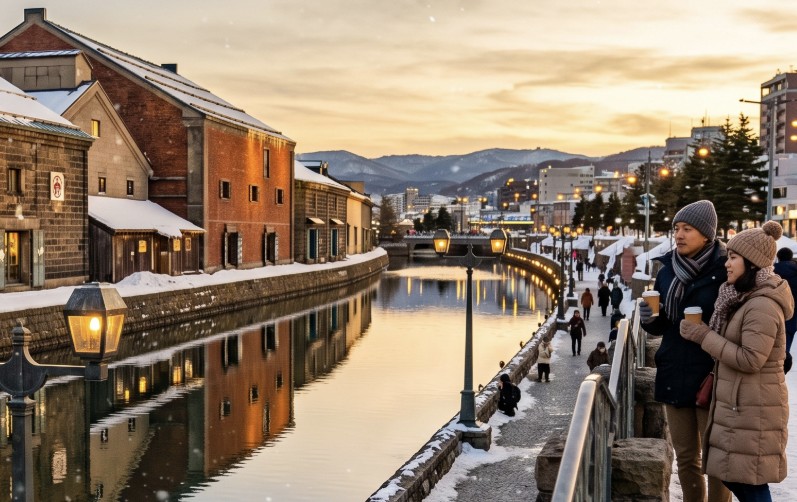
Sapporo to Otaru: Quick Answer
The easiest way to travel from Sapporo (札幌) to Otaru (小樽) is the JR Rapid Airport train. A non-reserved journey costs ¥800 one way and the fastest services take around 30 to 40 minutes from Sapporo Station. It is fast, frequent, reliable, and usually the most practical option for a day trip.
The Hokkaido Chuo Bus Kosoku Otaru-go (高速おたる号) is slightly cheaper at ¥730 one way or ¥1,360 return. It takes roughly one hour, depending on route and traffic, and can be useful if you are boarding near one of its Sapporo stops or travelling with larger luggage. In winter, however, the train is generally the safer choice because motorway delays are more likely than rail disruption.
For an Otaru return trip alone, a rail pass is not worth buying. Two standard JR tickets cost only ¥1,600 in total. A Hokkaido rail pass makes sense only if Otaru is part of a wider itinerary covering longer and more expensive train journeys elsewhere in Hokkaido.
Why Otaru Is Worth a Day Trip
Otaru is a compact port city on Hokkaido’s western coast, about 40 kilometres northwest of Sapporo. It is known for its preserved stone warehouses, old merchant streets, canal-side scenery, glass workshops, dessert shops, and strong seafood culture. Unlike many popular Japanese day trips, it does not require much local transport once you arrive.
The city’s appeal is not just the canal. Much of the pleasure comes from walking slowly between Minami-Otaru Station, Sakaimachi Hondori, Sushi-dori, and Otaru Station, stopping for coffee, sweets, small shops and harbour views along the way. Otaru feels different from central Sapporo: older, slower, more intimate, and easier to enjoy without a rigid schedule.
It works well in every season. Summer gives you longer daylight and a pleasant harbour atmosphere, while winter creates the classic snowy-canal mood many travellers picture when planning Hokkaido. Either way, a little planning helps you use the right station, avoid unnecessary uphill walking, and decide whether the train, bus or a wider-area rail pass suits your trip best.
Klook.comJR Train: Best Option for Most Travellers
JR Hokkaido’s Rapid Airport (快速エアポート) is normally the best all-round option for travelling between Sapporo and Otaru. Although the train also serves New Chitose Airport, it is a normal and widely used way to make this day trip. It runs on the Hakodate Main Line and is the standard recommendation for travellers staying around Sapporo Station, Odori or Susukino.
- Fare: ¥800 one way between Sapporo and Otaru in a non-reserved seat.
- Journey time: About 30 to 40 minutes on the fastest services.
- Reservation: Not needed for ordinary non-reserved travel.
- Best seats for scenery: Sit on the right-hand side when travelling towards Otaru for the coastal stretch near Zenibako.
- Official source: Check JR Hokkaido for timetable and service updates.
The Rapid Airport does not stop at Minami-Otaru Station (南小樽駅). If you want to begin your walking route from the upper end of the old merchant district and move downhill towards the canal, take a local JR train instead. Local trains cost the same ¥800 fare but take a little longer and stop at Minami-Otaru, Zenibako and Asari.
How to Buy the Train Ticket
For a simple Sapporo–Otaru journey, buy a paper ticket at Sapporo Station before entering the gates. Use a JR ticket vending machine, switch the screen to English if needed, choose Otaru as your destination, pay the displayed fare, collect the ticket, and insert it into the automatic gate. Keep the ticket until you leave the station at Otaru, where the exit gate will retain it.
If you prefer staff assistance, go to the JR Ticket Counter, also known as Midori-no-madoguchi. This is useful if you want help in choosing the correct train, need multiple tickets, are using a rail pass, or want to ask about reservations. Some Rapid Airport services have reserved uSeat seating, but the exact supplement and booking conditions should always be checked on the official JR site before paying.
At busy periods such as weekends, school holidays and major winter events, arrive at the platform early if you want a better chance of sitting together in the non-reserved carriage. The ride is short enough to stand if necessary, but boarding one train earlier often makes the day much easier.
Using Suica, Kitaca or Other IC Cards
If you already have a compatible Japanese IC card, you do not need to buy a paper ticket for a standard non-reserved journey. Suica, PASMO, ICOCA, Kitaca and other major mutually compatible IC cards can be used between Sapporo and Otaru. Tap in at Sapporo Station, tap out at Otaru Station, and the correct fare will be deducted automatically.
An IC card does not give a discount on the train fare, but it makes travel much easier. It is also useful for Sapporo’s subway network, convenience stores, vending machines, and many everyday purchases. If you expect to use public transport often during your Hokkaido trip, an IC card is worth having even if you also buy a rail pass for longer journeys.
Do not assume the IC card works on every onward rail journey beyond Otaru. If you plan to continue towards places such as Yoichi, Kutchan or Niseko, check JR Hokkaido’s current ticket rules first. Some journeys outside the main compatible area require a paper ticket instead of simple tap-in travel.
Klook.comWhere to Buy a Kitaca Card
If you do not already have an IC card, buy a non-registered Kitaca at a JR Ticket Counter or from a compatible ticket machine in the Kitaca area. New Chitose Airport Station and Sapporo Station are the easiest places for most visitors to buy one. Look for the Kitaca logo or ask at the JR counter if you are unsure which machine to use.
A new non-registered Kitaca costs ¥2,000, consisting of ¥1,500 stored value and a ¥500 deposit. You can top it up at station charging machines whenever needed. Keeping some cash in yen is sensible because machine payment methods can vary.
If you are travelling beyond Hokkaido later in your trip, it can still be useful because the major IC-card network is widely compatible across Japan. Just remember that it is a stored-value card, not a sightseeing pass.
The Local-Train Downhill Strategy
One of the smartest ways to visit Otaru is to take a local train to Minami-Otaru Station in the morning, then return from Otaru Station later in the day. This avoids retracing your steps and lets you walk gradually downhill through the most attractive central area. It is especially helpful if you plan to browse shops rather than rush straight to the canal.
From Minami-Otaru, walk down into Sakaimachi Hondori (堺町本通り), where you will find glass studios, dessert shops, souvenir stores and old merchant buildings. Continue towards Sushi-dori and the canal, then finish near Otaru Station for the quicker Rapid Airport train back to Sapporo. It is a simple route and one of the best ways to structure a first visit.
This strategy is also practical in winter, when repeated uphill walking on snowy or icy streets can become tiring. Even in summer, it makes the day smoother and more intuitive.
Klook.comHighway Bus: Cheapest Option
Hokkaido Chuo Bus operates the Kosoku Otaru-go between Sapporo and Otaru. The adult fare is ¥730 one way or ¥1,360 return, making it slightly cheaper than JR. The scheduled journey from Sapporo takes about one hour and three minutes, though traffic and weather can affect the actual time.
Different route variants operate, including services via Hokkaido University, Maruyama and Boyodai. Always check the route and final destination before boarding. Some buses go to Otaru Station, while others may end at Otaru Chikko Station, which is not the most convenient stop for the canal or the main historic centre.
Where available, buy the ticket at the relevant bus counter or machine before boarding and confirm the latest boarding instructions for your departure point. Carry cash in Japanese yen as a useful backup, even if you expect cashless payment options. Check the latest timetable on the official Hokkaido Chuo Bus site before travel.
The bus is a good option if you are travelling with larger bags or staying near a stop that makes it more convenient than returning to JR Sapporo Station. In heavy snow, however, the train is usually the more dependable choice.
Should You Buy a Hokkaido Rail Pass?
For Otaru alone, no. A simple return train trip costs only ¥1,600, which is far below the price of any regional or nationwide rail pass. A pass becomes worthwhile only when you are combining Otaru with longer-distance journeys that would otherwise be expensive as ordinary tickets.
| Pass | Validity | Pre-purchase Price | Purchase in Japan | Covers Otaru? | Best For |
|---|---|---|---|---|---|
| JR Hokkaido Rail Pass | 5 days | ¥22,000 | ¥23,000 | Yes | Multi-city Hokkaido travel |
| JR Hokkaido Rail Pass | 7 days | ¥28,000 | ¥29,000 | Yes | Longer Hokkaido itineraries |
| JR Hokkaido Rail Pass | 10 days | ¥37,000 | ¥38,000 | Yes | Extended rail-focused trips |
| JR Sapporo–Noboribetsu Area Pass | 4 days | ¥10,000 | ¥11,000 | Yes | Otaru plus Noboribetsu |
| JR Sapporo–Furano Area Pass | 4 days | ¥11,000 | ¥12,000 | Yes | Otaru plus Furano or Biei |
| Japan Rail Pass | 7 days | ¥50,000 | N/A | Yes | Multi-region Japan trips |
The Hokkaido Rail Pass and both regional area passes are intended for eligible non-Japanese passport holders. They cover the Sapporo–Otaru sector, but that does not automatically make them good value for this day trip alone. Always total the cost of your planned JR journeys before buying a pass.
Where to Buy the Rail Passes
You can buy the JR Hokkaido Rail Pass, JR Sapporo–Furano Area Pass, and JR Sapporo–Noboribetsu Area Pass through official JR channels, including JR-EAST Train Reservation, or at designated JR Hokkaido counters in Japan with your valid passport. JR Hokkaido also states that these passes may be purchased through travel agents outside Japan and then collected at designated exchange points in Hokkaido.
Travellers can also buy these passes through Klook. Klook currently lists the JR Hokkaido Rail Pass, the JR Sapporo–Furano Area Pass, and the JR Sapporo–Noboribetsu Area Pass. Before paying, compare the pass type, validity, exchange method, and collection location against the official JR Hokkaido conditions so you know exactly where and how the pass must be redeemed.
For example, JR Hokkaido notes that the Sapporo–Noboribetsu Area Pass can be purchased only at New Chitose Airport, Sapporo and Noboribetsu Stations in Japan, while the Sapporo–Furano Area Pass can be purchased only at New Chitose Airport, Sapporo and Asahikawa Stations. That matters if you are planning to exchange or collect a pass after arriving in Hokkaido rather than sorting it before departure.
You can buy the Rail Pass from Klook here.
Klook.comOne-Day Otaru Itinerary
Morning: Start at Minami-Otaru
Take a local JR train from Sapporo to Minami-Otaru Station and begin walking downhill into Sakaimachi Hondori. This preserved street is the heart of Otaru’s browsing culture, lined with confectionery shops, glass stores, music-box shops and older warehouse-style buildings. Arriving in the morning gives you a calmer atmosphere before the biggest crowds appear.
The Otaru Music Box Museum (小樽オルゴール堂) is one of the best-known stops in the district, while LeTAO is a popular destination for double fromage cheesecake and Kitakaro for sweets. Treat these as enjoyable pauses rather than a checklist: the charm of Otaru is in walking, peeking into small shops, and allowing time for spontaneous stops.
Lunch: Sushi-dori or a Local Café
Otaru is well known for seafood, and Sushi-dori (寿司屋通り) is the obvious place for a sushi lunch if that is part of your plan. Lunch is often more approachable than dinner in both price and pace. Arrive before noon if you want to minimise waiting, particularly in high season or on weekends.
If sushi is not your priority, Otaru also has cafés, bakeries, soba shops and seafood bowls throughout the centre. Smaller restaurants sometimes close early or sell out, so it is wise to keep one or two alternatives in mind.
Afternoon: Otaru Canal
After lunch, walk towards Otaru Canal (小樽運河), the city’s most recognisable landmark. The stone warehouses and canal-side path make for an easy slow stroll, and the area is compact enough that you can explore without a strict route. The canal is enjoyable in daylight, but it becomes especially atmospheric towards dusk.
If you want a structured activity, you can book the Otaru Canal Cruise with Seal Engraving Experience on Trip.com.
You do not need the cruise to enjoy the canal well. If you would rather save money for food or shopping, simply walk the bridges and the warehouse district on foot. The whole area is easy to cover without feeling rushed.
Late Afternoon: Optional Tenguyama View
If you start early and want a broader city view, consider the Otaru Tenguyama Ropeway. It is an optional add-on rather than a core stop, because it requires extra time and a local bus or taxi from central Otaru. In the 2026 summer season, the official site lists an adult round-trip fare of ¥1,800 and operation from 25 April to 3 November, but seasonal schedules and fares vary, so check the official Tenguyama Ropeway site before going.
If your priority is a relaxed first day in Otaru, it is perfectly reasonable to skip Tenguyama and keep the time for the canal, cafés and early evening streets instead.
Evening: Return to Sapporo
Finish near Otaru Station and take the Rapid Airport back to Sapporo for the fastest return. Check the departure board rather than relying on an old screenshot, especially in winter or if you have spent longer than expected in the city. The station is within walking distance of the canal, which makes the end of the day simple and efficient.
Winter Advice
Winter is one of the most beautiful times to visit Otaru, but it also requires more practical planning. Wear waterproof shoes with grip, allow more time for walking, and expect icy patches even on central streets. Sunset comes early, so if you want canal views at dusk, organise lunch and shopping before late afternoon.
When snow is forecast, check service updates from JR Hokkaido, Hokkaido Chuo Bus and the Japan Meteorological Agency. If the weather looks uncertain, choose the train rather than the bus and travel earlier in the day.
Frequently Asked Questions
- Is Otaru a good day trip from Sapporo? Yes. It is close, easy to reach, and compact enough to explore on foot in one day.
- How much is the Sapporo to Otaru train? The standard non-reserved JR fare is ¥800 one way.
- How much is the bus from Sapporo to Otaru? Hokkaido Chuo Bus charges ¥730 one way or ¥1,360 return.
- Can I use Suica from Sapporo to Otaru? Yes. Suica, Kitaca, PASMO, ICOCA and other compatible major IC cards work on this route for ordinary non-reserved travel.
- Where can I buy a Kitaca card? Buy one at a JR Ticket Counter or a compatible ticket machine, most easily at New Chitose Airport Station or Sapporo Station.
- Does the Rapid Airport stop at Minami-Otaru? No. Use a local train if Minami-Otaru is your intended starting point.
- Should I buy a rail pass just for Otaru? No. A normal return costs only ¥1,600, so a pass is only worthwhile when paired with wider Hokkaido travel.
- Can I buy the Hokkaido rail passes from Klook? Yes. Klook lists the JR Hokkaido Rail Pass, JR Sapporo–Furano Area Pass and JR Sapporo–Noboribetsu Area Pass, but you should still check JR Hokkaido’s official redemption rules before booking.
Before you travel, check the latest timetable, weather, and pass conditions. Otaru is one of Hokkaido’s easiest and most rewarding day trips, and with the right station strategy, it can be both simple and memorable.